Ride a Trail With Freshly Fallen Leaves Without Losing the Line
Fresh leaves can turn a familiar trail into a surface-reading problem, hiding roots, rocks, and slick drainage lines. I’ll explain how speed, vision, braking, and line choice work together so you can ride autumn-covered trails with more control.
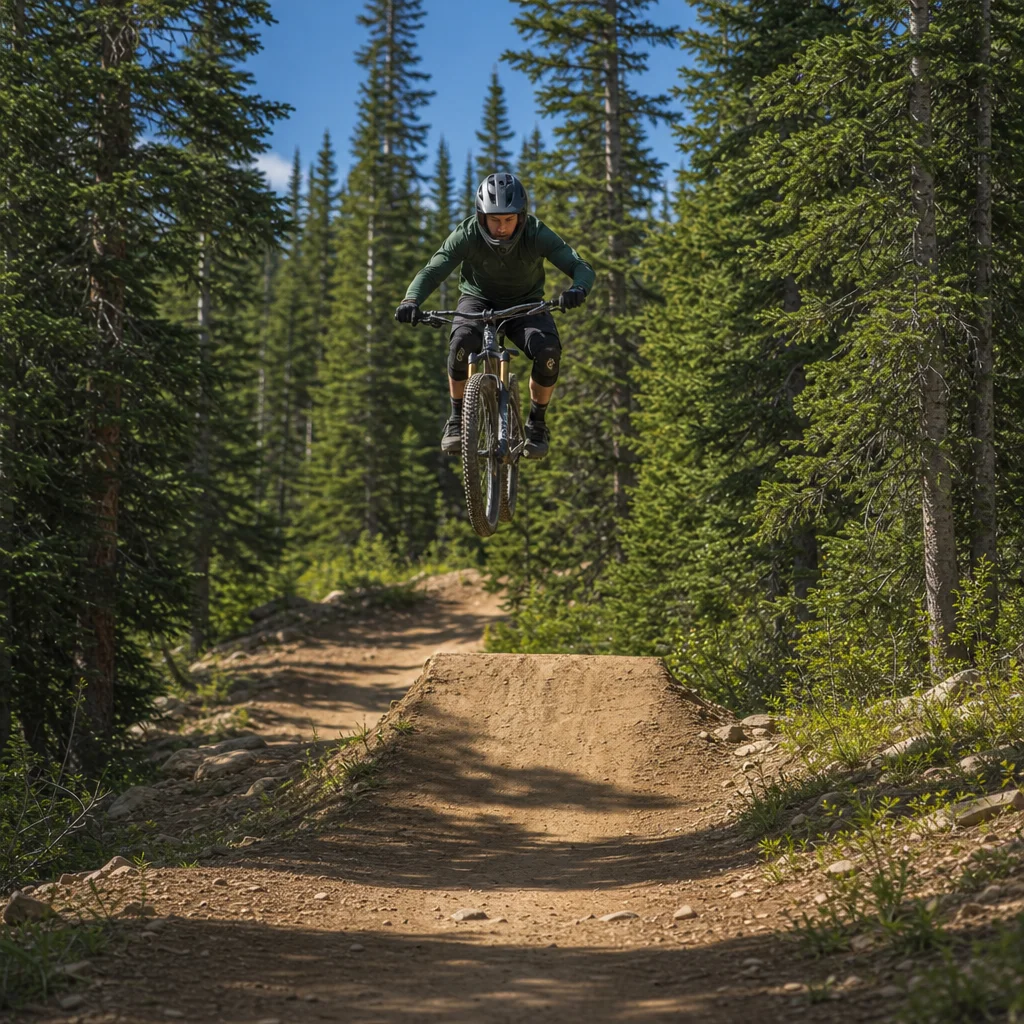
Freshly fallen leaves change a trail before they change its shape. A line you know well may still be there, but roots, rocks, ruts, and water channels can disappear beneath a thin, shifting layer. The challenge isn’t avoiding every leaf; it’s managing uncertainty without making sudden inputs that overwhelm your tires.
The safest approach is to connect several small decisions: reduce speed before visibility gets poor, look farther ahead than the nearest leaves, keep your body balanced, and brake where you can still trust the surface. That gives you time to adjust rather than forcing a late correction in a hidden feature.
Read the trail before choosing your line
Start by treating leaf cover as reduced information, not automatically as reduced traction. A thin layer of dry leaves on firm soil may ride almost normally, while damp leaves can become slippery, especially over smooth roots, rocks, and hard-packed clay. Deep piles can also hide holes or collect in the edges of a rut.
Look for clues around the covered section. The trail’s grade, drainage patterns, exposed stones, tree roots, tire tracks, and changes in leaf color can help you estimate what lies underneath. Low spots and shaded areas are more likely to stay damp. A strip of leaves gathered against the uphill side may mark a shallow rut or a place where water has crossed the trail.
You don’t need to identify every hidden object from a distance. Instead, decide whether the section allows a clear escape option. A broad, gently sloping trail gives you more room to make a small correction. A narrow trail with a drop, deep rut, or tree close to the edge deserves more speed reduction before you enter it.
Check the trail’s current condition: Before committing to a leaf-covered section, confirm that the trail is open and consider recent rain, frost, or maintenance. Local trail-condition reports and signs can tell you when a familiar route has become unusually slick or hazardous.
Use speed to buy information
Speed is the main variable you can control when the surface is uncertain. Entering a blind leaf-covered section slowly gives your tires more time to settle and gives you more time to react when a root or rock appears. It also reduces the consequence of a small loss of traction.
The useful timing is to slow down before the uncertainty, not in the middle of it. Brake while the trail is still relatively visible and your wheels are traveling in the direction you intend to go. Once you reach the covered feature, release some brake pressure and let the bike roll with a light, balanced grip. If you wait until the obstacle is revealed, a hard squeeze can make the tires slide before they can climb or track over it.
This doesn’t mean creeping everywhere. Excessively slow riding can make it harder to maintain balance, particularly on uneven ground. Choose a speed that leaves room for an unexpected feature and lets you stop or change direction without panic. If you can’t explain where you’d go if the line suddenly closes, you’re probably carrying too much speed.
Look beyond the nearest leaves
Your eyes should work in layers. First, scan the section ahead for its overall shape: where it narrows, drops, bends, or drains. Then check the immediate path for the specific features that will affect your front wheel. After that, return your vision to the exit of the section rather than staring at the largest visible patch of leaves.
This prevents a common mistake: fixating on the uncertain surface directly in front of the tire. Your bike tends to follow your steering and body direction, so looking at a stump, rut, or rock can pull you toward it. Keep your head up, turn your eyes through the corner, and make small steering corrections instead of trying to plot every inch of hidden ground.
On a blind turn, identify the likely exit before you enter. A wide outside line may offer better visibility, but it can also collect leaves, run close to the edge, or expose you to an unseen drainage rut. The best line is the one that combines visibility, usable traction, and room to recover—not simply the line with the fewest leaves.
Brake before the uncertain surface
Use both brakes smoothly when you need to reduce speed. Apply pressure progressively rather than grabbing the front brake or relying only on the rear. The front brake provides much of your stopping power, but abrupt front-brake input while the wheel is turned or crossing a slippery feature can remove traction quickly.
Keep the bike relatively upright while braking in a straight section whenever possible. Separate major braking from major turning: slow before the corner, then use lighter braking through the turn if you still need to control speed. If a covered root or rock appears mid-corner, avoid a sudden combination of hard braking and sharp steering. Reduce pressure, keep your hands steady, and choose the smoothest available exit.
On a descent, lower your center of gravity by bending your elbows and knees while keeping your hips centered over the bike. Don’t push your body far behind the saddle as a default response; that can unload the front wheel and make steering less predictable. Let the bike move beneath you while your torso stays calm and your arms remain loose enough to absorb small changes.
Keep traction through hidden features
A light, even grip helps the bike track over uneven ground. Clenching the handlebar tends to make every movement larger, which is especially unhelpful when leaves hide the start of a root or rut. Keep your pedals level when you’re coasting through a rough section, with your weight balanced between the contact points.
If you can see a root or rock, cross it as squarely as the trail allows and avoid braking on top of it. When the feature is only partly visible, maintain a stable direction and let the tires roll over rather than trying to steer around an object you can’t fully identify. A small amount of momentum is useful, but it should be controlled momentum—not speed carried in from the previous section.
Leaf piles beside the main tread can look inviting because they appear soft. They may conceal a drainage channel, a buried branch, or a soft edge that pulls the front wheel sideways. Stay on the firmest part of the trail unless you have inspected the alternative, and be particularly cautious when one wheel is on packed dirt and the other is in deep leaves.
Adjust for corners, climbs, and descents
In a flat or gently rolling section, you can usually prioritize a clear view and a smooth, moderate pace. On climbs, keep enough momentum to avoid stalling on a hidden root, but don’t attack the section so quickly that you can’t respond. Shift before the steep or covered part, remain seated when that improves rear-wheel traction, and keep your upper body quiet.
Descents require more preparation. Finish most of your slowing before the steepest or least visible part, then maintain a speed that allows the bike to roll freely over small changes. If the descent tightens into a corner, look for the exit and preserve a line that leaves space on the outside. A leaf-covered shortcut across the inside may hide a deeper rut than the main tread.
On flat corners, avoid leaning the bike aggressively when you can’t tell whether the leaves cover smooth soil or a slick root. Use a more upright, controlled turn and keep your weight centered. Once the surface becomes clearer, you can add speed gradually rather than committing to a fast corner based on the trail’s appearance in summer.
Make small setup and group adjustments
Fresh leaf cover usually calls for technique changes before equipment changes. Check that your tires have suitable tread and are properly inflated for the trail and your riding style, but don’t make a drastic pressure change just because the ground looks covered. Very low pressure can increase the chance of rim strikes or tire damage, while excessive pressure reduces the tire’s ability to conform to uneven ground.
A clean visor or clear glasses can matter more than a complicated setup change. Leaves, branches, and low autumn light can make it harder to see surface details, so keep your vision unobstructed and use lighting when the conditions or local rules make it appropriate. If you’re unsure about a section, stop in a safe place and inspect it rather than rolling in while distracted.
In a group, leave more space than usual. The rider ahead may uncover a root, kick leaves into the air, or brake suddenly after spotting a rut. Don’t follow another rider’s exact line without looking for yourself; their tires may have cleared leaves or chosen a different risk. Call out a hidden obstacle when you can do so safely, and regroup after a technical section rather than pressuring a less confident rider to maintain the same pace.
Recover when the line changes
If the front wheel begins to wander, resist the urge to make a large steering correction. Look toward the open part of the trail, soften your arms, and make the smallest adjustment that brings the bike back toward it. If traction continues to disappear, straighten the bike and reduce speed smoothly rather than forcing a turn at an angle.
When you realize the section is beyond your current comfort level, there’s no penalty for stopping. Choose a place with enough room to pull off the main tread, check the surface on foot, and decide whether to ride, walk, or turn around. A brief inspection is often faster than recovering from a fall in a hidden rut.
After a near miss, don’t immediately accelerate to regain momentum or confidence. Take a moment to identify what changed: poor visibility, wet leaves, late braking, an overly ambitious line, or a trail edge that looked firmer than it was. The useful lesson is usually specific, and you can apply it to the next covered section.
Leaf-covered trails reward anticipation more than bravery. Reduce speed before the surface becomes uncertain, scan for the trail’s shape and exit, brake while the bike is straight, and keep your body balanced enough to let the bike move beneath you. Choose the firmest line you can read, leave yourself room to change it, and treat deep or damp leaf cover as a reason to gather more information rather than a challenge to ride faster.
On your next ride, practice these decisions on a mild section first: compare a thin layer of dry leaves with a damp or deeper patch, notice where braking still feels predictable, and adjust your pace before the trail becomes difficult. That deliberate approach will help you keep the line when the forest floor stops showing you all of it.