Choose a Turnaround Time for a Mountain Bike Out-and-Back
Turnaround time matters because an out-and-back can become a night ride when pace, navigation, or repairs take longer than expected. I’ll show you how to build a realistic decision point around daylight, group speed, route uncertainty, and recovery options.
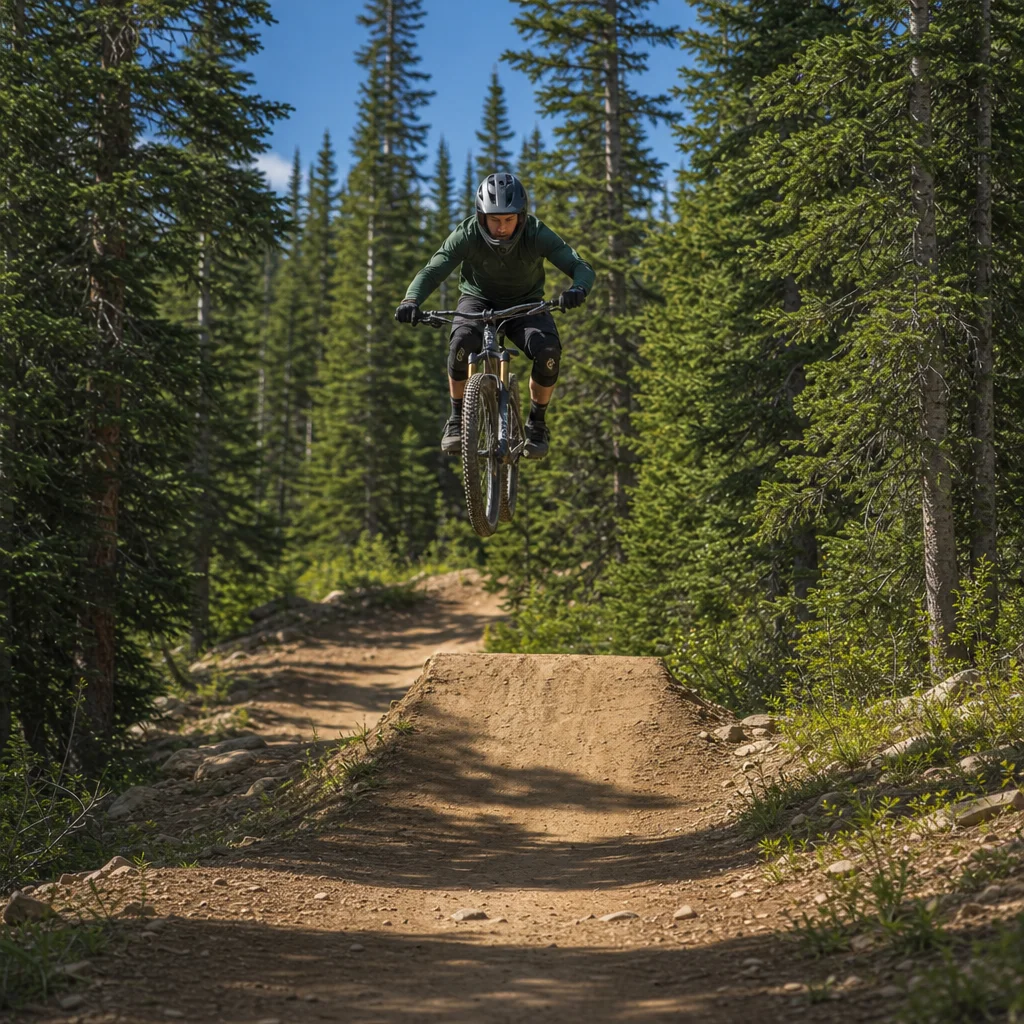
An out-and-back ride looks simple on a map: ride away from the trailhead, reach a sensible point, and return along the route you already know. The difficulty is that the halfway point in distance is rarely the halfway point in time or risk. Climbs may be slower than expected, route finding can add delays, and a minor mechanical problem can consume the margin you thought you had.
A good turnaround time gives you a clear point at which to stop extending the ride, even if the planned destination is still ahead. It isn't a sign that the ride has gone wrong. It's a way to make sure the return happens with enough daylight, energy, and problem-solving capacity left.
Start with the return, not the destination
The most useful question isn't, “How far can we ride before turning around?” Ask instead, “What time do we need to be back at the trailhead?” Work backward from that deadline.
Your return deadline should account for more than the scheduled end of the ride. Leave room for the final climb, loading bikes, a slow walk out, or a problem that appears close to the trailhead. If the route finishes with a technical descent, you may also want enough daylight to ride it at a controlled pace rather than rushing because the parking area is close.
For example, suppose sunset is at 7:45 p.m. You may decide that the group should be back at the trailhead by 7:00, giving you 45 minutes for delays or an unexpectedly slow final section. If the expected return leg takes two hours, the latest useful turnaround is 5:00 p.m. That is the time to begin heading back, not the time to arrive at the destination and then decide what to do.
If the ride has a fixed closing time, shuttle pickup, reservation, or other hard deadline, use the earlier of that deadline and your daylight-based return time. A ride plan that depends on everything going exactly right isn't a plan with a margin; it is a best-case estimate.
Check the conditions before you set the clock: Confirm the current sunset or usable-light conditions, trail access, closures, and any local restrictions for the route. Weather, smoke, flooding, and seasonal access can change what counts as a realistic return window.
Estimate riding time with a range
A single average speed is a poor basis for a turnaround decision. Mountain-bike pace changes with climbing, trail surface, technical features, fitness, traffic, navigation, and how much stopping the group does. A route that averages 7 miles per hour on a smooth gravel approach may average less than half that on a rocky, unfamiliar trail.
Divide the route into meaningful sections rather than applying one number to the entire ride. A paved or smooth access road, a sustained climb, a technical traverse, and a descent should each have their own rough estimate. You don't need laboratory precision. You do need to notice which sections are likely to absorb time.
Use a range for each section. If a climb might take 35 to 50 minutes, record the range rather than choosing 40 minutes because it looks tidy. Add realistic stops for water, regrouping, navigation, photos, and minor adjustments. Those stops are part of the trip, not evidence that the estimate failed.
For an out-and-back, the return may not take the same amount of time as the outward leg. Descending can make the return faster, but fatigue, darkness, loose conditions, or a long final climb can erase that advantage. If the route includes a technical section in both directions, use the slower expected time for the direction in which the group is likely to be more tired.
A practical estimate might look like this:
- Outward leg: 2 hours 15 minutes to 2 hours 45 minutes
- Planned stop or destination break: 15 to 25 minutes
- Return leg: 1 hour 45 minutes to 2 hours 20 minutes
- Contingency for navigation, regrouping, and minor problems: 30 to 45 minutes
The total is a range of roughly 4 hours 45 minutes to 5 hours 55 minutes. The latest turnaround should be based on the slower credible estimate and the return deadline, not on the shortest version of the trip.
Let the slowest rider shape the decision
A group doesn't move at the pace of its strongest rider. It moves at the pace of the person who needs the most time on the climb, the technical section, or the navigation stop. This isn't a criticism of that rider; it is a basic feature of group planning.
Before setting off, agree on how the group will stay together. If riders spread out, decide where the front group will wait and how the rear group can communicate. Otherwise, the time spent regrouping may be underestimated, especially when the trail offers few obvious stopping points.
Use the slowest realistic pace for the sections that determine the schedule. You don't need to make every rider follow the same speed on every part of the route, but you should plan around the rider who is least able to make up lost time later. A strong rider can often wait at a junction. A tired or less experienced rider may not be able to safely increase speed on the return.
For mixed-ability groups, make the turnaround a group decision with a group consequence: once the agreed time arrives, everyone turns back. Avoid an informal arrangement in which faster riders continue toward the destination while others are expected to catch up. That can create navigation, communication, and safety problems at exactly the point when the schedule is already tightening.
Add time for uncertainty you can't measure
Some delays are predictable, while others are simply part of riding unfamiliar terrain. Navigation is one of the most common sources of lost time. A route may have several junctions, an incomplete trail sign, a user-created line, or a map track that doesn't match current conditions.
If you know the route well, a modest navigation allowance may be enough. On an unfamiliar route, add more time before the turnaround rather than assuming every junction will be obvious. Stop in a safe place to check the map instead of riding farther while uncertain. A wrong turn that takes five minutes to identify can become a much longer problem if the group continues downhill or crosses an unmarked junction.
Mechanical risk deserves its own allowance. You don't need to predict a specific failure, but consider the condition of the bikes and the route. A tubeless tire that has already lost pressure, a shifting problem, worn brake pads, or a chain that has been skipping should reduce the planned distance and increase the margin. Rough, remote, or rocky trails deserve more contingency than a smooth loop close to roads and trailheads.
Your contingency should match the consequences of being late. Near the trailhead, a delay may mean a slow walk or a phone call. Far from help, it may mean a long hike with a damaged bike or a return in poor light. The more difficult the recovery, the less reasonable it is to use a narrow turnaround window.
Set decision points during the ride
A turnaround works best when it isn't just one number written before the ride. Set several check-in points. At each one, compare the actual time, location, group condition, and remaining daylight with the plan.
Useful checkpoints include the end of the first major climb, the last easy exit from the route, the start of a remote section, and the point where turning back would still leave a comfortable return. At each checkpoint, ask four questions:
- Are we on schedule based on the slowest rider, not the fastest section?
- Is the group still riding at the expected pace and energy level?
- Have navigation, stops, or mechanical issues used our contingency?
- Can we return by the planned deadline if the next section takes longer than expected?
If the answer to the last question is uncertain, turn around early. You don't need to wait until the official turnaround time if the ride has already consumed its margin. Likewise, reaching a planned destination doesn't automatically justify continuing to a viewpoint, an extra loop, or “just one more climb.” Treat the return deadline as the fixed part of the plan.
Recover when the plan starts slipping
When a ride falls behind schedule, the safest recovery is usually to reduce ambition rather than increase speed. Skip the optional spur, shorten the stop, or turn around at the next safe location. Riding faster to recover lost time can increase mistakes, crashes, and mechanical damage, particularly when the group is tired.
If the group is separated, stop and regroup at a known location before making a new decision. If a rider has a mechanical problem, assess whether it can be repaired with the available tools and whether the bike remains safe to ride. A temporary fix that allows a controlled return may be preferable to attempting the original destination, but a damaged brake, wheel, tire, or steering component may require walking out or using a planned extraction option.
If navigation becomes uncertain, return to the last confirmed point rather than guessing. Mark the location if possible, communicate the change to the whole group, and avoid splitting up unless everyone understands the route and has a reliable way to communicate. A phone's map can be useful, but battery life, signal, and downloaded data shouldn't be assumed.
When daylight is running short, prioritize the route that offers the simplest and most predictable exit. That may mean abandoning a more scenic trail for an access road or walking a technical section. The best recovery choice is the one that reduces uncertainty and preserves options.
Build a turnaround you can actually use
Before the ride, write down a return deadline and a latest turnaround time. Estimate the outward and return legs separately, include the slowest rider's pace, and add time for stops, navigation, and minor mechanical problems. Then identify at least one earlier exit or shortened version of the route.
During the ride, check the plan at natural landmarks instead of waiting until the schedule is already failing. If the group is behind, tired, uncertain, or dealing with a bike problem, make the call while you still have daylight and easy choices. A turnaround is most effective when it happens before the ride becomes an emergency.
The destination is optional; the return is part of the ride. Choose a time that leaves enough margin for the conditions you actually have, and you'll make better decisions when the trail, the weather, or the bikes refuse to follow the neat version of the plan.