How to Plan a Mountain Bike Ride When Daylight Is Shrinking in Autumn
I’ll help you build an autumn ride plan around shrinking daylight, changing temperatures, route difficulty, navigation, lighting, parking access, and a realistic mechanical margin—so a weekday outing remains enjoyable without relying on a perfect schedule.
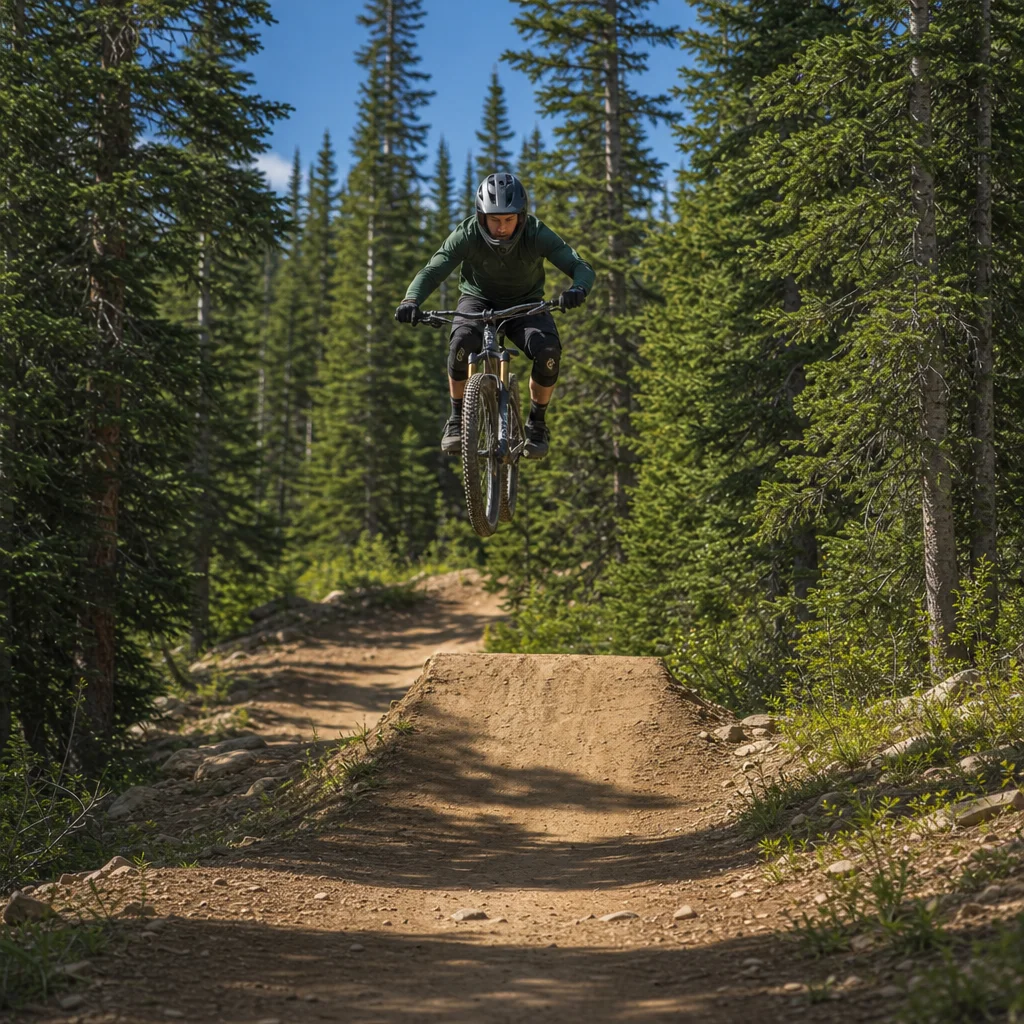
Autumn changes a mountain bike ride before the trail itself does. A route that feels comfortably short in June can become a rushed outing when the sun sets earlier, leaves hide obstacles, temperatures drop, and a small mechanical problem costs more time than expected. The answer isn’t to treat every ride like an expedition; it’s to plan around the parts of the day that are least forgiving.
For riders in the northern United States and Canada, the most reliable approach is to choose a route with a clear time limit, establish a turnaround point before starting, and leave enough margin for slower trail conditions and an unplanned delay. You can still ride familiar trails after work or on a cool weekend morning, but the plan should account for more than the moving time shown by a trail app.
Start with the usable daylight, not the trail distance
Begin by identifying when you need to be back at the vehicle or at another safe, well-lit location. Don’t use sunset as your practical finish time. In wooded terrain, dense foliage, steep slopes, and shaded valleys can make the trail feel dark well before the published sunset. Wet leaves and low-angle light can also make familiar features harder to read.
Work backward from your required finish time. Allow time to change clothes, load the bike, and deal with a dropped chain or flat tire at the trailhead. If you’re riding after work, include the drive to the trail, parking, and preparation in the schedule. A ride that technically fits between arriving and sunset may not leave enough time to get out of the woods comfortably.
The useful question isn't, “How many miles can I cover?” It’s, “How much riding time can I spend while still returning with a reserve?” Distance is a poor planning measure when autumn brings mud, slippery roots, crowded trailheads, or a route with more climbing than expected. Use elapsed time and the route’s escape options as your primary limits.
Check the trail’s autumn operating details: Confirm current opening and closing times, seasonal restrictions, parking-lot access, gate schedules, and any temporary closures with the land manager or trail organization. A route can be rideable while its usual parking exit or access road is unavailable.
Choose a route that gives you options
In shrinking daylight, route design matters more than ambition. Favor a trail system where you can shorten the ride without retracing a difficult section, crossing an exposed area in the dark, or depending on a connector you haven’t recently checked. A compact loop, a series of linked loops, or an out-and-back with obvious turnaround points is generally easier to manage than a long point-to-point route.
Look at the map for bailout options before you leave. Identify where you can turn toward the trailhead, where a service road or wider path offers a simpler exit, and which sections would be unpleasant or unsafe to negotiate after dark. A route may look short on a map but contain a remote low point, a creek crossing, or a long descent that becomes a problem if you have a mechanical issue.
Autumn surfaces deserve their own assessment. Leaf cover can conceal rocks, roots, holes, and drainage channels. Rain can turn a normally quick trail into a slow technical ride, while frost can make wet ground firm early in the day and slippery as it thaws. If the forecast suggests changing conditions, select a route where slower sections won’t trap you far from the trailhead.
For a weekday ride, consider choosing a familiar route rather than using limited daylight to explore. Familiarity reduces navigation stops and makes it easier to judge whether the trail is taking longer than expected. Save new route-finding for a day with more daylight, a reliable riding partner, or a straightforward return option.
Set a turnaround time before you roll
A turnaround time is more useful than a vague promise to “keep an eye on the clock.” Set it before the ride, when you’re still looking at the map rather than enjoying a good run of trail. At that time, you turn around or take the planned bailout even if you’re close to the next feature.
Build the decision around the slowest realistic part of the outing. If the route includes climbing, technical terrain, or navigation between separate trail areas, estimate those sections conservatively. Then add a reserve for a flat tire, a minor adjustment, a wrong turn, or a short rest. You don’t need to predict every delay; you need enough margin that one ordinary problem doesn’t erase your options.
A simple example is to divide your available riding window into an outbound portion, a return portion, and a reserve. The reserve should remain available when you reach the turnaround point, not be spent on the way out. If you have two hours from leaving the trailhead to your required finish, you might plan to turn around after roughly 45 to 50 minutes, keeping the remainder for the return and interruptions. The exact split depends on whether the return is faster, slower, or more technical than the outbound route.
Don’t assume the return will take the same time. A descent may be quicker when the trail is dry, but a technical descent covered in leaves may require more caution. Conversely, an out-and-back with a long climb away from the trailhead can make the return slower than expected. Plan from the trail features and surface conditions, not from a symmetrical distance on the map.
Account for temperature changes and fading light
Autumn rides often begin with conditions that encourage overdressing or end with conditions that punish inadequate layers. Check the expected temperature at the start and near the end of the ride, along with wind, precipitation, and the likelihood of damp trail conditions. A forecast for the general area may not reflect a shaded valley, exposed ridge, or higher elevation section.
Wear or carry a layer that remains useful when you stop moving. A thin wind-resistant shell, lightweight insulating layer, or dry base layer can make the difference between a comfortable delay and a miserable one. Keep the layer accessible rather than buried under tools and food. If you’re carrying a hydration pack, protect spare clothing from rain and wet tools.
Gloves are especially easy to underestimate. Colder fingers reduce braking comfort and dexterity when you need to repair a flat or adjust a derailleur. Choose gloves suited to the forecast while preserving enough control to operate your controls. A hat or thin cap can also be more useful during a roadside or trail-side delay than during the ride itself.
Low light changes how you ride even before darkness arrives. Contrast is reduced beneath trees, shadows become longer, and wet leaves can disguise the shape of the trail. Reduce speed when the surface is difficult to read, particularly on descents and unfamiliar sections. Finishing earlier is a better plan than trying to preserve summer pace in autumn visibility.
Treat navigation as a backup system, not a phone screen
Download the route and surrounding map area before leaving reliable service. Confirm that the file opens in your navigation app, and know how to identify your position if the route forks or your phone’s battery is low. A screenshot of the main route, trailhead, and bailout points is a useful secondary reference, especially in wooded areas where reception can be inconsistent.
Record the trailhead name, parking location, and intended exit in a form you can access without searching online. If the route uses several trail names, note the order in which you expect to encounter them. This prevents a common autumn mistake: spending daylight at a junction trying to determine which of several similarly named paths leads back to the car.
Keep your phone warm and charged. Cold temperatures can reduce battery performance, and constant screen use, tracking, or poor reception can drain it faster than expected. A small power bank is reasonable for longer or more remote rides, but it shouldn’t replace a route with clear bailout options.
If you’re riding with someone else, agree on the route and turnaround point before starting. Don’t rely on the faster rider to navigate or assume everyone will recognize a change in plan. A short conversation at the trailhead can prevent a late decision from becoming a separation problem.
Carry enough for a delay, not every possibility
Your autumn kit should match the route and the consequences of being delayed. At minimum, carry a working pump or inflator, a spare tube even if you ride tubeless, tire levers, a multitool, a chain quick link that matches your drivetrain, and enough water and food for the planned ride plus a delay. Check that you know how to use the repair items before relying on them in fading light.
A light can be worthwhile even when you expect to finish in daylight. Choose one that can illuminate the trail rather than only making you visible, and check its charge before leaving. A backup light or spare battery becomes more valuable on longer, remote, or unfamiliar rides. The exact equipment and any requirements for lights vary by location and land manager, so check current local rules rather than assuming a general recommendation applies everywhere.
For a short, familiar ride close to the trailhead, you may not need a large survival kit. For a remote route, poor weather, or a ride where the parking area could close before you return, the calculation changes. Carrying a little extra insulation and a dependable light is often more useful than carrying specialized tools you can’t operate.
Avoid parking and access problems at the end
Trailhead logistics can create a tighter deadline than the ride itself. Check whether the lot has a closing time, whether a gate is locked on a schedule, and whether parking rules change after summer. Some trail systems have different access arrangements for weekdays, hunting seasons, maintenance work, or wet-weather closures. Don’t assume that an open trail means every access point remains available.
Arrive with enough time to park legally, prepare your bike, and use the facilities without reducing the ride below a sensible length. If the lot is unfamiliar, save its location and the best exit route in advance. Consider whether returning to a dark, empty parking area would create a problem for your group, and plan a well-lit alternative when appropriate.
Keep keys, phone, and any access pass secure and easy to reach. A lost key or locked vehicle isn't made easier by early darkness. If you’re meeting a riding partner, agree on where you’ll regroup if one person returns ahead of the other.
A simple autumn planning sequence
The night before, check the trail status, access information, weather, and daylight. Choose the route, bailout points, turnaround time, and required finish time. Download navigation data and charge your lights and phone.
At the trailhead, reassess the plan against actual conditions. If the trail is wetter, colder, busier, or slower than expected, shorten the route before starting. Confirm that everyone understands the turnaround time and return route.
During the ride, use elapsed time and energy as information rather than waiting for a crisis. If you reach a junction later than planned, if the light is fading beneath the trees, or if a mechanical issue has used your reserve, take the easier exit. The best autumn decision is often the one that leaves a little unused trail for another day.
Shrinking daylight doesn’t require you to abandon mountain biking until spring. It does require a more deliberate relationship with time. Pick routes with options, leave a reserve for ordinary problems, carry lighting and clothing suited to a delay, and verify access details that may change seasonally. With those habits in place, a fall ride can stay focused on riding rather than on trying to outrun the sunset.