Decide Whether You Need a Full-Face Helmet for Local Trails
Local trails can justify a full-face helmet—or make one feel unnecessarily hot and restrictive. I’ll help you weigh terrain, speed, shuttle days, riding goals, fit, ventilation, and the protection a helmet can and can’t provide.
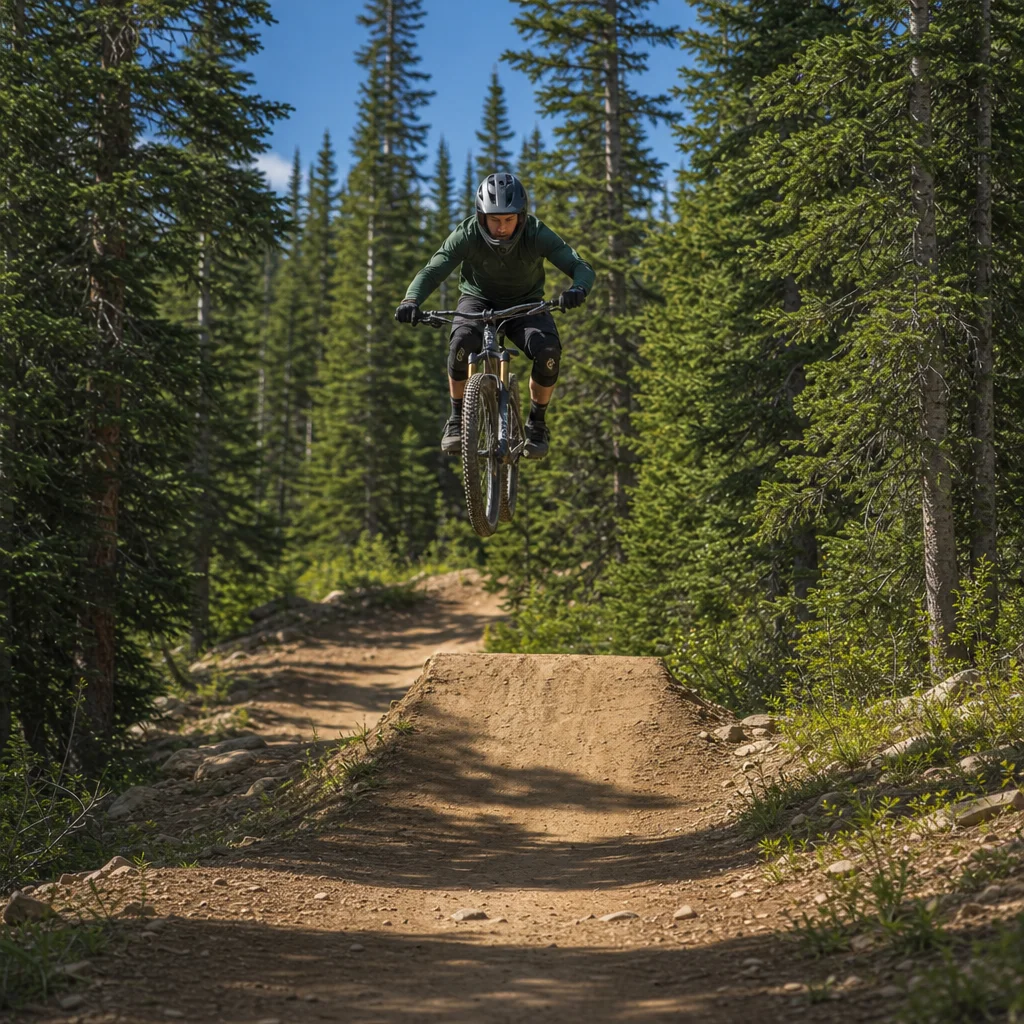
You don’t need to ride a downhill park to wonder whether a full-face helmet makes sense. A familiar local trail can still include steep descents, blind corners, rocky chutes, jumps, or the occasional mistake that sends your face toward the ground. At the same time, wearing more helmet than you need can leave you hot, uncomfortable, and less willing to ride.
The useful question isn’t whether full-face helmets are “better.” It’s whether the additional coverage fits the way you ride those trails. A sensible decision starts with terrain and consequences, then considers speed, access to help, riding goals, fit, ventilation, and how consistently you’ll actually wear the helmet.
Start with the likely crash, not the label
An open-face helmet primarily protects the top and sides of your head. A full-face model adds a chin bar and usually more coverage around the lower sides and back of the head. That extra structure is most relevant when your face, jaw, or lower head could contact the ground, a tree, a rock, or the bike.
It doesn’t make you immune to concussion, neck injury, facial injury, or other crash consequences. It also doesn’t replace good line choice, speed control, eye protection, or a bike that’s properly maintained. Think of it as one part of a risk-reduction system rather than permission to ride faster.
Your trail’s surface matters, but so does its shape. A smooth, moderate path may have low consequences even if it is technically rated as difficult. Conversely, a short local descent with exposed rocks, ledges, narrow trees, or a hard runout can create a meaningful case for more coverage. Consider what happens if you lose the front wheel at the speed you normally carry, not only what the trail looks like when you’re riding carefully.
Match the helmet to your local riding
A full-face becomes easier to justify when several of these conditions overlap:
- You regularly ride steep or technical descents.
- The trail has rocks, roots, drops, jumps, or close trees where a fall could strike your face.
- You carry more speed than you did when learning the trail.
- You’re practicing jumps, drops, cornering, or other skills with a higher chance of going over the bars.
- You ride alone or in places where assistance is slow or difficult to reach.
- You use a shuttle or lift, so you spend more of the day descending and less energy climbing.
- You’ve had repeated front-wheel washouts, over-the-bars crashes, or near misses.
None of these is an automatic rule. A beginner practicing small features may benefit from a full-face precisely because the skill is new, while an experienced rider on a smooth cross-country loop may reasonably prefer an open-face helmet. The decision should reflect your actual exposure, not an identity such as “trail rider” or “enduro rider.”
If most of your local rides involve long climbs and relatively moderate descents, an open-face helmet may be the more practical everyday choice. If you have a short loop that finishes with a steep, rocky descent, you could use a full-face for that section or for specific sessions. That approach can work, provided changing helmets doesn’t become an excuse to skip protection when you need it.
Check your trail-day conditions: Before choosing which helmet to wear, look at the route, weather, trail surface, planned features, and whether you’ll be climbing, shuttling, or riding lifts. A decision that makes sense for a cool, wet technical lap may not suit a hot, all-day cross-country ride.
Consider speed and riding goals honestly
Speed changes the decision because it reduces your time to react and increases the energy involved in a crash. You don’t need to know the exact speed at which a helmet becomes necessary. Instead, compare how you ride now with how you rode when an open-face helmet felt unquestionably adequate.
If you’re learning to jump, ride steeper terrain, or descend more aggressively, a full-face can provide useful coverage while you build those skills. It may also make you more willing to look ahead and commit to controlled technique. But confidence can cut both ways: feeling protected can lead some riders to take risks they wouldn’t otherwise take. The helmet should support better decisions, not replace them.
For local trails, look for repeatable patterns. Do you brake late because the descent feels fast? Do you often arrive at corners tired from a long climb? Do you ride features that leave little room for correction? These questions are more useful than comparing your riding to someone else’s kit. A helmet that makes sense for a friend’s pace, bike, and trail choices may not make sense for yours.
Account for shuttle and lift access
Shuttle and lift days shift the balance toward a full-face helmet. You may complete more descents, repeat difficult features, and spend less time cooling down during a climb. The cumulative exposure is higher, even if each individual run is familiar. Many riders also approach descents with more speed when climbing effort isn’t limiting them.
That doesn’t mean every shuttle trail requires a downhill-style helmet. A lighter trail full-face can be appropriate for moderate terrain, while a more robust model may suit sustained bike-park riding. Check the helmet’s intended use and certification information rather than assuming that all full-face designs offer the same level of coverage or impact performance.
On a mixed day, a convertible helmet can be an option. Some models allow the chin bar to be removed, but the convenience comes with compromises: added cost, extra weight, a different fit, and a chin bar that may not offer the same coverage or construction as a dedicated full-face helmet. Treat it as a compromise chosen for flexibility, not as proof that every helmet configuration is equivalent.
Fit matters more than extra features
A full-face helmet should sit securely without painful pressure. When fitted correctly, it shouldn’t rock noticeably when you move your head, slide backward during a crash, or interfere with your vision. The chin bar shouldn’t press against your mouth, and the helmet shouldn’t force your head into an awkward position.
Try it with the eyewear and any thin headwear you’ll actually use. Check that the visor doesn’t block your view when you look down a steep trail and that goggles or glasses don’t create pressure points. Open and close your mouth, turn your head, and lean into a riding position. A helmet can feel fine standing in a shop and become distracting once you’re looking through a corner.
Sizing differs between brands and models, so use the manufacturer’s measurement method rather than relying on a familiar size label. If you’re between sizes, don’t assume tightening the retention system will solve a shell that is fundamentally too large. A professional fit check at a reputable bike shop can be worthwhile, particularly for a first full-face purchase.
Verify the model before you buy: Check the manufacturer’s current fit instructions, intended-use information, certification markings, and replacement guidance for the exact helmet. Standards and product details vary by market and can change, so don’t rely only on a retailer title or an old review.
Balance coverage against heat and ventilation
Heat isn't a minor comfort issue if it changes your behavior. A full-face helmet generally traps more heat and restricts airflow around your face compared with an open-face model. On long climbs, that can increase discomfort and make you more likely to loosen the helmet, remove it, or leave it attached to your handlebars while riding exposed sections.
Look for well-placed intake and exhaust vents, an adjustable visor, removable and washable padding, and a shell shape that works with your goggles or glasses. Weight matters too, especially if you climb under your own power. A lighter helmet may encourage consistent use, but lighter doesn't automatically mean suitable for every type of riding.
You can manage heat with pacing, hydration, and carrying the full-face during climbs when the route allows. However, a helmet dangling from a pack or bars won’t help during an unexpected crash. If you commonly ride technical terrain immediately after a hot climb, choose a setup you’re willing to keep on or put on before the descent.
Understand what a full-face can’t do
A chin bar can reduce some facial impacts, but it doesn’t guarantee protection from every angle. Helmets may not prevent all brain injuries, and their performance depends on correct fit, intact construction, and the type of impact. They also don’t protect your torso, hands, knees, or eyes. Depending on the trail and your goals, gloves, knee protection, eye protection, and a well-maintained bike may provide meaningful additional risk reduction.
Replace a helmet after a significant impact if the manufacturer says to do so, even when damage isn’t obvious. Also replace it when the shell, liner, straps, buckle, or retention system is damaged or deteriorated. Follow the specific manufacturer’s service and replacement guidance, since advice varies by product and region. Don’t modify the shell, drill ventilation holes, or use unapproved accessories that could affect fit or structure.
A helmet that is too old, damaged, poorly fitted, or left at home isn't a successful equipment choice. Consistent use is part of the trade-off. If a model is so hot or restrictive that you avoid wearing it, a better-fitting or lighter option may reduce more risk in real use than a heavier helmet that stays in your gear bag.
Make the decision for your normal week
Choose an open-face helmet as your default when your local riding is mostly moderate, your speed is controlled, your descents have forgiving runouts, and the helmet gives you a comfortable fit you’ll wear consistently. Add a full-face for technical sessions, skill practice, shuttle or lift days, unfamiliar trails, or routes where a face-first impact is a realistic concern.
Choose a full-face as your everyday helmet when technical descents are a regular part of your rides, the consequences of a mistake are high, or your riding goals are moving toward jumps, drops, steep terrain, and higher speed. Prioritize fit and ventilation over appearance, then confirm that the model is intended for the riding you plan to do.
If you’re unsure, borrow or rent a properly fitted helmet and use it on the exact local loop that prompted the question. Pay attention to whether you keep it on, whether it shifts, whether heat affects your decisions, and whether the additional coverage changes your confidence in a useful rather than reckless way. Your best choice is the one that matches the trail’s real hazards and remains comfortable enough to use every time those hazards are present.