Pace a Long Mountain Bike Climb When You Don't Know the Route
I’ll help you pace an unfamiliar long mountain bike climb by balancing effort, breathing, gearing, food, and visible landmarks, so you can preserve energy without crawling from the first switchback or guessing when the hardest section is still ahead.
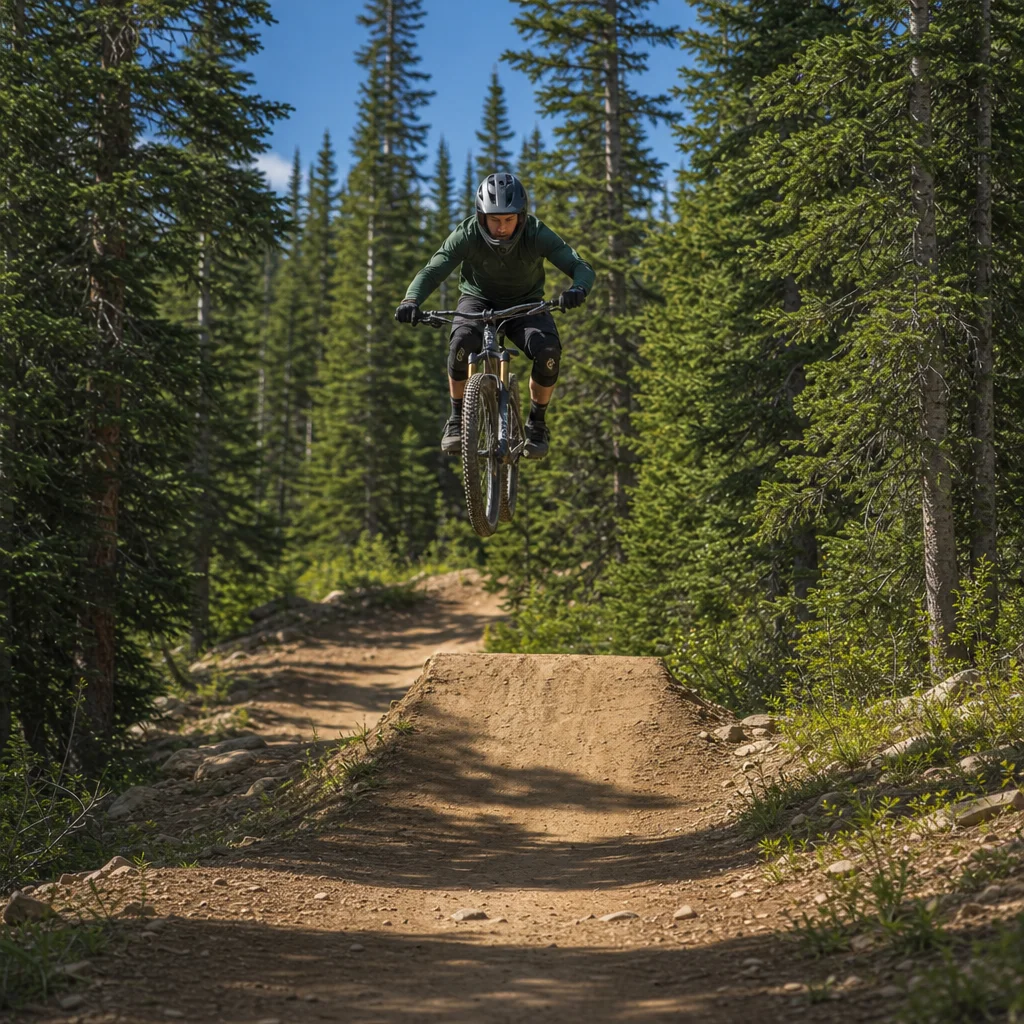
An unfamiliar climb is difficult to pace because the first section tells you very little about the whole effort. A gentle opening may lead to a long, steady grade, while a short steep ramp can make the entire route feel harder than it is. If you start by matching the speed of a familiar climb, you may spend your best energy before you know what the route demands.
The goal isn't to ride every part at one constant speed. It’s to choose an effort you can repeat, adjust when the terrain changes, and finish with enough control to handle the final pitch, a technical descent, or an unplanned route extension.
Start below your assumed pace
For the first several minutes, treat the climb as reconnaissance rather than a test. Use a gear that lets you pedal smoothly, stay seated where traction allows, and breathe without immediately chasing a faster cadence. Your early speed will be influenced by the surface, gradient, and traffic on the trail; your breathing and muscular tension are more useful clues than the number on your computer.
A good opening effort should feel almost too restrained. You should be able to speak a short sentence, although you may not want to deliver a speech. If your breathing becomes ragged quickly, your legs feel loaded before the climb has revealed its shape, or you’re already standing to maintain momentum on moderate ground, back off before fatigue forces the decision for you.
This cautious start has a trade-off. Riding slowly can feel inefficient, especially if the trail is smooth and you’re worried about losing momentum. But a small amount of unused capacity early is valuable when the route turns steeper. You can spend that reserve later with much better information than you had at the trailhead.
Use breathing and effort before numbers
Heart rate, power, speed, and elapsed time can all help, but none of them explains the route by itself. Speed falls on a rough or steep section even when your effort is steady. Heart rate can lag during a short ramp and can also rise because of heat, dehydration, stress, or accumulated fatigue. Power data is useful for riders who train with it, but a target that works on a known climb may not suit an unfamiliar trail.
Perceived effort and breathing are therefore useful first-line controls. On a long climb, aim for an effort that feels controlled and sustainable rather than merely comfortable. You should notice the work, but you shouldn’t be repeatedly forcing yourself back from the edge. If you can breathe rhythmically and relax your shoulders, hands, and jaw, you’re more likely to be using an effort you can maintain.
A simple progression works well:
- Opening section: easy enough to learn the surface and gradient.
- Middle section: settle into a steady effort that requires concentration but doesn’t cause panic breathing.
- Known or visible finish: increase only when you can identify where the extra effort will take you.
The exact intensity depends on your fitness and the length of the route. The principle is consistent: use breathing and muscular tension to prevent an enthusiastic first kilometer from deciding how the last kilometer feels.
Choose gears for sustainable movement
The best gear on an unknown climb is the one that keeps your pedaling smooth without making you feel trapped by either cadence or traction. Shift early when the trail begins to steepen. Waiting until your cadence has collapsed often leads to a rushed shift, a loss of momentum, or an unnecessary stand that spins the rear wheel.
Lower gears reduce the force required for each pedal stroke, but they can also make the bike feel less stable if you’re spinning without control. Higher gears preserve momentum on smooth, gradual terrain, yet they increase muscular strain and can make a short steep ramp disproportionately expensive. Your choice should change with the surface rather than follow a fixed rule for the entire climb.
On loose or technical ground, a slightly easier gear can help you stay seated and pedal with less force per stroke. Keep your upper body quiet, apply power smoothly, and avoid abrupt shifts in pressure that break traction. On a smooth, firm section, a harder gear may let you maintain momentum if your breathing remains controlled. Don’t interpret a higher cadence as automatically better or a lower cadence as automatically stronger; choose the combination that keeps the bike moving and your legs usable.
If the climb repeatedly changes between steep ramps and flatter connectors, shift before each change rather than after it. Use the flatter section to recover while keeping your effort moderate, and use the ramp to focus on traction, line choice, and steady pressure. Standing can be useful for a brief steep pitch or to change muscle position, but treating every ramp as a standing effort will usually cost more than it returns on a long climb.
Break the route into landmarks, not miles
When you don’t know the total distance, counting down to a finish you can’t see is poor motivation. Instead, divide the climb into visible or predictable sections: the next bend, a stand of trees, a creek crossing, a rock feature, a change in trail surface, or the top of a switchback. These landmarks give you short decisions without pretending that you know the whole route.
Use each one as a check rather than a target to attack. Ask whether your breathing is still controlled, whether your hands and shoulders are relaxed, whether you’re drinking normally, and whether the current gear gives you room for the next change in gradient. If the answer is no, adjust before moving on.
Landmarks also help you recognize false summits. A visible rise may only lead to another ramp, so avoid spending your reserve simply because the trail appears to end. When the route briefly flattens, take the opportunity to pedal lightly and look ahead. That pause can tell you whether the next section is a short technical rise or another sustained effort.
If the trail forks or the route is poorly marked, stop somewhere safe rather than trying to navigate while exhausted and moving. A few minutes spent confirming the direction is cheaper than committing to the wrong climb with limited food or daylight.
Check the route before committing: Trail conditions, closures, weather, and access rules can change. Before riding, check the current information from the land manager, park, or trail organization, particularly if the climb is remote or the forecast includes heat, storms, snow, or high winds.
Eat and drink before you feel empty
Food and water are part of pacing, not emergency repairs. On a long climb, waiting until you feel weak can make it difficult to recover while continuing to ride. Take small, regular drinks and eat modest portions that you already know you can tolerate on the bike. The exact amount depends on duration, temperature, your size, and how hard you’re riding, so avoid treating a single rigid intake number as universal.
The unknown route creates a reason to be conservative with supplies. If you expect a climb to take an hour but it could reasonably take much longer, carry enough for the longer possibility and know where your final reliable water source is. Don’t assume a creek, fountain, or store will be available unless you’ve confirmed it. Water treatment and refill decisions also depend on the local setting and current conditions.
Use a landmark as a reminder to drink or eat, especially when the trail demands constant attention. A few bites on a manageable section are easier than trying to unwrap food during a steep, rocky pitch. If your breathing is already uncontrolled, reduce the effort first; taking in calories while over the limit is less comfortable and may not solve the underlying pacing mistake.
Heat, cold, and altitude can change how the same climb feels. A pace that is reasonable on a cool morning may be too aggressive in direct sun. Likewise, riding higher than usual can make breathing feel difficult before your legs become the limiting factor. Treat these conditions as reasons to lower the opening effort and reassess more often.
Decide when to push and when to conserve
Unknown climbs require trade-offs. You can pace by maintaining a deliberately even effort, by riding conservatively until the route becomes clear, or by using every easier section to build time before the next steep part. None is always best.
An even perceived effort is usually the safest default. It prevents short ramps from dominating the ride and makes your energy use easier to predict. A conservative start is better when the climb may be long, the weather is demanding, you’re carrying extra gear, or there’s no dependable water or turnaround point. Using flatter sections more assertively can work when the surface is smooth and you’re confident that the next steep section is short, but it increases the chance that your legs will arrive at that section already loaded.
A useful rule is to push only when you can explain the reason. You might increase effort because the trail is entering its final visible section, because you’ve reached a known landmark, or because a short ramp must be cleared before a recovery section. “It feels easy” isn't always enough, since the route may have concealed the hardest terrain.
If you’re riding with others, agree on a regrouping approach before the climb. The fastest rider shouldn't turn every unknown section into a chase, and the slower rider shouldn’t be forced to spend their reserve matching a pace they can’t sustain. Regrouping at clear landmarks keeps the group together without requiring everyone to climb at exactly the same speed.
Recognize when the plan needs changing
A good pacing plan is flexible. Persistent heavy breathing, repeated loss of traction, cramping, dizziness, unusual weakness, or difficulty thinking clearly are signs to reduce effort and address the problem. Stop in a safe place if needed. Continuing because the summit “must be close” is a poor bargain when you don’t actually know where the summit is.
You can also adjust without stopping. Shift down, stay seated, shorten your pedal stroke, relax your grip, and let speed fall on the steepest section. Walking a short pitch may preserve more energy than forcing a stalled, unstable attempt, particularly if the alternative is overheating or damaging your legs for the rest of the ride. Getting back on after the pitch is a pacing decision, not a failure.
At the top, avoid treating the climb’s end as an automatic signal to sprint into the descent. Take a moment to drink, eat if needed, check your brakes and controls, and let your breathing settle. An unfamiliar route may still contain navigation decisions, exposed terrain, or another climb hidden beyond the apparent high point.
Make the next unknown climb easier
After the ride, note what the route taught you: where the grade changed, which gear range you used, when you ate and drank, and whether your opening effort left you with useful energy. If you use a cycling computer, save the route or mark major landmarks, but don’t rely on the device alone next time. A remembered false summit or waterless stretch can be more useful than an average speed figure.
For the next unfamiliar climb, begin with a deliberately restrained effort, establish a breathing rhythm, and use the first landmarks to gather information. Shift before steep changes, fuel before hunger becomes urgent, and save your strongest effort for terrain you can identify. That approach may not produce the fastest possible ascent, but it gives you a better chance of reaching the top in control—and of having enough left for whatever the route puts after it.