How to Climb Loose Gravel Without Spinning the Rear Tire
I’ll explain how seated position, gear choice, pedal timing, traction control, and line selection work together on loose climbs, so you can decide when to stay smooth, when to change tactics, and how to avoid wasting energy in wheelspin.
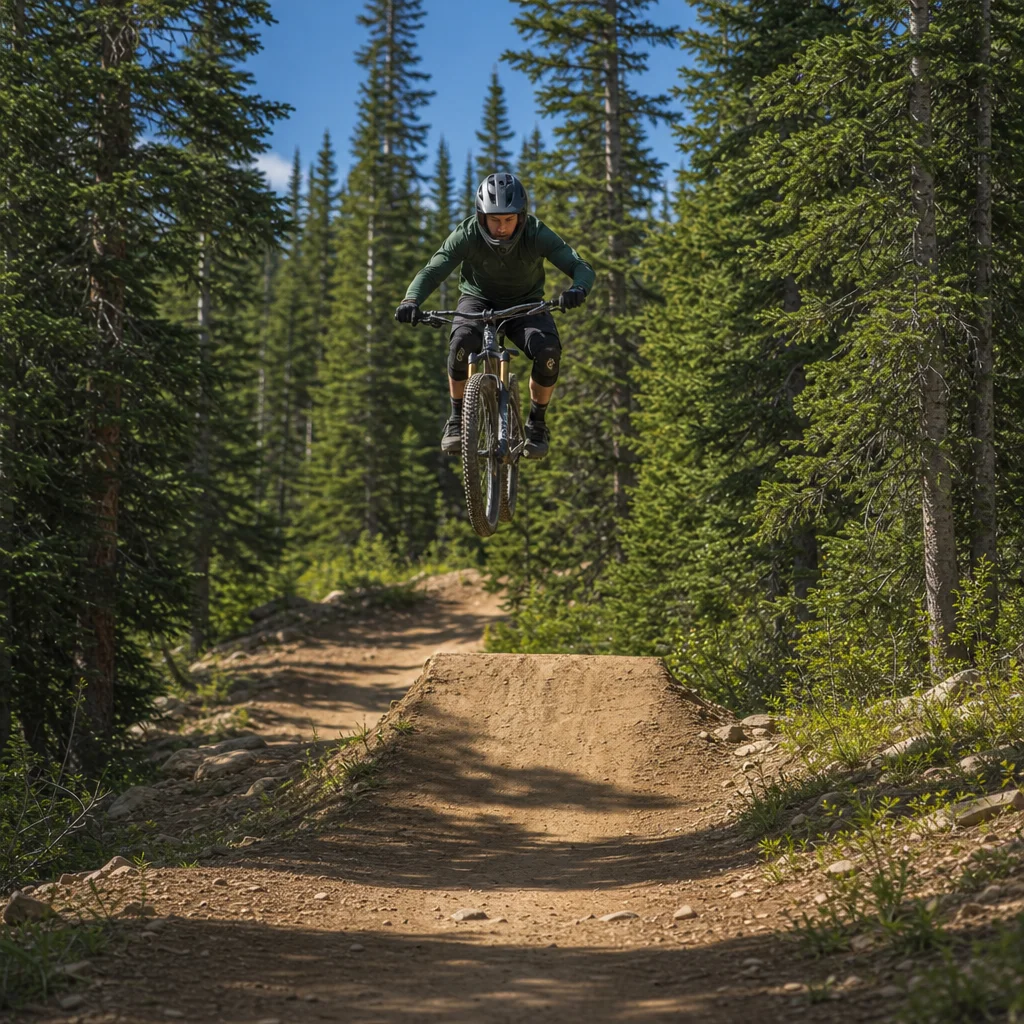
Loose gravel turns an ordinary climb into a traction problem. Your rear tire may look like it has plenty of grip, yet a small burst of pedal force can make it spin and send you backward. The answer usually isn’t simply “pedal harder.” You need to balance your weight, torque, speed, and line so the tire receives force gradually enough to stay connected.
For beginner riders, the most useful approach is to make several small decisions before the slope becomes steep: choose a manageable gear, settle into a stable seated position, watch the surface ahead, and keep your pedaling smooth. Standing can help in some situations, but it often makes loose climbing harder because it changes how your weight is distributed and increases the force reaching the rear tire.
Start with the seated position
On most loose gravel climbs, remain seated with your hips centered over the saddle or slightly toward its nose. This keeps your weight on the rear wheel while allowing your upper body to stay relaxed. If you sit too far back, the front wheel may wander or lift. If you lean too far forward, you can unload the rear tire and make wheelspin more likely.
Your torso should angle forward as the slope steepens, but that movement should come mostly from your hips rather than by rounding tightly over the handlebar. Keep your elbows bent and your hands light. A rigid upper body makes every small bump or patch of gravel more disruptive, while relaxed arms let the front wheel follow the surface without forcing you to make abrupt corrections.
The goal isn't to pin yourself to the saddle. You’re trying to maintain enough rear-wheel pressure for grip while keeping the front wheel weighted enough to track straight. On a steady fire-road climb, that often means a calm, seated posture with your chest low enough to keep the bike balanced and your hips stable enough to prevent unnecessary bouncing.
Select the gear before the slope gets loose
Choose a gear that lets you pedal at a controlled cadence without pushing hard on each stroke. A gear that is too high demands more torque from every pedal push. On firm ground, you may be able to muscle through that resistance, but loose gravel magnifies the problem: each forceful stroke can break the tire’s grip.
A gear that is too low has its own drawback. It may let you spin easily, but the bike can become difficult to keep straight if your cadence is frantic. Excessively quick spinning also makes it harder to time your pedal strokes around rocks, ruts, and patches of deeper gravel.
The best gear is usually one that leaves you with a little reserve rather than one that makes you strain immediately. Shift before the steepest or loosest section, while the pedals are still turning smoothly. If you wait until you’re already losing traction, shifting under heavy load can interrupt your rhythm and cause an additional surge of force.
Choose the gear before the gravel: Look ahead far enough to shift while the surface is still manageable. If the climb becomes noticeably steeper or looser, make the change early and keep your pedaling pressure steady through it.
Smooth out the pedal stroke
Wheelspin often begins with a single uneven pedal stroke. You push down hard on one side, the rear tire slips, you react by pushing harder on the other side, and the tire continues to lose traction. Instead, aim for a rounder, more even effort with no sudden acceleration.
You don’t need a perfect laboratory-style pedal stroke. Focus on avoiding sharp stomps, especially when your dominant leg reaches the top of its stroke and begins pressing down. Keep your ankles relatively quiet, maintain a stable pelvis, and let your legs turn at a pace you can repeat for the entire loose section.
Pedal timing matters when the surface is irregular. If you can see a larger rock, shallow rut, or patch of deep gravel ahead, try to arrive with the pedals in a position that gives you control rather than forcing a heavy downstroke at the obstacle. A brief reduction in pressure can help the rear tire roll over the rough patch. Once the tire is across it, resume your steady effort.
Avoid repeatedly coasting and then stamping on the pedals to regain speed. That pattern creates exactly the surges that loose surfaces punish. If you need to slow down, do it gradually. If you need more speed, add pressure progressively over several pedal strokes instead of trying to recover all at once.
Manage traction with your body
Traction improves when the rear tire is loaded consistently, but loading it doesn’t mean throwing your weight backward. Sudden weight shifts can make the bike pitch, cause the front wheel to wander, or briefly lighten the rear tire as your body settles.
Keep your weight low and centered. If the rear tire starts to spin, first ease off the pedals slightly rather than standing up or steering sharply. A small reduction in torque may allow the tire to reconnect with the surface. Once it grips again, resume with a gentler pressure. This is a useful recovery pattern: soften the input, stabilize the bike, then rebuild the effort.
If the bike begins to snake from side to side, look farther up the climb and reduce your upper-body corrections. Let the handlebars move only as much as necessary. Overcorrecting can break the rear tire loose and may put you onto a worse part of the road. Your line should be deliberate, but your hands shouldn’t fight every small movement.
Standing can be useful when you need a short burst of power, when a step is too abrupt to pedal through seated, or when you need to reposition the bike over an obstacle. On continuously loose gravel, however, standing often reduces rear-wheel traction because your weight moves away from the saddle and your pedal force becomes less consistent. Treat it as a specific tool, not the default solution to a difficult climb.
Pick the surface with the best compromise
The smoothest-looking line isn’t always the fastest or most secure. A broad patch of loose, deep gravel may look easy but allow the rear tire to sink and wander. A slightly rougher strip with embedded stones can provide more predictable support. Your task is to find the line that offers enough grip without forcing large steering corrections.
Look several bike lengths ahead, then compare the options. Firmer edges may provide better traction, but they can also be crowned, rutted, or close to a drop-off. The center of a fire road may be flatter yet covered in marbles. On gravelly singletrack, the best line may be a narrow strip where the underlying soil or rock is visible.
Avoid riding directly over the largest loose stones when you can go around them without making a sudden turn. At the same time, don’t weave constantly in search of a perfect surface. Every sharp change of direction adds instability, and a line that is slightly imperfect but predictable is often better than one that requires repeated corrections.
Enter turns with a little speed already established and use a smooth, wide arc. Heavy pedaling while turning can make the rear tire slide, while abrupt braking can remove the momentum you need to climb out of the corner. If the turn is too loose or steep to pedal safely, slow before it, steer through with control, and resume pedaling once the bike is pointed where you want to go.
Decide between momentum and control
Momentum helps you carry through a short loose patch, but it isn’t a substitute for traction. Entering too quickly can make the bike skip across the surface and leave you with fewer options if the line changes. For a long climb, a controlled pace is usually more sustainable than trying to attack every loose section.
Use enough speed to keep the bike stable, then protect that speed with smooth inputs. If the surface becomes deep and the rear tire begins to spin, a slightly slower but consistent pace may work better than chasing a faster cadence. If the climb contains a brief steep ramp followed by easier terrain, preserving momentum can be worthwhile, provided you can keep the bike pointed straight and avoid an abrupt pedal surge.
These are trade-offs rather than fixed rules. Staying seated generally improves consistency but may not provide enough power over a sudden step. Standing can clear that step but may reduce traction on a long loose pitch. A low gear gives you climbing range but can make your cadence too quick. A higher gear feels calmer but may require more force per stroke. Choose the option that keeps the tire loaded and your inputs repeatable.
When the rear tire starts spinning
Don’t immediately shift your weight dramatically or jerk the handlebar. Ease the pedal pressure, keep the bike straight, and allow the tire to regain contact. If the climb permits it, steer toward a firmer patch with a gentle movement. Once traction returns, continue with a slightly lower effort rather than repeating the same forceful stroke.
If you can’t recover without stopping, aim for a controlled reset. Brake smoothly, put a foot down if necessary, and move to a surface where you can restart without digging the rear tire into the loose section. Restart in an easier gear, settle into the seated position, and build your effort gradually. A clean reset is more useful than several frustrated attempts that scatter gravel and drain your legs.
Check the consequence of a failed line: Before committing to a steep or exposed loose section, identify where you could safely slow, stop, or step off. Choose the line and speed that leave you room to recover, not just the one that looks shortest.
Build the skill on manageable climbs
Practice these techniques on a mild gravel incline before trying them on a steep fire road. Ride the same short section several times, changing only one variable at a time: use a slightly easier gear, move your hips a little forward, reduce pedal surges, or try a different line. This makes it easier to recognize which adjustment improved traction.
Pay attention to what happens immediately before the tire spins. You may be pushing too hard, entering a loose patch too slowly, sitting too far back, or choosing a line that requires constant steering. The cause is often visible in the seconds leading up to the slip, not in the slip itself.
For most beginner riders, the dependable starting formula is simple: shift early, stay seated, keep your weight balanced, pedal smoothly, and look for a firm, predictable line. Add speed only when you can maintain control, and stand only when the terrain gives you a clear reason. Loose gravel rewards patience more than force, and a climb completed without wheelspin usually begins with decisions made before the difficult section arrives.