How to Ride Shared Trails Around Hikers, Horses, and Other Cyclists
I’ll explain how to avoid the common mistake of treating a shared trail like a private downhill run, with practical habits for managing speed, communicating clearly, and passing hikers, horses, and cyclists safely.
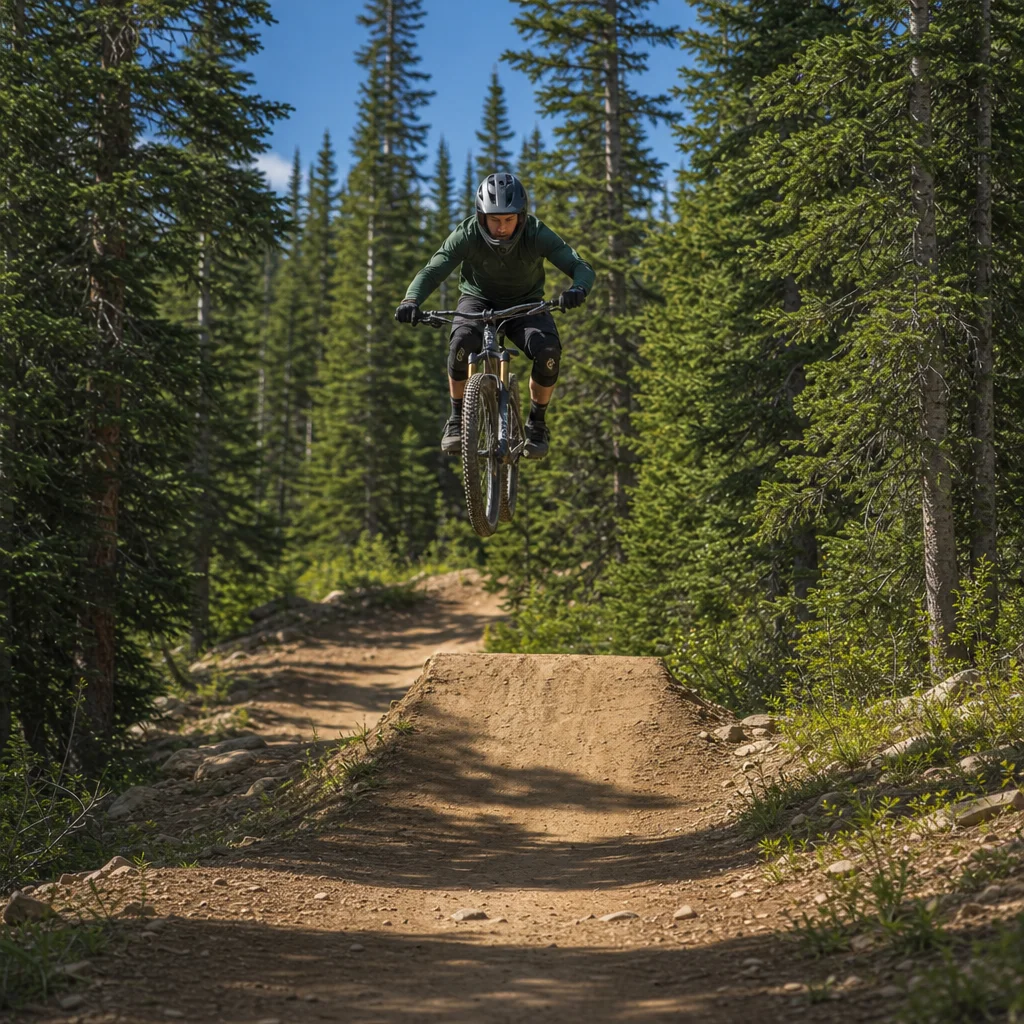
Shared trails become difficult when there isn’t enough room—or time—to negotiate. A hiker may not hear you, a horse may react to a sudden movement, and another cyclist may appear around a blind corner just as you’re carrying speed.
The solution isn’t to ride nervously or stop at every sight of another trail user. It’s to make your speed, position, and intentions predictable. On a mixed-use trail, good etiquette is really a form of risk management: you’re reducing surprises for everyone, including yourself.
Start by controlling the approach
The most important habit is to slow down before you reach a crowded, blind, or narrow section. Braking once you’re already beside someone is too late. If you can’t see far enough ahead to stop comfortably, your speed is higher than the trail currently allows.
Keep your index fingers near the brake levers on descents and loose terrain, but avoid covering the levers so tensely that you lose steering control. Use both brakes smoothly, with enough pressure to reduce speed without locking a wheel. Your goal is to arrive at an encounter with time to choose a line—not to arrive quickly and hope everybody else solves the problem.
Blind corners, trail crests, steep roll-ins, and sections with vegetation close to the tread deserve particular attention. A short burst of speed may feel harmless when the trail is empty, but it removes the margin you need when someone appears unexpectedly. Staying under control also makes your communication more effective because you’re not trying to shout, brake, and steer at the same time.
If you’re riding with friends, leave enough space that each rider can respond independently. Following closely creates a chain reaction: the lead rider sees a hiker, brakes hard, and the riders behind have no room to adjust. Gaps are especially important on narrow descents and around corners.
Check the trail’s local rules: Before riding an unfamiliar area, look at the posted signs, trailhead map, or land-manager website for current direction-of-travel, yielding, speed, and seasonal rules. Shared-trail etiquette is broadly similar across North America, but the signs and regulations at that specific trail take priority.
Make your presence easy to understand
A clear, early greeting is usually better than a vague warning at the last second. “Hi there,” “good morning,” or “biker behind you” gives a person a chance to register that you’re approaching without making the interaction feel like an order. If you need to pass, follow with a simple question such as, “Can I come by when there’s room?”
Avoid relying on a bell as your only communication. Bells can be useful, and some trails encourage or require them, but a sound doesn’t explain whether you’re one rider or a group, how close you are, or which side you intend to use. Ring or call out early, then reduce speed until the other person has acknowledged you or you have enough space to pass without depending on their reaction.
People may not respond immediately. Headphones, conversation, wind, and trail noise can all mask an approach. A person who turns around suddenly may move into your line, so don’t accelerate toward them simply because you’ve announced yourself. Give them time to look, understand, and choose a position.
When riding in a group, the lead rider should communicate for the group when possible. Tell the person how many riders are coming: “Three more behind me.” The last rider can also confirm when the group has passed. This prevents a hiker from stepping back into the trail after assuming the first cyclist was alone.
Passing hikers without creating pressure
Many hikers will move aside when they know you’re approaching, but they may choose a different side than you expect. Stay behind them until you have a clear view and enough space. Don’t squeeze through a gap between a person and the trail edge if a small steering error could put either of you off balance.
Pass at a walking pace or another speed that lets you stop immediately. The correct speed depends on the trail width, surface, visibility, and the hiker’s position. On a broad, open section, you may have plenty of room. On a narrow bench cut with a drop-off, the safest choice may be to stop, put one foot down, and wait for a wider spot.
When passing from behind, use the side that is safe and consistent with local signs and trail custom. Don’t shout “on your left” and then assume the hiker will move left; some people interpret the warning as an instruction, while others simply become startled. A greeting followed by a request is clearer: “Hi—could I pass on your left when you’re ready?”
Oncoming hikers require the same patience. Slow down early, move to a stable part of the trail, and leave room for both of you. If the trail is too narrow, stop and let the hiker choose a comfortable position. Keep your bike pointed where you intend to go rather than making a sudden swerve toward the edge.
Treat horses as a special encounter
A horse isn't just another trail user with a different preferred speed. It’s an animal that may interpret a bicycle, a rider’s clothing, or a sudden movement as a threat. Even a calm, experienced horse can react unpredictably when surprised, so your responsibility is to make the encounter slow and uneventful.
When you see horses ahead or approaching, reduce speed immediately and speak in a calm voice so both the rider and horse know you’re there. Ask the rider what they’d prefer. They may want you to stop, move to a particular side, dismount, or wait until they have reached a wider area. Follow that direction rather than applying a fixed passing rule.
If you’re approaching from behind, stay far enough back that you don’t pressure the horse. Don’t coast silently up to its hind legs, ring a bell repeatedly, or pass while the horse is visibly tense. Wait for the rider to acknowledge you and indicate that passing is appropriate. If you’re passing in the opposite direction, stop or move well aside where the trail allows, keeping your movements slow and predictable.
Avoid sudden noises, fast starts, and gestures toward the horse. Keep dogs under control if one is with you, and don’t assume a horse has seen you just because its rider has. Once you’ve passed, continue calmly rather than sprinting away. The goal is to give the horse a normal, understandable encounter from beginning to end.
Handle other cyclists with the same predictability
Encounters with cyclists tend to happen faster because the closing speeds are higher. On a two-way trail, stay to the appropriate side indicated by local signs and normal trail practice, and keep enough speed in reserve to stop or move aside. Oncoming riders may be descending quickly, climbing slowly, or managing a technical feature, so don’t assume their line from a distance.
When approaching a rider from behind, announce yourself early and give them time to respond. “Rider behind,” followed by “passing when clear,” is more useful than a shout delivered at the instant you reach their rear wheel. If you’re riding a fast e-bike or another bicycle capable of carrying significantly more speed, allow an even larger margin; the other rider may not judge your approach accurately.
Pass only where you can see the trail and leave adequate space. Don’t overtake in a blind corner, at a trail intersection, immediately before a feature, or where the slower rider would have to move toward an exposed edge. If the trail is narrow, waiting a few seconds is usually faster than forcing a tense pass and then dealing with a crash or argument.
On climbs, a slower rider may need the entire usable tread to maintain balance. On descents, a rider may need room to brake and choose a line. Neither situation gives you permission to pressure someone. Ask, wait for acknowledgment, and pass when both riders have a predictable path.
Decide who should yield without guessing
Yielding is more complicated than memorizing one universal rule. Some trails assign priority to hikers or equestrians, some publish direction-specific rules, and local etiquette may distinguish between a climbing rider and a descending rider. Posted signs and land-manager guidance are more authoritative than a slogan repeated online.
When no specific rule is visible, the safer decision is the one that avoids forcing another person into a difficult maneuver. A rider with less control, less room, or a more vulnerable position may need you to wait, even if you technically have momentum or a customary priority. On a narrow uphill section, for example, stopping a climbing rider may be awkward; on a steep descent, stopping the descending rider may be the more practical choice. Communicate rather than turning that judgment into a contest.
If you do yield, make it complete. Slow or stop well before the other trail user reaches you, move to a stable location, and keep your bike out of the travel line. Don’t stop just around a corner or in the center of a narrow trail. After the encounter, check that the trail is clear in both directions before accelerating.
Recover when communication goes wrong
Misunderstandings happen even when everyone is trying to be courteous. Someone may move the wrong way, fail to hear you, or become annoyed by an approach. The best response is to reduce speed, create space, and avoid turning a minor mistake into a confrontation.
If a pass feels uncertain, abort it. Brake gently, return behind the person, and wait for a better opportunity. If you startle someone, a brief apology is more useful than explaining why they should have heard you. If another rider passes too close, let them go rather than chasing them down to make a point.
After a near miss, consider what you could change: approach speed, warning distance, cornering position, group spacing, or route choice. That review is more valuable than deciding who was technically at fault. Shared trails work best when users leave one another enough margin to make ordinary mistakes without serious consequences.
Build the habit before the busy section
Before each ride, check your brakes, make sure your bell or voice is usable, and understand whether the route is shared, one-way, seasonal, or subject to special restrictions. While riding, scan farther ahead than the distance you need for your next corner, and treat every blind section as a place where another user could already be present.
The practical pattern is simple: slow early, communicate clearly, wait for acknowledgment, and pass only when there is room for both people to remain comfortable and in control. Hikers, horses, and cyclists don’t need identical treatment, but they all benefit from the same predictable behavior. If you make that behavior automatic, you’ll spend less time apologizing for close calls—and more time enjoying the trail without making it harder for anyone else to do the same.