Technical Climbing in Loose Southwestern Desert Terrain
Lowering tire pressure can help on loose rock, but too little support creates new problems. I’ll explain the first adjustments to make for traction, pedal timing, line choice, and controlled recovery on dry Southwestern climbs.
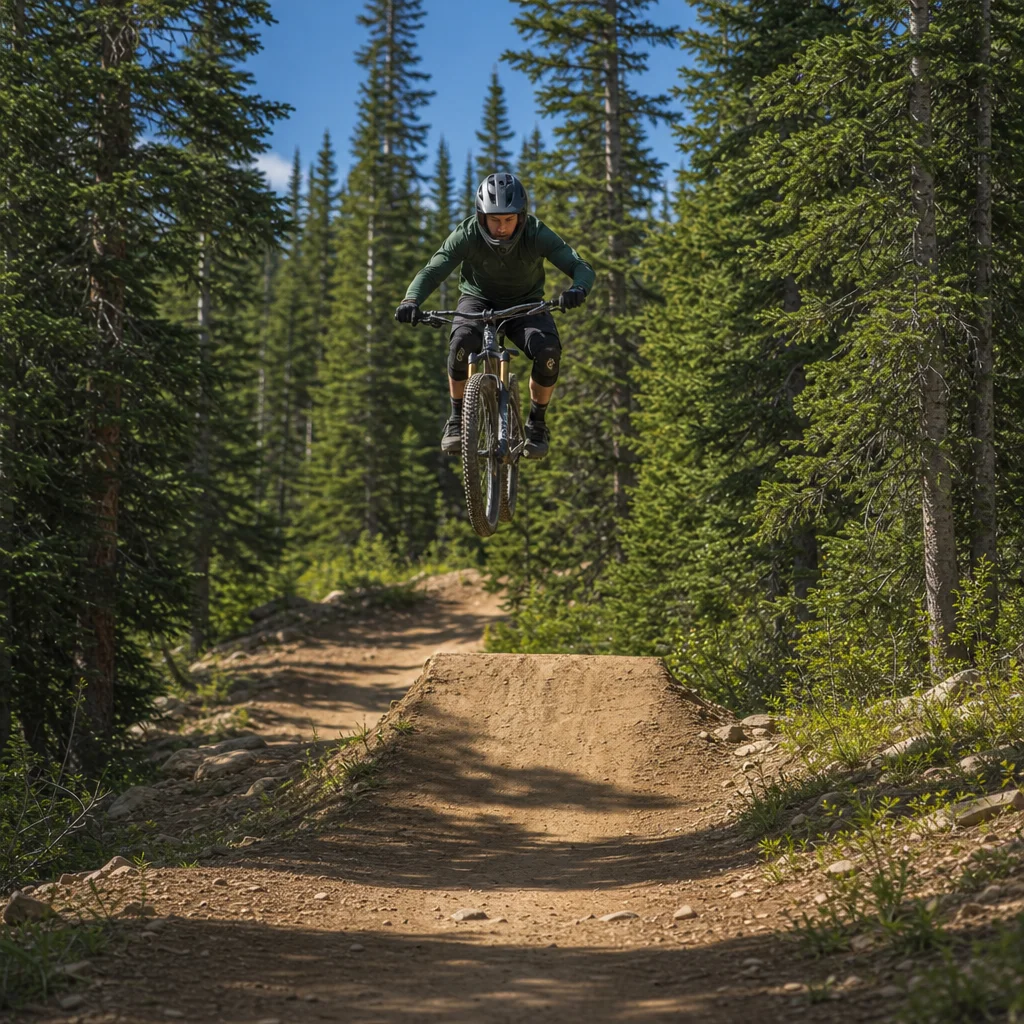
Loose Southwestern climbs rarely fail because they’re simply too steep. More often, the surface takes away your traction a few inches at a time: dust over hardpack, rounded rock under a layer of grit, or a ledge that breaks your rhythm just as the rear tire starts to spin. The useful response isn’t to add more effort everywhere. It’s to preserve traction, keep the bike moving, and make fewer corrections.
For technical climbing in this terrain, a minimalist approach works well. Start with tire support, body position, pedal timing, and a line you can actually ride. Add recovery skills after those basics are dependable. Extra equipment may help with a long day in remote country, but it won’t compensate for a tire that’s too soft, a gear that’s too tall, or a line chosen after your momentum is already gone.
Set up for support, not just grip
Tire pressure is the first adjustment worth checking, but “lower” isn’t automatically better. A small reduction can help the tread conform to sharp, uneven rock. Too much reduction can make the tire squirm during a direction change, burp air from a tubeless rim, or allow the rim to strike when you load the rear wheel on a ledge.
Use your normal pressure as a starting point and make changes in small steps. Your weight, tire casing, rim width, tubeless setup, and riding speed all affect the safe range, so there isn’t one pressure that applies to every rider. If the rear tire feels vague when you steer around a rock, or you hear rim impacts, the problem may be insufficient support rather than insufficient grip. A slightly higher pressure can give you more usable traction because the tire remains predictable under load.
Before a ride, check that both tires are holding air and that the valves and rim tape are behaving normally. For a technical route, a compact pump, tubeless plug kit, and the means to reinflate a tire are more useful than carrying every possible spare. If you run tubes, carry a spare tube that fits your wheel and tire. The minimalist principle isn't to carry nothing; it’s to carry the small tools that let you solve the likely failures.
Suspension setup matters for the same reason. Too much compression or too little available travel can make the front wheel deflect off embedded rocks instead of tracking over them. Too little damping can cause the bike to move excessively when you’re pedaling out of the saddle. Begin with the manufacturer’s pressure and rebound recommendations, then make only one change at a time. The goal is a bike that stays composed while climbing, not one that feels plush at the expense of support.
Check the desert before you roll: Confirm current trail access, weather, heat exposure, water availability, and any land-management restrictions for your route. Dry conditions can make a climb rideable one day and dangerously hot, storm-affected, or closed the next.
Keep the rear tire loaded without burying it
On loose rock, traction comes from managing weight rather than simply moving it forward. Keep your chest low and your elbows relaxed, but avoid folding over the handlebar. Your hips should stay close enough to the front of the bike to keep the front wheel tracking, while your weight remains centered over the bottom bracket instead of hanging entirely over the rear axle.
When the climb steepens, slide forward slightly on the saddle or hover just above it. This helps prevent the front wheel from wandering without unloading the rear tire. If you stand too early, your body weight rises and shifts from side to side with each pedal stroke. That movement can break rear-wheel traction, particularly on loose-over-hard surfaces. Sitting and applying smooth power is often more effective than standing and forcing the pedals.
Use a light grip. A tense upper body makes every small deflection feel like a steering emergency, and you’ll tend to overcorrect. Let the front wheel move around minor stones while keeping your torso quiet. Your hands guide the bike; they shouldn’t fight every movement of the tire.
Choose a gear that lets you maintain a steady cadence without spinning so quickly that the rear tire scrabbles for grip. A gear that’s too hard encourages forceful, uneven strokes. One that’s too easy may produce rapid pedal movements that are difficult to time around rocks. The best gear is usually the easiest one that still gives you deliberate control over each stroke.
Time the pedals around the terrain
Pedal timing is especially important when the surface is loose. If you drive hard into a patch of gravel with your weight over the rear wheel, the tire can spin before it reaches the firmer rock beneath. Instead, look several wheel revolutions ahead and decide where each foot should be as you enter the technical section.
Approach a rock or ledge with the crank positioned so your stronger foot can deliver power after the front wheel clears the obstacle. You don’t need to make every climb a perfectly choreographed sequence, but you do want to avoid having the pedal at the bottom of its stroke while the rear wheel hits a square edge. That position can stall the bike or force a pedal strike.
As you pass over uneven ground, use short, controlled bursts rather than one continuous surge. Ease off slightly before the loose patch, maintain enough pressure to keep the chain loaded, and add power as the tire finds a firmer surface. This feels less dramatic than attacking the obstacle, but it keeps the contact patch working for you.
Pedal strikes deserve particular attention in rocky desert terrain. If the trail funnels you between rocks, keep your pedals level and let the bike move beneath you. When you have room, pedal through the obstacle with the crank position you planned. If there’s no safe timing option, a brief ratchet—partial pedal strokes that avoid bringing either crank fully around—can keep you moving without exposing a pedal to the highest rock.
Select a line before the steepest section
A good climbing line usually has three qualities: a firm entry, a manageable change in direction, and an exit that leaves room to keep pedaling. The shortest line is often not the easiest. A diagonal across loose rock may look efficient but can make the rear tire slide sideways. A slightly longer route that keeps the bike pointed uphill may require less correction and less power.
Scan for darker, firmer rock, shallow depressions, and the edges of embedded stones that offer a ramp rather than a vertical hit. Avoid loose piles that have no obvious base. In Southwestern terrain, a clean-looking strip of pale dirt may be softer than a rough section of exposed rock. Surface color is a clue, not a guarantee; judge the texture, slope, and likely wheel path together.
Use the whole trail when it’s permitted and considerate to do so. Set up wide for a turn, then aim for the exit rather than staring at the inside edge. Keep your eyes beyond the immediate front wheel. If you look only at the rock you’re trying not to hit, your steering will often drift toward it.
Switchbacks require a different compromise. Enter slowly enough that you can turn without braking hard in the loose center of the corner. Brake before the turn, release or lighten the brakes as you steer, and keep your outside foot weighted. On a steep uphill switchback, you may need to choose a wider, more gradual arc instead of attempting a tight pivot. If the inside edge is banked, it can provide support, but don’t force the bike onto an unstable lip simply to shorten the corner.
Recover before the stall
The most useful recovery skill is recognizing a failing climb early. If the rear wheel starts spinning, stop adding force. Ease your pedal pressure, straighten the bike if possible, and keep your weight centered. Sometimes the tire will regain grip and carry you through. If it doesn’t, continuing to mash usually digs a hole and leaves you with less control.
When the front wheel wanders, lower your chest slightly and soften your hands rather than making a sharp steering correction. A small change in pressure on the bars may be enough to bring the wheel back. If the bike begins to stall, unclip only when you have a stable option for a foot. Reaching blindly for the ground on a steep, rocky slope can put your ankle or knee onto an awkward rock.
If you need to dab, aim for a firm, level spot and stop pedaling smoothly. Keep the bike pointed in a direction that gives you room to restart. Before trying again, look back at the section that stopped you. Decide whether the issue was the gear, the line, the pedal position, or simply an approach that was too slow. A restart from a stable patch is usually more productive than immediately repeating the same attempt.
Some sections are better treated as a short hike. Step off on the uphill side when practical, move the bike to a safe position, and avoid standing below a loose rock that could roll. Walking a ledge or a blind, exposed turn isn’t a failure of technique; it’s a sensible way to preserve energy and reduce the consequences of a mistake.
Keep the essentials simple
For a technical desert climb, your most important supplies are adequate water, a way to repair or reinflate a tire, a basic multitool, and a communication or navigation method appropriate to the route. Carry protection suited to the terrain and your riding speed, including a properly fitted helmet. On remote or hot routes, plan for delays rather than assuming the ride will proceed at the intended pace.
The mechanical checks are brief: confirm that the brakes feel firm, the tires are seated and inflated, the drivetrain shifts acceptably, and nothing is loose at the cockpit or wheels. A clean, lubricated chain makes controlled climbing easier because shifting under load is less likely to become a problem. Shift before the steepest pitch, not halfway through it.
Technical loose terrain rewards restraint. Reduce pressure only enough to improve contact, choose a gear that supports smooth strokes, load both wheels without locking your body into one position, and read the line before you commit. If traction disappears, recover early instead of trying to overpower the slope. Those habits give you more control with less equipment, less wasted energy, and fewer unplanned dismounts.