What to Do When a Trail Is More Technical Than Expected
When a trail suddenly turns steep, rocky, or exposed, deciding whether to ride on can feel harder with tired legs and a waiting group. I’ll help you weigh walking, scouting, rerouting, or continuing while protecting your energy, confidence, and safety.
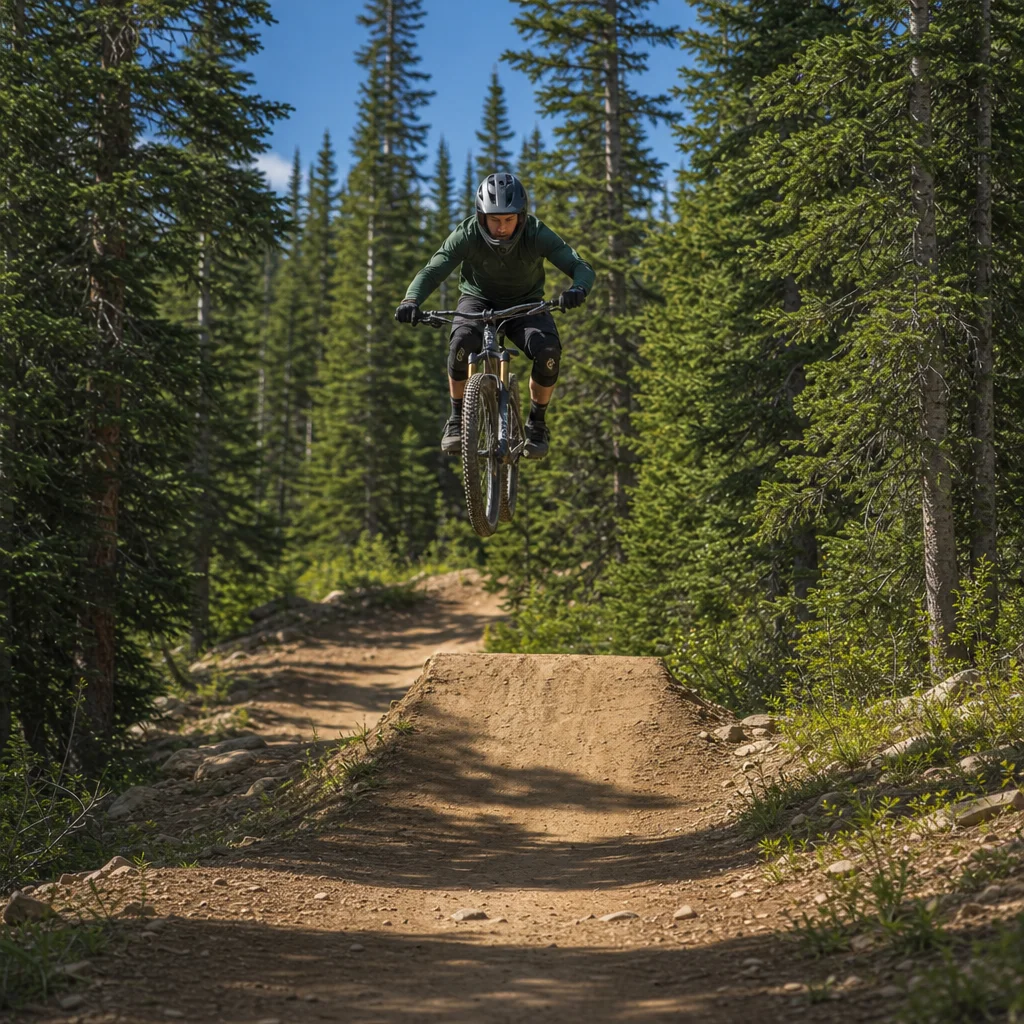
A trail can become more technical than expected without doing anything dramatic. The surface changes from packed dirt to loose rock, a short climb turns into ledges, or a narrow descent reveals consequences you couldn’t see from above. The difficult part isn’t only the feature itself; it’s making a good decision while tired, uncertain, or aware that other riders are waiting.
You don’t have to prove that you can ride every section. A sensible choice considers the trail, your current ability, your remaining energy, and what happens if the attempt goes badly. Walking a difficult feature, scouting it first, or choosing another route can be the strongest decision available—not a failure to complete the ride.
Stop before you commit
When a section catches you by surprise, slow down or stop in a place where you’re safely out of the main line. Don’t pause on the blind side of a jump, in the middle of a narrow descent, or directly below a rider who may lose control. Move to a visible shoulder or a wider area if one is available.
Take a few seconds to settle your breathing and look beyond the first obstacle. Ask yourself what the trail does after the feature, not just whether you can get over the rock or through the turn. A difficult entrance followed by a steep off-camber exit may be much more consequential than the first move suggests.
A quick assessment should cover four questions:
- Can you identify a clear line from start to finish?
- Is the surface predictable enough for your tires to grip?
- Do you have enough room to slow, stop, or recover from a mistake?
- What is the likely consequence if you lose balance or miss the line?
If you can’t answer those questions, you don’t yet have enough information to ride it confidently. That is a reason to scout or walk, not a reason to guess.
Check the conditions before choosing a line: Trail difficulty, closures, weather, and riding guidance can vary by location and change during the day. Confirm current local signs, posted notices, and land-manager guidance, especially if the section is wet, icy, recently damaged, or exposed to changing weather.
Decide what kind of problem you’re facing
Not every intimidating feature requires the same response. Separating the problem into type and consequence helps you avoid both unnecessary retreat and reckless commitment.
A feature may be technically difficult because it requires a skill you haven’t developed yet, such as lifting the front wheel over a step, controlling braking on loose terrain, or holding a precise line through roots. It may also be difficult because the conditions have changed. Wet roots, deep dust, fallen branches, poor visibility, or trail damage can turn a familiar section into a different problem.
Your physical condition matters too. A feature that would be manageable early in a ride may become unsafe after a long climb, missed food, dehydration, or repeated hard efforts. Fatigue makes it harder to keep your eyes up, control braking, and respond to small changes in balance. If your hands are cramping or your attention is narrowing, treat that as useful information rather than something to ignore.
Finally, consider consequence. A low-speed dab on a smooth uphill isn't equivalent to a fall beside a drop, into a tree, or onto a rocky landing. When the consequence is serious, your confidence should come from a clear, repeatable plan—not from pressure to keep moving.
When walking is the right choice
Walking makes sense when you can’t see a reliable line, can’t control your speed, or don’t have enough space to recover. It’s also the sensible option when the feature is beyond your current skill level and the available landing or runout leaves little margin for error.
Before stepping onto the trail, look for a safe place to dismount. If the trail is narrow, keep your bike on the uphill side when practical and remain alert for riders approaching from either direction. On a steep section, use a controlled walking position rather than trying to jog beside the bike. Keep your footing deliberate, and don’t let the bike pull you downhill.
Walking can cost time and energy, especially if you have to push up a steep pitch. Even so, one short hike-a-bike is usually less costly than a crash that leaves you injured, damages the bike, or drains your confidence for the rest of the ride. If you’re already tired, choose the option that preserves enough energy to get home safely, not the one that looks fastest for the next thirty seconds.
You may also decide to walk only the hardest part. Look for a place where you can remount without immediately entering another obstacle. Before doing so, check your pedals, feet, and body position; an awkward remount on a slope can create a new problem.
When scouting can change the decision
Scouting is useful when the feature looks worse from a distance than it actually is, or when the correct line isn’t visible from your approach. Walk far enough to see the entry, the main obstacle, and the exit. Pay attention to where the trail widens, where the surface changes, and whether a safer alternate line exists.
As you walk, notice what the trail asks you to do. Does it require steady braking, a gentle direction change, a front-wheel lift, or simply commitment to a firm line? Are there roots or rocks that can be rolled, or do they create abrupt steps? Is the apparent shortcut actually steeper than the main route?
Scouting doesn’t automatically make a feature rideable. It gives you better information. If you still can’t describe your speed, line, body position, and stopping plan, walking remains a sound choice. If the feature becomes understandable and the consequences are modest, you may decide to ride it slowly and deliberately—or save it for a future ride after practicing the relevant skill somewhere more forgiving.
When scouting with a group, avoid standing in the trail or below the feature. Let other riders know where you are, and make sure everyone understands whether you’re moving, waiting, or walking through. Good communication prevents a cautious decision from creating a different hazard.
When rerouting is better than forcing the main line
Reroute when the trail has become unsuitable for your ability, your equipment, or the day’s conditions. A marked easier line, bypass, service road, or nearby connector may allow you to continue without spending all your energy on one section. If no safe alternative is visible, turning around can be the appropriate route choice.
Rerouting is especially valuable when the difficulty is likely to continue. One unexpected rock garden may be manageable; a long sequence of steep, exposed features late in a ride may not be. Look at the bigger route decision: how much climbing remains, how far you are from assistance, whether daylight is limited, and whether your group has enough food, water, and mechanical margin to continue.
Don’t assume that a bypass is automatically safer. It may be rougher, steeper, less traveled, or subject to its own closure. Check signs and trail intersections, and avoid creating an unofficial shortcut that damages the trail or puts you onto terrain that isn’t open to bikes. If the only alternative is an unmarked line through sensitive ground, stay on the established route or turn back.
When continuing is reasonable
Continue only when you can identify a manageable line and have enough control to use it. Start with the simplest version of the feature: the firmest surface, the widest line, and the least consequential exit. Remove distractions such as trying to match another rider’s speed or attempting a move you haven’t practiced.
Set your speed before the difficult part rather than entering fast and trying to brake through it. Keep your eyes on the line you want, use light and controlled braking, and let the bike move beneath you while keeping your weight balanced. The exact technique depends on the feature, but the decision should be made before you enter it.
Have a bailout plan. Know where you could put a foot down, stop, or leave the main line if the feature changes. A bailout plan doesn’t make every feature safe, but it helps you recognize early when the attempt is no longer going as intended. If you lose the line, tense up, or find yourself braking harder than planned, choose the safest available exit instead of trying to rescue the original plan at all costs.
A successful ride through one section also doesn’t mean you should continue riding every similar feature. Reassess after the attempt. If the effort used more energy or concentration than expected, adjust the rest of the ride accordingly.
Handling pressure from a group
Group pressure can make an ordinary decision feel like a test. You may worry about slowing everyone down, appearing inexperienced, or making the group change its plan. Those concerns are understandable, but they shouldn’t decide whether you enter a feature with consequences you don’t accept.
Use direct language: “I’m going to walk this,” “I need to scout it,” or “I’m taking the easier line.” You don’t need a long explanation. A group that rides responsibly should allow different choices, and experienced riders generally understand that ability, fatigue, and risk tolerance vary.
Agree on a meeting point before separating. If you walk while others ride, the group should wait somewhere safe rather than at the bottom of a blind feature. If you reroute, confirm where you’ll reconnect and avoid splitting up when someone lacks navigation, water, communication, or the energy to manage alone.
The group should also avoid turning a cautious rider into a spectator for the rest of the day. Offer useful information without insisting on an attempt. There’s a difference between encouraging someone and treating their hesitation as an obstacle to the group’s schedule.
Preserve energy after the decision
Technical surprises often cost more energy than the feature itself. Stopping, pushing, repeating a line, and managing nerves can raise your effort level quickly. Once you’ve made your choice, settle into the next section rather than carrying frustration into it.
If you walked or rerouted, use the easier terrain to recover. Drink before you feel depleted, eat if you’re approaching the point where concentration fades, and adjust your pace on climbs. Keep enough reserve for navigation, mechanical problems, and the trip back to the trailhead. Turning around safely requires energy too.
If the problem was a skill gap, make a note of the specific demand. “Too technical” is less useful than “couldn’t control speed on loose downhill” or “couldn’t see a reliable line over the step.” Later, practice that skill on a lower-consequence feature, ideally with instruction or a rider who can give clear feedback. The goal is to expand your options gradually, not to convert one pressured attempt into a habit.
A simple decision framework
When you’re unsure, use this sequence: stop safely, look through the feature, assess the surface and consequence, and check your physical and mental condition. Then choose among four responses: ride it if the line and risk are acceptable, scout it if information is missing, walk it if control or consequence is unfavorable, or reroute if the difficulty is likely to continue or the route no longer fits the day.
If the choice still feels unclear after scouting, treat uncertainty as a reason to reduce exposure. You can return with more practice, better conditions, or a riding partner who can help you learn the feature. A trail will still be there more reliably than your confidence or your bike will be after an avoidable crash.
The practical next step is to decide your personal limits before the ride, including what kinds of exposure, surface, and fatigue you won’t accept. On the trail, stop early enough to preserve choices, communicate your decision plainly, and protect the energy you need for the rest of the route. Choosing to walk, scout, reroute, or continue isn't about looking brave; it’s about making the option that keeps the ride manageable from that point onward.