Yielding on a Narrow Trail With No Good Passing Spot
I’ll explain how to handle a narrow trail when neither rider has a good passing spot, from communicating early to choosing stable ground and protecting the trail edge. You’ll also learn how to avoid turning a courteous yield into a risky, awkward maneuver.
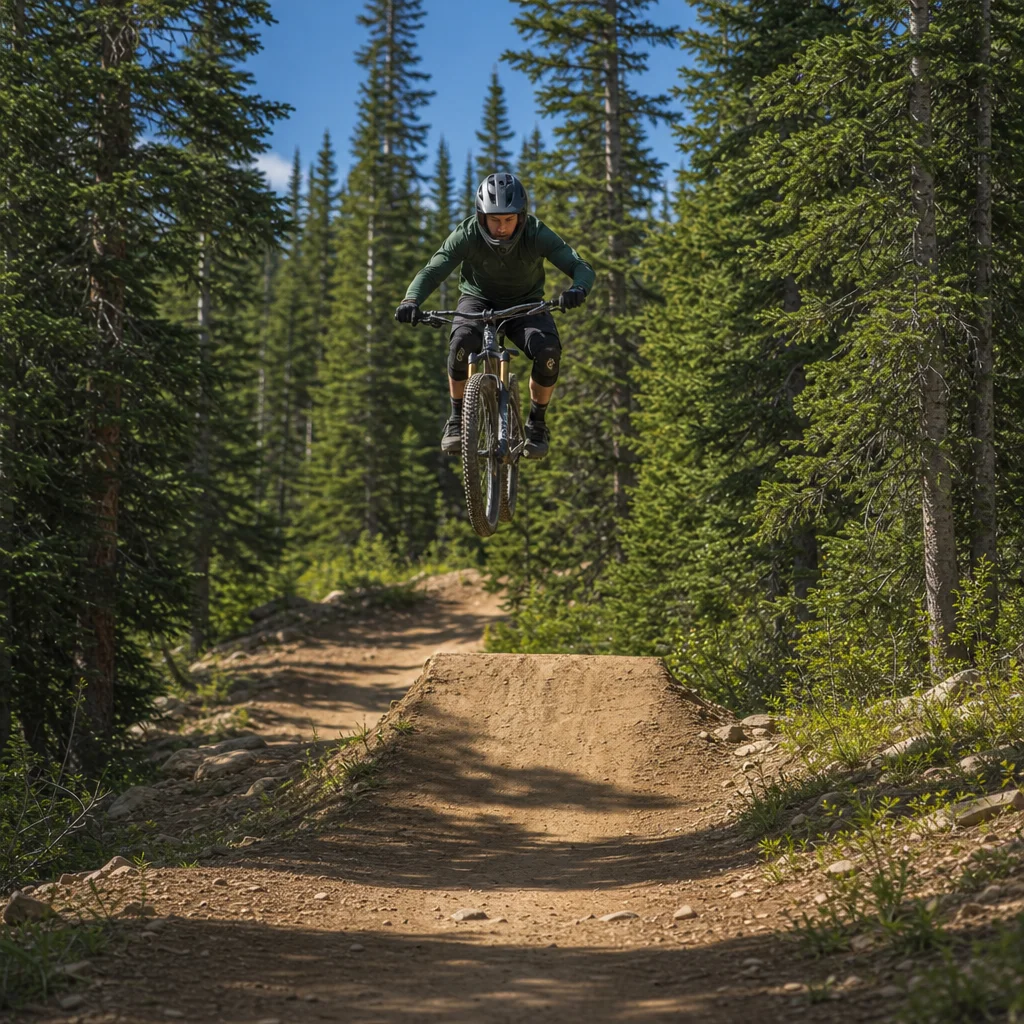
When a narrow trail offers no safe passing spot, the right answer usually isn’t to squeeze past. Slow down early, communicate clearly, and look for a place where the person yielding can stop without putting a tire—or a foot—on unstable ground.
The difficult part is that “yield” doesn’t always mean “move immediately.” On a bench cut, steep side slope, loose traverse, or rocky chute, an apparently small move can create a real fall or trail-damage risk. Good trail etiquette depends on making the safest choice for everyone, not on following a passing ritual so rigidly that it becomes dangerous.
Start communicating before the trail closes down
If you see another trail user ahead, reduce speed while there’s still room to do so. A calm greeting such as “Hi—can we find a spot to pass?” is more useful than waiting until both parties are at the narrowest point. Early communication gives the other person time to understand your position and scan for a suitable place to stop.
Use a normal speaking voice rather than shouting a command. “Could you let me by when there’s a wider section?” leaves room for discussion, while “Coming through” can sound as though the other person is expected to solve the problem immediately. If wind, distance, or trail noise makes speech difficult, a brief wave and a slower approach can communicate your intention without adding confusion.
Don’t assume the person ahead has seen you. They may be focused on a technical feature, wearing headphones, riding with a group, or simply unable to look behind them safely. Keep enough space to stop without braking abruptly, and avoid freewheeling directly onto their rear wheel. A little patience is much easier to manage than a rushed pass.
If you’re approaching someone from behind, remember that the slower user may have less control over where they can stop. A hiker with a dog, a rider on a loaded bike, or someone negotiating loose rock may need more time and space than you expect.
Decide who should wait—and where
Passing conventions vary by trail system and user group. In many riding situations, the person who can reach a safe pullout more easily will yield, rather than the person who technically has priority. Uphill and downhill practices also differ: some trails commonly give the climbing user priority, while other situations are handled by whoever can stop safely with less disruption. Local signs, trail design, and established etiquette matter.
What should remain consistent is the safety test: nobody should be pressured onto an unstable edge, into a blind corner, or into the path of a technical feature. If one person is already committed to a narrow section, the other should generally wait for a place where that person can regain control and move aside without a risky maneuver.
Look beyond the next few feet. A wider patch may appear close, but it might be on the outside of a turn, covered in loose gravel, blocked by roots, or followed immediately by another narrow section. The best stopping area is usually level enough to stand or pause comfortably, firm enough to support a foot or tire, and visible to approaching users.
If you’re the one yielding, say what you’re going to do: “I’ll stop at the next flat spot.” If the other person is yielding, give them time to reach it. Don’t keep advancing because the space looks almost wide enough. Many awkward encounters happen when both users move at once, each expecting the other to make the final decision.
Check the local passing custom: Before riding a busy or unfamiliar trail, look for posted right-of-way guidance and current information from the land manager or trail organization. Local conventions may differ, and temporary closures or one-way rules can change how you should handle a narrow section.
Protect the edge instead of forcing a pass
Trail edges are often less stable than they look. The downhill side may be undercut, loose, wet, or covered by vegetation that hides a drop. The uphill side may have exposed roots, a drainage channel, or a bank that can't support a bike being leaned into it. Stepping off the tread can also widen the trail and damage plants or fragile soil.
If there’s no stable place to put a foot, stay on the trail and wait. You don’t need to prove courtesy by balancing on a slope with one pedal down. Likewise, don’t ask another user to do that for your convenience. A short pause is preferable to a fall, a collision, or a damaged trail edge.
When a pullout is available, position yourself so the trail remains open and your bike doesn’t create a second obstacle. Move only as far as necessary. Keep your handlebars, pedals, and backpack clear of passing space, and make sure you’re not standing on the outside of a turn where an approaching rider won’t see you until the last moment.
On a steep traverse, the safer arrangement may be for one user to dismount and face the slope rather than stand at the downhill edge. That decision depends on the surface, exposure, and the person’s confidence. If it feels unstable, continue to the next suitable area instead of trying to imitate a maneuver that looks tidy from a distance.
When both users are already at the pinch point
If you meet head-on in a section with no passing room, stop moving forward. Keep your bike under control, place a foot where the ground is secure, and briefly discuss the options. Often one person can reverse to a wider spot, but backing up on loose or steep terrain can be harder than continuing forward. Choose the direction that gives the least experienced or least stable user the safest outcome.
Avoid turning the conversation into a debate about who has priority. The immediate problem is finding a safe position, not winning an etiquette argument. You can say, “There’s no good room here. I’ll back up to that flat section,” or, “I’m not stable on this edge—can we continue to the next widening?” Clear, specific language usually resolves the situation faster than vague gestures.
If bikes are involved, control them before trying to move around each other. A rider who is still clipped in, holding a brake on a slope, or balancing beside a drop may need to dismount carefully. Don’t reach across another person’s bars or grab their bike without permission. Keep hands and wheels out of the downhill fall line, where a small stumble could pull someone farther than expected.
Groups need extra discipline. The lead rider should alert the rest of the group, and everyone should avoid spreading across the trail while deciding what to do. If a group is yielding, move together only when there’s enough room; otherwise, let the approaching user pass one at a time while the rest remain stationary and visible.
Common mistakes that make the situation worse
One mistake is waiting until the last second to announce yourself. By then, the other user may have reached the only marginal stopping area, and both people may feel rushed. Another is assuming that a friendly bell or “on your left” automatically creates a safe passing opportunity. A signal communicates presence; it doesn’t manufacture space.
It’s also easy to mistake a smooth-looking strip beside the trail for a legitimate place to ride. Soft soil, moss, wet leaves, and loose rock can disappear under a tire. Riding off the established tread may damage the trail or put you into a drainage feature. If the only way to pass requires leaving the durable surface, waiting is usually the better choice.
Avoid passing on a blind corner, near a drop, immediately before a technical feature, or at the exit of a steep descent. Even if the current user agrees, another person may appear from the opposite direction. Give both parties a visible approach and enough room to stop if the situation changes.
Finally, don’t treat a yielded pass as permission to accelerate away immediately. Thank the person, proceed slowly until you’re well clear, and watch for additional users behind you. A rider who stops for you may still be repositioning, and a hiker’s dog or companion may not move at the same speed.
A simple decision process
When you see a narrow encounter developing, use this sequence: slow down, announce your presence, scan for a stable and visible stopping area, and agree on who will wait. If no suitable spot is close, keep your position and ask the other user to continue to the next widening—or offer to reverse if you can do so safely.
Once someone has stopped, keep the pass controlled and predictable. Leave generous clearance, avoid brushing vegetation or the trail edge, and don’t force the stationary person to lean farther away from the tread. If the space is still questionable, wait longer. There’s no time advantage in converting a ten-second pause into a crash or a damaged trail.
The most courteous choice on a narrow trail is the one that preserves control, protects the surface, and gives every user a clear way out. Learn the local conventions, but use them as guidance rather than a reason to ignore what the terrain is telling you. Slow communication and a stable stopping spot will solve most encounters; when they won’t, waiting is a perfectly successful outcome.