How to Safely Approach Blind Rollers on an Unfamiliar Trail
I’ll explain how to read a blind roller on unfamiliar singletrack, choose a safe entry speed, and respond when the trail disappears beyond the crest. You’ll also learn when to stop, inspect, or walk instead of guessing.
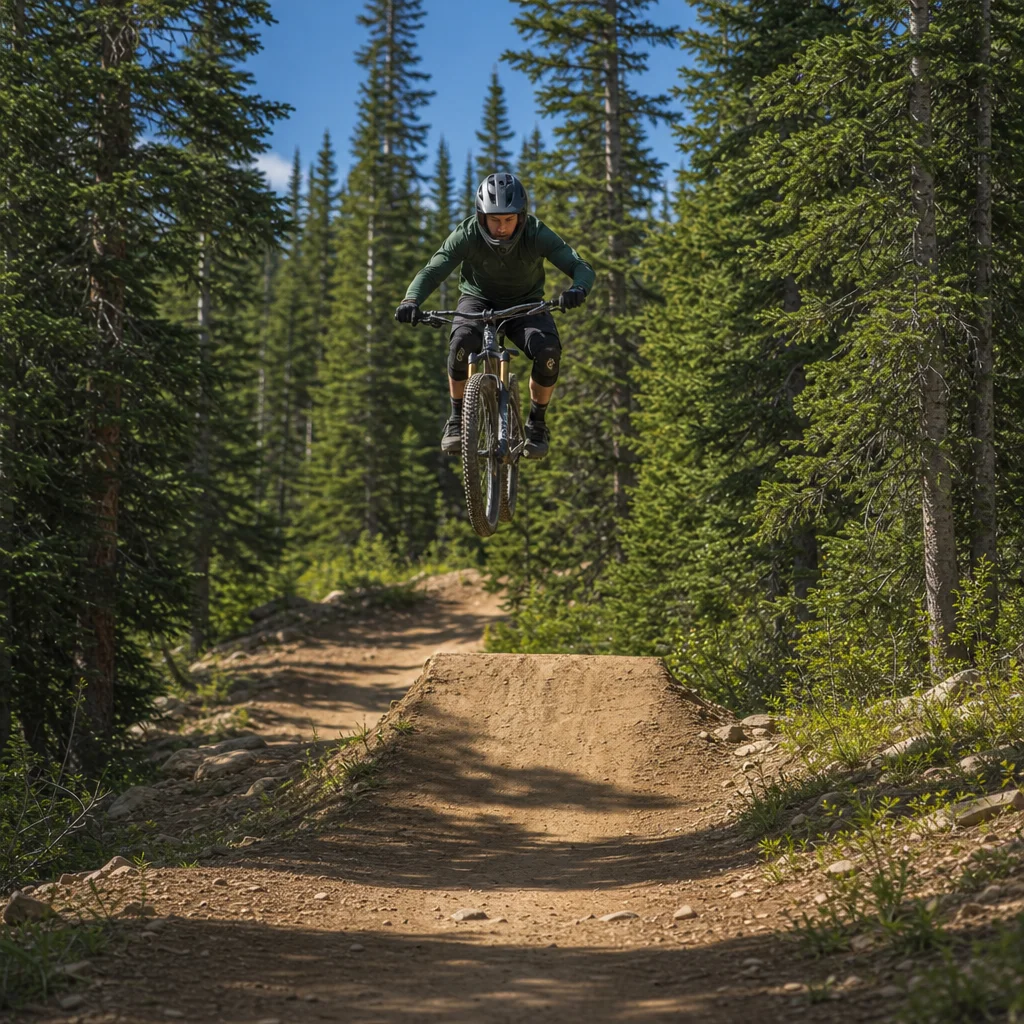
Blind rollers are easy to misread because the trail can look smooth and manageable right up to the point where the ground disappears. A crest may hide a steep drop, a sharp turn, an eroded landing, another rider, or an obstacle that only becomes visible after you’re committed.
The safest approach isn't to eliminate all uncertainty. It’s to manage uncertainty before the roller takes away your options. On unfamiliar trail, that means treating the first approach as an inspection, controlling your speed early, and choosing a line that leaves room for correction.
Read the approach before you commit
Start assessing the roller as soon as you can identify it. Look beyond the crest for clues about the trail’s shape: visible side edges, tree spacing, the angle of the next section, exposed dirt, tire marks, and any continuation of the trail through the vegetation. You may not be able to see the landing, but you can often determine whether the trail appears to continue straight, turn, narrow, or fall away sharply.
Pay attention to the approach itself. A flat or mildly descending run-in usually gives you more time to reduce speed. A steep approach, loose surface, or rough braking zone demands earlier control because braking at the crest may make the bike unsettled. If the trail is already forcing you to manage rocks, roots, or ruts, don’t treat the roller as an isolated feature. Your available attention and traction are already reduced.
A roller isn't automatically a jump. On an unfamiliar trail, assume the crest may conceal a change in direction or elevation rather than offering a takeoff. Keep your wheels on the ground unless you have deliberately inspected the feature and know that leaving the ground is appropriate.
Check the trail’s current condition: Before riding an unfamiliar route, look for current closures, construction, weather-related damage, directional rules, and local warnings from the land manager or trail organization. A feature that was previously rideable may be altered by rain, maintenance, erosion, or a new traffic pattern.
Choose a speed that preserves options
Your entry speed should allow you to stop before the point you can’t see, or at least slow enough that an unexpected feature won’t immediately overwhelm you. That may be much slower than the speed you’d use on a familiar roller. If you can see only a few feet beyond the crest, you don’t have enough information to justify carrying speed from the approach.
Brake before the roller, not as a last-second reaction at the top. Use both brakes smoothly while the bike is relatively stable, with more pressure available from the front brake when the ground isn't excessively steep or loose. As the front wheel reaches the crest, release some braking pressure so the suspension and tires can move over the change in terrain without a sudden pitch or skid. The exact timing depends on the surface and slope, but the general sequence is consistent: reduce speed early, settle the bike, then roll the crest with control.
Avoid dragging the brakes so heavily that your hands, arms, and suspension become tense. Constant braking can also make the bike feel less predictable over rough ground. The goal isn’t to crawl at any cost; it’s to arrive at the hidden section with enough margin to react.
If you can't stop safely before the blind point, that’s useful information. You entered too quickly for the available sightline. Reduce speed earlier on the next attempt, or stop and inspect before proceeding.
Set your body position for uncertainty
Approach the roller with a balanced, neutral stance rather than leaning far back. Keep your pedals level, your heels slightly dropped, your elbows and knees relaxed, and your hips centered over the bike. This position gives the bike room to move while keeping your weight available to steer and brake.
Leaning aggressively behind the saddle can make the front wheel light and reduce steering control just when the trail may turn. It can also make it harder to shift your weight forward if the front wheel needs traction on the far side. Conversely, staying rigid or hanging heavily over the handlebar can make a steep downslope feel abrupt and overload the front tire.
As the bike crests, allow your arms and legs to extend or compress with the terrain. Don’t pull up on the handlebar simply because the trail drops out of view. A small unintentional lift can become a front-wheel landing if the far side is steeper than expected. Keep looking where you want the bike to go, but don’t stare at the edge of the crest; your vision should continue searching for the trail’s exit and any hazards that become visible.
Manage the crest and the first visible section
The crest is usually the wrong place for a dramatic decision. By the time you reach it, major braking or steering inputs can upset the bike. Try to arrive with your speed and direction already set, then make small corrections as the trail reveals itself.
Once you can see the landing or the next turn, reassess immediately. If the trail drops more steeply than expected, stay low and centered, keep your eyes through the feature, and use controlled braking as traction allows. If it turns, look toward the exit rather than the outside edge, but don’t force a turn you entered too quickly to make. Straighten the bike and slow down if that is the safer option.
If the trail contains a rut, rock, root, or loose patch directly beyond the crest, avoid sudden swerves. A small, deliberate line adjustment is generally more stable than a sharp correction while the suspension is unloading. When there is no clear safe line, slowing or stopping is preferable to trying to improvise over terrain you haven’t read.
Decide when to stop and inspect
Stopping is appropriate whenever the hidden section could contain a consequence you aren’t prepared to accept. That includes a possible drop, tight turn, washed-out edge, narrow bridge, exposed rock slab, deep rut, or blind intersection. It also includes situations where glare, dust, fog, heavy shade, or vegetation prevents you from seeing enough to make a reasonable decision.
Stop before the crest if possible, placing the bike where approaching riders can see you and where you aren’t blocking the usable trail. If the trail is narrow, move to a safe side only when doing so doesn’t put you near an exposed edge. Dismount and walk forward to inspect the landing, but don’t step into the path of riders who may be approaching from either direction. If you can’t see far enough on foot, the feature may require a slower alternate line or a walk-around rather than a riding attempt.
When inspecting, look for more than the first meter beyond the crest. Check how the trail continues after the initial landing, whether the surface changes, and whether the line leaves room to brake. A roller that looks harmless at the top may feed directly into a corner or another blind feature. Plan for the whole sequence, not just the first slope.
Account for traffic and trail etiquette
Blind rollers create a particular risk when riders approach from opposite directions or when a faster rider is following closely. Listen for calls, freewheel noise, and voices, especially in dense woods where sightlines are short. If you’re riding with others, communicate clearly before the feature and leave enough space that one rider’s surprise doesn’t become another rider’s obstacle.
Don’t assume a trail’s direction or use pattern from appearance alone. Some routes are shared with hikers, equestrians, motorcycles, or riders traveling in the opposite direction. A blind crest can conceal any of them. Follow posted signs and local rules, and slow down whenever the trail’s use is uncertain.
If you stop to inspect, make your presence obvious without shouting unnecessarily. Once you’ve confirmed the line, wait for a clear gap and re-enter the trail in control. Avoid standing immediately below the roller, where you may be hidden from the next rider.
Handle the edge cases conservatively
Wet, sandy, icy, or freshly disturbed surfaces change the decision even when the feature itself is familiar. Braking distances increase, tires can slide during small steering inputs, and the far side may be more damaged than the approach. Reduce speed earlier and expect the trail to require a straight, patient line. If the surface is beyond your ability to control, walking is a sound riding decision rather than a failure.
Fatigue is another hidden variable. After a long climb or several technical descents, your braking precision, vision, and reaction time may be worse than they feel. A roller that would be manageable early in a ride may deserve an inspection later. The same applies to low light, unfamiliar equipment, a soft tire, suspension settings you haven’t tested, or a loose component that affects handling.
A group can also create pressure to follow the rider ahead. Don’t copy a line or speed you haven’t evaluated yourself. The rider in front may know the trail, have different tires and suspension, or simply accept more risk than you do. Leave enough distance to see the feature rather than reacting to their movement at the crest.
Build a repeatable approach
For each blind roller, use a simple sequence: identify it early, scan for the trail’s continuation, reduce speed before the crest, settle into a neutral position, and decide whether the visible information is sufficient. If it isn’t, stop and inspect. Once the far side appears, reassess the slope, surface, and direction instead of assuming the feature is finished.
On a familiar trail, repeated inspection gradually gives you better information. On an unfamiliar one, each blind roller is still a separate decision. The safest rider isn’t the one who carries speed through every crest; it’s the one who preserves enough control to respond when the trail doesn’t match the first impression. Slow down before the sightline disappears, keep your options open, and walk the feature whenever the consequences of guessing are too high.