Ride Safely When You Are the Slowest Person in the Group
I’ll help you avoid the common mistake of treating the group’s pace as your responsibility, with clear ways to set expectations, communicate delays, choose sensible limits, and keep a mixed-ability ride enjoyable and safe.
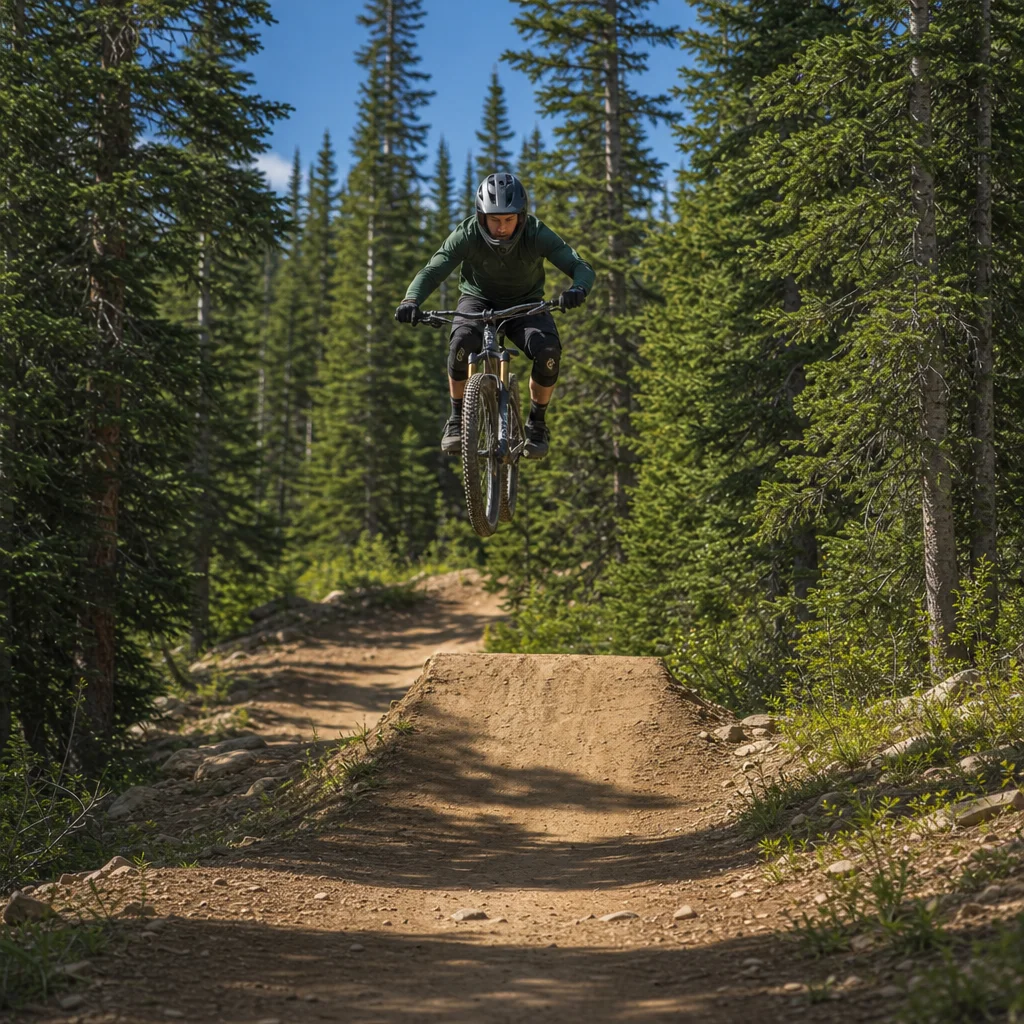
Being the slowest rider in a group can make every climb feel like a test and every pause feel like an apology. That pressure can lead you to ride beyond your fitness, skip needed breaks, take descents too quickly, or follow a route you’re not prepared for. The safest solution isn’t to force yourself to match the fastest rider. It’s to make the group’s plan clear before the ride and keep communication simple while you’re on the trail.
A well-managed group ride has room for different speeds. Faster riders wait at sensible points, slower riders speak up early, and everyone understands whether the group intends to stay together or ride as smaller pods. You can help create that structure even if you’re new to mountain biking.
Set expectations before the ride starts
The most useful conversation happens before anyone clips in. Ask how long the ride is expected to take, how difficult the trails are, whether the route includes sustained climbs or technical descents, and how the group usually handles different speeds. “We’ll regroup when we reach the next junction” is a safer plan than “we’ll just see how it goes.”
Be honest about your current ability without turning it into a confession. You might say, “I’m comfortable on easy and moderate terrain, but I’ll be slower on climbs and may walk technical sections.” That gives the group information it can use. It also makes it less likely that your decision to stop, walk, or pass an obstacle will surprise anyone.
Ask whether the route has obvious meeting points and whether someone will ride behind you. A designated sweep rider can reduce uncertainty, but don’t assume that person is automatically responsible for every safety problem. You still need to know the route, carry what you need, and tell the group if you’re stopping or changing plans.
If the ride is organized around a fixed start and finish time, clarify that as well. A group may be happy to wait at trail intersections but unwilling to extend the outing by an hour. Neither arrangement is inherently wrong; the important part is knowing which one you’re joining.
Confirm the ride plan: Before setting off, agree on the route, regrouping points, expected duration, and what happens if someone turns back. A clear plan makes it easier to choose your own safe pace without leaving the group guessing.
Understand what “staying together” really means
Groups use the phrase “stay together” in different ways. Sometimes it means nobody rides out of sight. Sometimes it means the group travels the same route but gathers at junctions, trailheads, and the tops or bottoms of significant features. Ask for the specific version rather than trying to interpret it while already tired.
For a mixed-ability ride, regrouping at decision points is often more practical than keeping every rider in one compact line. The faster riders can ride ahead, then stop where the route changes. The slower riders can maintain a manageable pace without feeling chased. This approach works only if the waiting points are agreed upon and riders know which direction to take.
A useful regrouping point should be easy to identify and reasonably safe. A broad trail junction, a signed intersection, or a clear area away from the main line of travel is better than an exposed corner or a narrow section where stopped riders block others. Riders who arrive first should wait in a visible place without creating a new hazard.
Don’t let a gap become a silent emergency. If you’re behind and still moving normally, you can call out when you reach the next meeting point. If you’re stopping because of a mechanical problem, injury, navigation confusion, or a sudden change in conditions, communicate that directly. A short message such as “I’m stopped at the last junction; I need help” is much more useful than hoping someone notices you’re missing.
Choose a pace you can control
Your sustainable pace is more important than the group’s average speed. On a climb, that may mean using an easier gear, reducing effort before you are exhausted, and taking brief breaks before your legs completely fade. Walking a steep or loose section can be a sensible riding decision, not a failure. It often leaves you with more control and energy for the rest of the route.
Try to avoid riding hard simply to close a gap. Repeated bursts can turn a manageable ride into a cycle of overexertion and recovery. You may arrive at the group breathless, then repeat the same effort after the next corner. A steady pace that keeps you in control is usually safer and more sustainable.
On descents, being slower isn't automatically a problem. Brake before corners, look far enough ahead to identify changes in surface and direction, and leave yourself room to stop. If other riders are waiting below, they should stop somewhere that doesn’t require you to enter a corner faster than you want to. You don’t owe the group a dramatic run just because they reached the bottom first.
If the trail is narrow, let faster riders pass only when you can do so safely. Move to a stable, visible place rather than stopping suddenly on a blind corner, landing, or steep slope. A quick call of “rider behind” or “passing when clear” can prevent confusion, but you’re still entitled to wait for a suitable spot.
Treat pressure as useful information
A little discomfort is normal when you’re learning. Pressure that repeatedly changes your decisions is a warning sign. If you’re skipping water, ignoring pain, riding features you haven’t practiced, or choosing lines because you’re afraid of holding people up, the group’s pace has become a safety issue.
You can state a limit without negotiating it. “I’m not riding that drop today,” “I’m going to walk this section,” or “I need five minutes before we continue” are complete explanations. You don’t need to make the decision sound temporary or invite a vote.
A supportive group may offer information, such as an easier line or a way around a feature. That’s different from repeated encouragement after you’ve said no. If someone keeps pushing, be direct: “I’ve decided not to ride it. I’ll meet you at the next safe point.” If the route doesn’t provide a reasonable way to bypass the feature, turning around may be the right choice.
Fatigue deserves the same respect as technical difficulty. As you tire, braking, balance, judgment, and reaction time can all suffer. The safest decision may be to shorten the ride, skip an optional loop, or return by a familiar route. It’s better to disappoint a schedule than to turn tiredness into an avoidable crash.
Know when the group should split
A group doesn’t have to remain one unit for the entire outing. If the fastest riders want to continue onto a more difficult loop and you don’t, the group can divide at a known point with a clear plan. Confirm where you’ll reunite, who is going with each group, and whether everyone has the route information and equipment needed for the chosen option.
Splitting becomes less suitable when riders are unfamiliar with the area, the route is difficult to navigate, weather is changing, or someone is injured or experiencing a mechanical problem. In those situations, the priority is making sure nobody is isolated without a reasonable way to get help or return.
Never assume that losing sight of the group is harmless. If you miss a turn or reach a meeting point and nobody is there, stop rather than continuing deeper into unknown terrain. Check the agreed plan, try to contact the group if you have a reliable way to do so, and use the route you already understand. Continuing in the hope of catching up can make a small separation much harder to resolve.
Recheck your limits at the next stop: Before starting a harder trail, ask yourself whether you have enough energy, water, daylight, and confidence to finish it. If any answer is uncertain, choose the easier option or return with a clear message to the group.
Carry enough independence for the ride
Good group communication reduces risk, but it doesn’t replace basic self-sufficiency. Bring water, food appropriate for the duration, a way to repair a puncture, a pump or inflator, and tools suited to your bike. Carry a charged phone, but don’t rely on coverage in every riding area. The exact equipment depends on the route, weather, and local conditions.
You should also know the bike’s basic controls and any issue that could affect its handling. A soft tire, loose component, poor shifting, or brake problem can make keeping pace harder and increase the temptation to ride aggressively. Tell the group about a mechanical concern before it becomes a failure.
Agree on what to do if someone has a crash or can't continue. One person should stay with the affected rider while others get help or communicate the location, unless the circumstances require a different response. Use local emergency guidance and the trail’s posted information where available. If a situation is serious, avoid moving an injured rider unnecessarily unless leaving them in place creates a more immediate danger.
Make the group easier for everyone
Faster riders have responsibilities too. They can reduce pressure by waiting at planned locations, avoiding impatient comments, and not disappearing over the horizon without checking that the route is clear. A rider who is constantly trying to catch up may make poor decisions even if nobody explicitly tells them to hurry.
Slower riders can help by communicating early, riding predictably, and being clear about their plans. Tell the group when you need a break, when you’re walking, and when you intend to turn around. This makes your pace manageable for you and easier for others to accommodate.
Before the next group ride, agree on a route that matches the least experienced rider’s current ability unless everyone has explicitly accepted a different arrangement. With a clear regrouping plan, honest limits, and permission to change course, being the slowest person doesn’t have to make you the least safe person. Ride at a pace you can control, communicate before a problem grows, and judge success by returning with good decisions intact—not by reaching every feature as quickly as the group.