How to Descend More Consistently When Fear Makes You Brake Too Early
I’ll explain how to separate useful speed control from panic braking, then build a repeatable descent routine around vision, body position, trail choice, and deliberate practice so you can regain confidence without simply forcing yourself to ride faster.
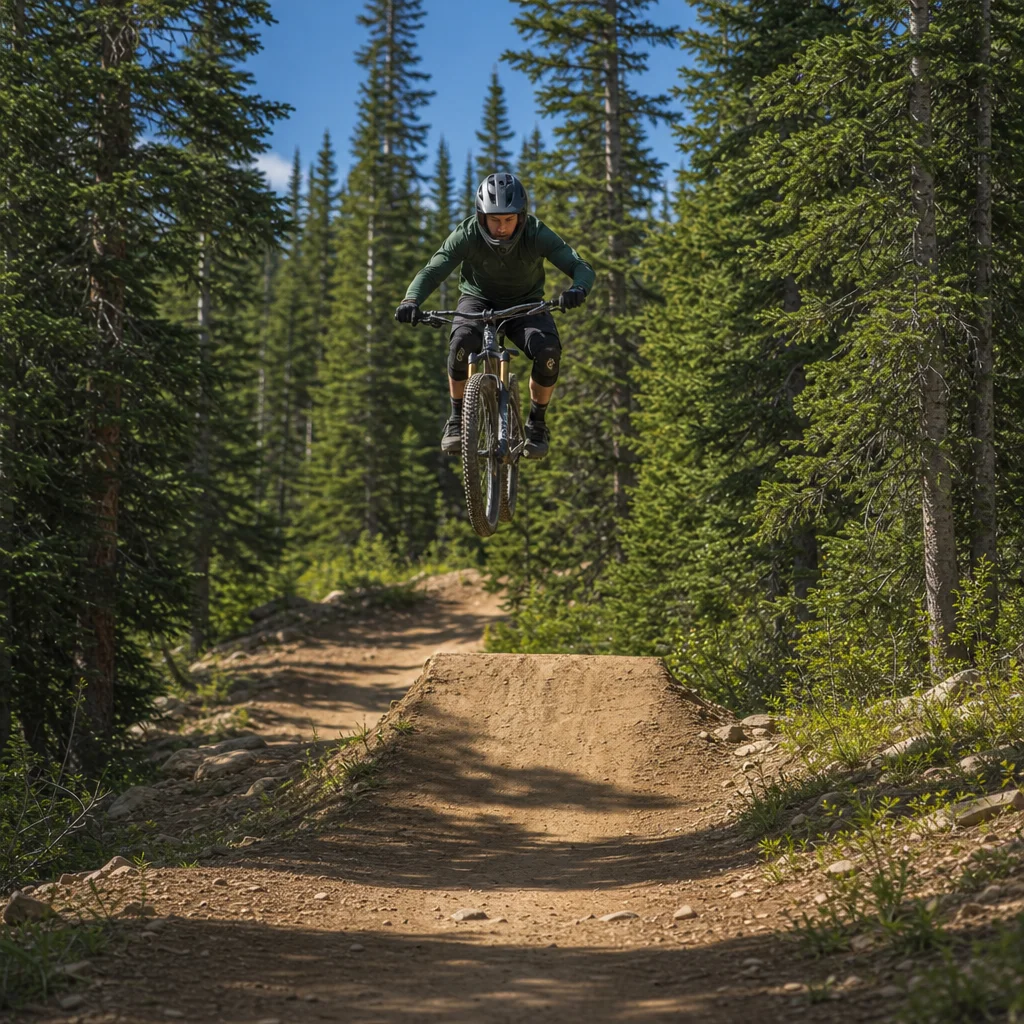
Fear often makes braking feel like the safest available decision. You see the trail steepen, squeeze both levers, and arrive at the next corner slower than planned, tense through your arms and unsure whether the bike will turn. The problem usually isn’t that you’re braking; it’s that braking happens too late, too hard, or in places where it leaves no room for the next decision.
More consistent descending comes from replacing emergency reactions with earlier, smaller choices. You’re not trying to eliminate caution or carry maximum speed. You’re trying to manage speed before the difficult feature, keep enough traction and control to steer, and repeat that process until the trail feels readable again.
Understand what early braking is doing
Fear-based braking often follows a predictable sequence. Your eyes lock onto the obstacle or the outside edge of the trail. Your body stiffens, your hands grip harder, and you brake while entering a turn or rough section. The bike slows, but because your attention is fixed on the immediate threat, you may not release the brakes smoothly or prepare for what follows. The result is a descent made up of abrupt slowdowns rather than controlled speed changes.
That doesn’t mean all early braking is a mistake. Reducing speed before a blind corner, steep roll-in, loose surface, or crowded trail can be exactly the right decision. The useful distinction is between planned speed control and panic braking. Planned braking begins with enough space to choose how much speed you want. Panic braking is an attempt to escape a situation after the available space has already disappeared.
A slower descent can also create its own difficulties. If you brake continuously through rough ground, your suspension and tires have less opportunity to track the surface freely, and your hands may become tired from holding the bike back. If you enter a corner dragging the brakes, the bike can feel reluctant to turn and your attention gets consumed by staying upright. More speed isn't automatically better, but speed that is managed in the right places is often easier to control than speed that is repeatedly interrupted.
Use a simple speed-management pattern
A reliable pattern is to look, brake, release, and steer. Look through the section you intend to ride, brake while the bike is relatively straight, release enough brake pressure to let the bike move and turn, then steer through the feature with your body relaxed and your eyes already searching for the next exit.
You don’t have to release the brakes completely every time. Light, even pressure can help you fine-tune speed, particularly on a long descent or a surface where a full release would let the bike accelerate more than you want. The important point is to avoid treating the brake levers as on/off switches. Use the initial braking phase to make the larger speed adjustment, then use small inputs only when they serve a clear purpose.
Try to finish most of your meaningful braking before a corner rather than discovering the corner’s speed requirement halfway through it. This gives the front wheel a better chance to follow your steering input and leaves you with more options if the surface changes. On a steep, loose, or unusually tight turn, some braking in the corner may still be necessary. The goal isn't a rigid rule; it’s to enter with enough speed control that you’re making a decision rather than reacting to a crisis.
Your body position supports this pattern. Keep your heels slightly dropped, elbows and knees bent, and your weight centered enough that both tires remain engaged. Avoid hanging far behind the saddle as a default response to fear. On very steep terrain you may need to move your hips rearward, but an exaggerated rearward position can make the front wheel light and reduce your ability to steer. A stable, mobile position is generally more useful than trying to hold yourself away from the slope.
Let your eyes create more time
Visual focus is one of the quickest ways to change how a descent feels. If you stare at the rock, rut, or drop that worries you, your steering tends to follow it and your braking becomes reactive. Instead, identify the feature early, choose the line you want around or over it, and then shift your gaze toward the exit. You can still monitor the hazard with peripheral vision without giving it all of your attention.
On a corner, look through the turn as soon as the entry is under control. On a rocky section, look for the spaces between the obstacles rather than cataloging every rock. On a steep straight, look far enough ahead to notice where the trail changes pitch or direction. Your eyes won’t make an unsuitable line safe, but they can give your brain more time to organize steering, braking, and body position.
If fear makes it difficult to look ahead, reduce the task. Pick one short section with a clear exit and practice looking from the entry to the exit without adding speed. Once that becomes manageable, link two sections. Confidence usually grows more reliably from repeated successful decisions than from one attempt to ride an entire descent while forcing yourself not to brake.
Check the section before you commit: Walk or inspect an unfamiliar feature when practical, and confirm that the line, surface, visibility, and consequences fit your current skill and equipment. Choosing to slow down, stop, or take a different line is part of consistent riding—not a failure of confidence.
Compare the main ways to rebuild confidence
There are several useful approaches, and they solve slightly different problems. Riding the same descent repeatedly helps you memorize its rhythm, braking points, and surface changes. That can be highly effective when fear comes from uncertainty. The limitation is that you may become comfortable only on that one trail, especially if you rely on memorized landmarks instead of learning the underlying technique.
Practicing on an easier trail gives you more room to work on vision and brake timing. You can repeat the same corner or slope without the consequence of a difficult feature immediately afterward. The trade-off is that easy terrain may not reproduce the steepness, exposure, or loose surface that triggered your fear. Use it to build the movement pattern, then transfer the skill gradually to more demanding terrain.
Another option is to focus on carrying more speed. This can help if you’re braking so much that the bike becomes unstable, but it’s a poor first response when your line choice or visual focus is unclear. Speed amplifies mistakes. First make the section predictable at a controlled pace; then reduce unnecessary braking in small increments.
You can also practice braking itself. On a gentle, open slope, experiment with using both brakes progressively, feeling how much pressure slows the bike without locking a wheel or causing your arms to stiffen. Practice braking with the bike upright, then releasing smoothly before a turn. This develops a more precise range between no braking and a full panic squeeze. Surface, gradient, tire condition, and bike setup all affect the result, so keep the practice area forgiving and leave room to stop.
Break descents into repeatable sections
A long descent can feel intimidating because it presents too many decisions at once. Divide it into short sections defined by something meaningful: a corner, a change in grade, a rock garden, or a visible trail exit. Your objective for the first run might be to reach the next section with a relaxed grip and a controlled speed, not to complete the whole trail quickly.
Before each section, ask yourself three questions: Where do I want to look? Where will I make most of my braking adjustment? What is my exit or stopping option? You don’t need to answer aloud, and you shouldn’t turn the descent into an elaborate checklist. The questions are useful because they move the decision earlier, when you still have space and attention.
After riding the section, assess one specific result. Did you brake earlier but too much? Did you look at the exit? Did the bike feel unsettled because you were stiff or because the line was poor? A single observation gives you something to change on the next attempt. Trying to correct every detail at once usually adds more tension.
If a section still causes panic after several controlled attempts, make the section easier rather than simply repeating the same reaction. Use a wider line, stop and reset before the feature, lower your speed earlier, or walk it. You can return when the decision feels clearer. Repetition is valuable only when it reinforces a useful pattern.
Adjust the bike without expecting it to solve fear
A bike that fits poorly or has unsuitable controls can increase the effort required to descend consistently. Check that you can reach the brake levers comfortably from your normal riding position and that the levers don’t require an awkward wrist angle. Brake feel should be predictable, with enough power available without an abrupt grab. If braking feels inconsistent, have the system inspected rather than adapting your technique around a fault.
Tire pressure, tire condition, suspension settings, and cockpit setup also influence confidence. Excessively high pressure can make rough terrain feel harsh and reduce grip, while pressure that is too low can increase the risk of rim impacts or tire problems. There isn’t one correct setting for every rider or trail; your weight, tires, rims, terrain, and riding style all matter. Make small changes and test them on familiar ground.
These adjustments support skill, but they don’t replace it. A more powerful brake, softer suspension, or grippier tire may give you additional margin, yet none can compensate for entering a feature without a clear line or with your attention fixed on the hazard. Treat setup changes as ways to make your inputs more predictable, not as permission to override your judgment.
Build practice around calm repetition
A useful session might begin with several easy braking drills, continue with a familiar descent at a deliberately controlled pace, and finish with one section that challenges you slightly. Stop while your decisions are still reasonably calm. Fatigue narrows attention, increases grip tension, and can make a familiar trail feel unexpectedly threatening.
If you ride with others, explain that you’re working on consistency rather than speed. Leave enough space that you don’t feel pressured to follow someone else’s line or braking points. A faster rider may make a section look effortless while using a different line, bike, or risk tolerance. Your reference should be your own repeatable control.
Confidence isn't the absence of fear. It’s the ability to notice fear early enough to make a sensible choice. Sometimes that choice is to brake sooner; sometimes it’s to release the brakes and let the bike roll through a prepared line; sometimes it’s to stop and inspect the feature. The common thread is that you decide before panic takes over.
Start on terrain where you can practice looking toward exits, making most of your speed adjustment before turns, and keeping your body mobile. Repeat short sections until the braking feels progressive rather than abrupt, then link them together. As your decisions become earlier and more predictable, you may find that you’re braking less—not because you forced yourself to be faster, but because you no longer need the last-second escape.