Recover Speed After Braking Too Early on a Descent
I’ll explain how to regain flow after braking too early on a descent, including when to release the brakes, reset your position, and leave speed alone for safety.
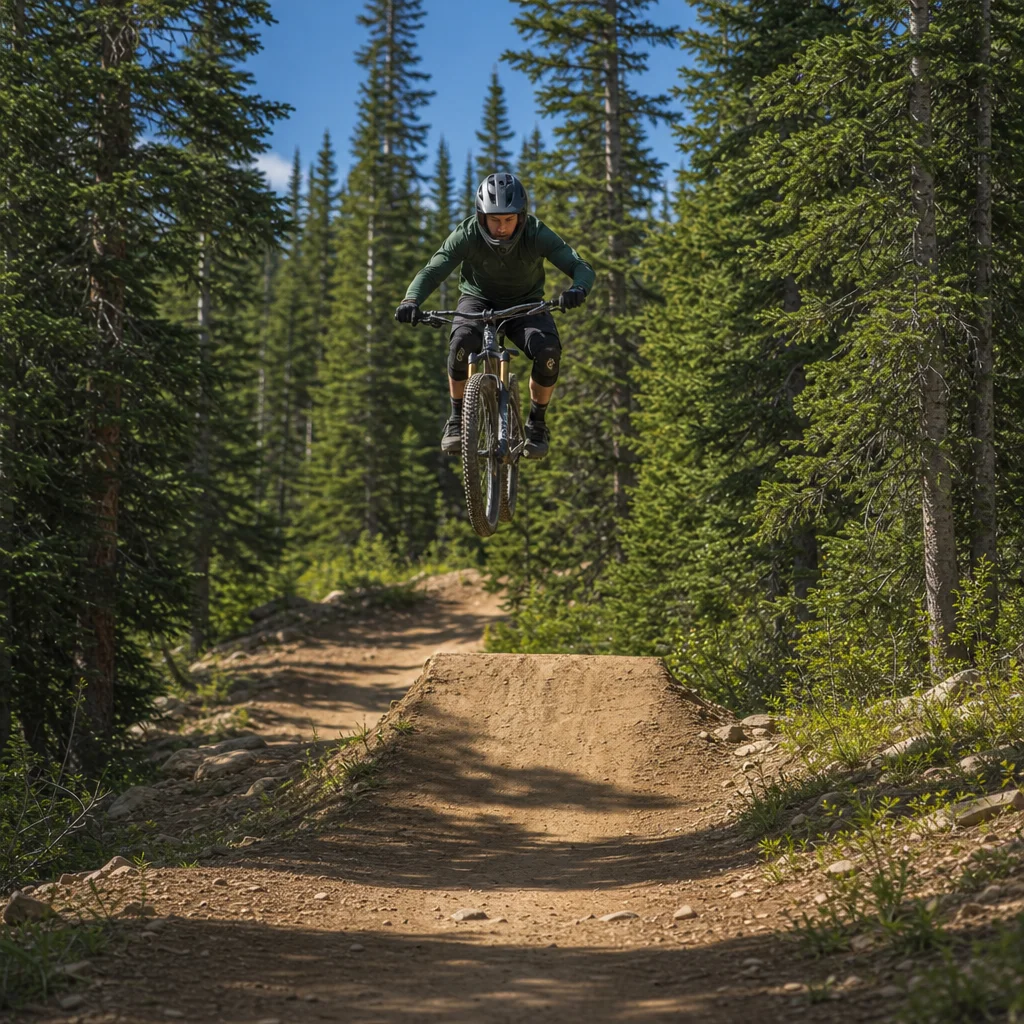
Braking too early on a descent can leave you feeling stranded: the corner is still ahead, your momentum has disappeared, and trying to make it back immediately often creates a second mistake. The useful response isn’t to chase the speed you lost. It’s to regain control first, then let the bike roll where the trail gives you room.
Why early braking disrupts your descent
Braking changes more than your speed. It also affects your body position, traction, and ability to move the bike over uneven ground. When you brake well before the point where you need to slow, you may arrive at the corner with little momentum but still feel tense because the turn, obstacle, or steep pitch hasn’t passed yet.
Many riders then stay lightly on the brakes out of uncertainty. That keeps the suspension loaded and makes the bike feel reluctant to move. It can also encourage you to sit heavily on the rear wheel or stare at the ground directly in front of the tire. The result is a descent that feels slower and less stable than it needs to be.
The correction is to separate the problem into two parts: finish the braking decision, then allow the bike to move again. You don’t need to recover every bit of speed immediately. You need enough rolling momentum to maintain balance and choose your next line clearly.
Finish braking before you try to accelerate
If you’ve braked too early, first decide whether you’re actually ready to release. Look through the corner or beyond the feature, check that your line is open, and make sure the surface is as predictable as you can reasonably tell. If you still need to reduce speed, do it deliberately rather than alternating between braking and coasting without a plan.
Once you’ve reached a controllable speed, release the brakes smoothly. “Smoothly” doesn’t mean holding them slightly forever; it means avoiding an abrupt snap from heavy braking to a sudden surge. A gradual release lets the suspension extend and gives the tires a chance to roll freely again.
On a reasonably open, smooth section, you can release both brakes and let the bike regain speed naturally. On a loose, steep, or narrow trail, you may keep a light, adjustable touch on the brakes while still allowing the bike to roll. That is different from dragging the brakes continuously. Your hands should be ready to change speed, not committed to slowing the bike at every moment.
Choose control before speed: If the next section is blind, crowded, unusually loose, or beyond your current comfort level, don’t force a speed recovery. Let the descent stay slow, or use a safe place to stop and reset.
The most common mistake is trying to recover speed before the bike is pointed where you want it to go. If you’re still correcting the line, braking, or looking at an obstacle, acceleration is premature. Get the bike organized first.
Reset your body position
Early braking often leaves you in a defensive posture. Your hips may be pushed behind the saddle, your arms straight, and your shoulders tight. That position can feel secure while braking, but it limits how easily you can steer and absorb the trail once you start rolling again.
As you release the brakes, return to a balanced descending position. Keep your pedals level, stand lightly on the feet, bend your elbows and knees, and let your hips move freely rather than locking them behind the saddle. Keep your chest low enough to stay centered, but don’t fold over the front of the bike. Your weight should be supported through your feet, with your hands guiding the bars instead of hanging on for stability.
This reset doesn’t need to be dramatic. A large body movement can introduce its own wobble, especially on a technical descent. Think of it as removing tension: soften your arms, bring your hips back toward a neutral position, and allow the bike to move underneath you.
Your feet matter particularly when recovering from a slow entry. Level pedals give you a stable platform and leave either foot ready to support a corner. If you’re approaching a turn, place the outside pedal down once the bike is set up for the corner, while keeping your upper body relaxed and your eyes directed toward the exit.
Look where you want the speed to go
After braking too early, it’s easy to focus on the fact that you’re slow. That usually leads to staring at the front tire, the nearest rock, or the section of trail you’ve just survived. Your bike tends to follow that attention, and the descent becomes a series of late reactions.
Instead, look through the next usable section of trail. On a corner, identify the exit or the open space beyond the apex. On a straight, look toward the next feature that will require a decision. This gives your hands and body time to prepare and helps you judge whether the bike is gaining enough speed without constantly checking the ground immediately ahead.
Your gaze should still scan for hazards. Looking farther ahead doesn’t mean ignoring roots, holes, riders, or changing surfaces. It means taking in the near trail with your peripheral vision while giving your main attention to the direction you want to travel.
Let the trail rebuild momentum
Once the brakes are released and your position is balanced, the simplest way to recover speed is often to do less. Gravity will provide acceleration on a descent; your job is to avoid wasting it through unnecessary braking, steering, or body tension.
Stay loose through small bumps and let the bike roll over them rather than trying to lift or push through every feature. Keep your steering inputs modest. A bike that is allowed to track smoothly will usually regain speed more efficiently than one being repeatedly corrected.
You can also use changes in terrain to build momentum without sprinting. A smooth dip may allow the bike to accelerate, while a rise may call for a quiet, centered position rather than a hard pedal stroke. On a safe, open trail, gentle pressure through the feet can help the bike follow the shape of the ground. This isn't a command to pump every roller aggressively; it’s a reminder that speed can come from working with the terrain instead of fighting it.
Pedaling can be useful when the trail is smooth and the next section is visible. Use a few controlled strokes only after you’re stable and pointed in the right direction. Pedaling while still unsettled can pull your attention away from steering and make your body rigid. If the trail immediately becomes rough, steep, or technical, rolling in a neutral position is usually the better priority.
Know when not to accelerate
Recovering speed isn't always the correct goal. If you braked early because the trail was hard to read, that information still matters. A blind corner, a sudden drop, wet roots, loose gravel, hikers, or another rider can make a slower entry the sensible choice.
You also shouldn’t accelerate simply because the bike feels slow compared with a previous attempt. Conditions change, and the line that worked on firm dirt may be poor after rain or traffic. If the surface is moving beneath the tires, keep your speed low enough that you can make a correction without grabbing the brakes in panic.
When you’re unsure, use the available space to reset. A wider trail section, a flat patch, or the outside of a safe runout may give you room to regain balance and reassess. If there isn’t enough room, stay at the speed you have and focus on making the next decision cleanly. A controlled slow section is far easier to manage than a rushed attempt to recreate lost momentum.
Prevent the mistake on the next run
The best way to stop braking too early is to identify why it happened. You may have entered the descent too quickly, looked too late, misread the corner, or braked because the trail felt intimidating rather than because a specific speed reduction was needed. Each cause has a slightly different solution.
On a familiar section, choose a clear reference for braking, such as a particular change in surface or the start of the turn’s approach. Brake firmly enough to reach a comfortable entry speed, then release before you begin turning. Avoid treating that reference as permanent: your speed, the trail, and your confidence all affect where braking should happen.
Practice the sequence on a mild slope with good visibility. Roll toward a gentle corner, use the brakes in a defined zone, release them before the turn, and keep your eyes on the exit. Repeat it slowly enough that you can notice your hands, pedals, and body position. The aim isn't to carry maximum speed; it’s to make braking and releasing separate, deliberate actions.
If you brake early during a real descent, remember the recovery sequence: finish deciding your speed, release the brakes when the line is ready, return to a neutral position, look ahead, and let the trail rebuild momentum. Accelerate only when the surface and visibility support it. That approach may not produce the fastest possible run, but it gives you a much better chance of staying relaxed, choosing the next line, and carrying useful speed into the rest of the descent.