Plan a Group Mountain Bike Ride With Different Fitness Levels
I’ll clarify how to plan a mixed-ability mountain bike ride without turning the strongest riders into impatient guides or the least experienced riders into a deadline. You’ll learn how route choice, regrouping, communication, and bailout options reduce risk while keeping the day enjoyable.
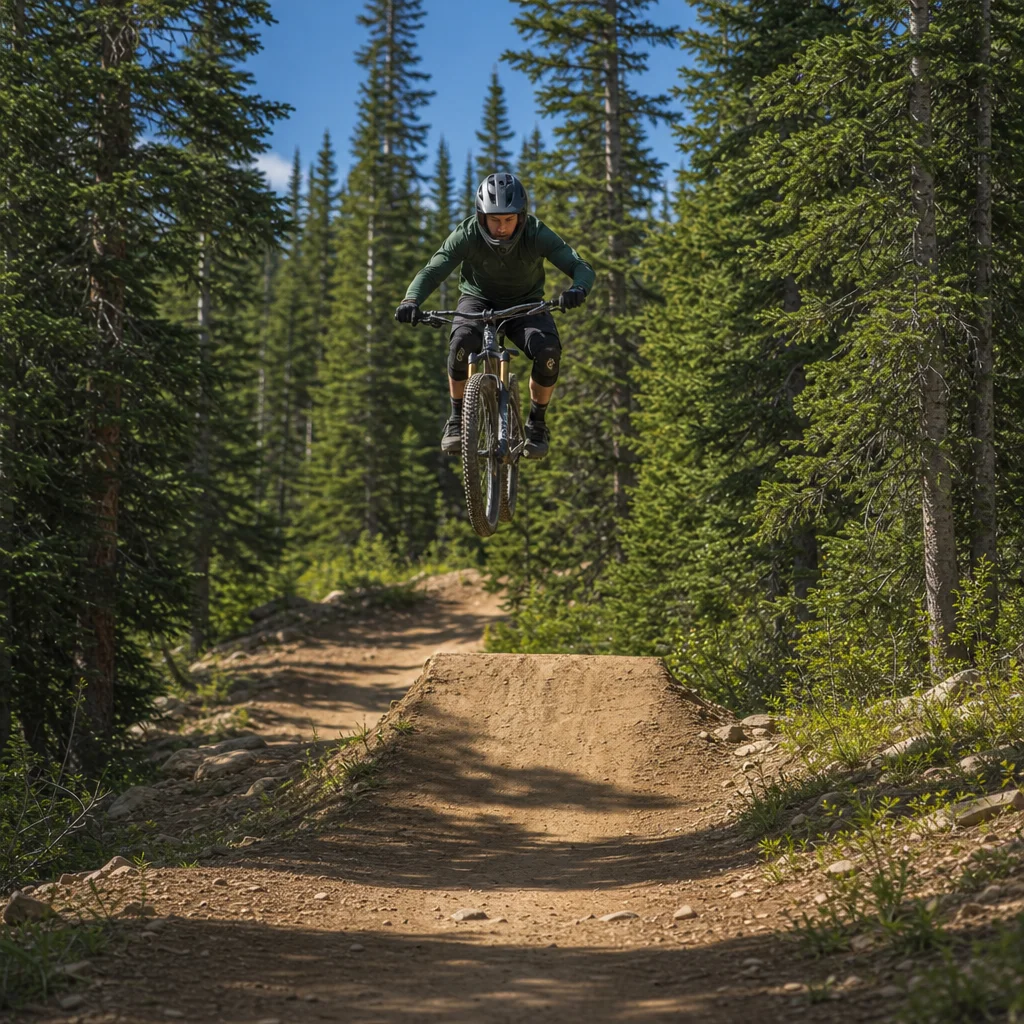
Different fitness levels don’t have to make a group mountain bike ride awkward or unsafe. The real problem is usually a mismatch between the route, the group’s expectations, and the way riders are expected to stay together. If you solve those three things before the ride, a mixed-ability group can share the same trail without everyone being pushed beyond a sensible limit.
The goal isn’t to make every rider travel at exactly the same speed. It’s to create a plan that allows the group to spread out briefly while making it easy to reconnect, communicate problems, and leave the route if someone is tired, injured, or simply no longer enjoying the challenge.
Choose the ride around the least confident rider
Fitness is only one part of the planning decision. A rider may have excellent endurance but little experience on steep, loose descents. Another may climb slowly but handle technical terrain confidently. Before choosing a route, consider fitness, technical ability, confidence, recent riding experience, and how comfortable everyone is with walking difficult sections.
Ask the group for honest information rather than relying on vague descriptions such as “I’m not very fast.” Useful questions include:
- How long have you ridden recently, and what is your longest comfortable ride?
- Which parts of mountain biking cause the most concern: climbs, descents, exposure, rocks, roots, or navigation?
- Are you comfortable walking a section if it feels beyond your ability?
- Do you have any injury, health, or equipment considerations that affect the plan?
Choose a route that suits the least experienced or least confident rider, not just the strongest person who suggested it. A route that is easy for the fastest rider may still include a descent where a newer rider feels pressured to take risks. It’s usually better to finish with energy in reserve than to discover halfway through that the route has no comfortable way back.
For a mixed group, a loop with multiple exit points is often more useful than a single out-and-back. A short loop, optional extension, or nearby return route lets the group adjust without making one rider feel as though they’ve ruined the day. Avoid building the plan around a difficult feature that everyone is expected to attempt. Technical sections should be optional, with a clear way to walk or bypass them.
Check the route you’ll actually ride: Conditions can change after rain, storms, maintenance, closures, or heavy use. Before setting out, confirm the current trail status and whether the planned loop, access road, and bailout routes are open and suitable for bikes.
Set expectations before anyone starts pedaling
A short conversation in the car park can prevent most problems later. Explain the approximate distance, climbing, expected duration, surface, technical difficulty, and places where the group can shorten the ride. Avoid presenting an optimistic moving time as though it were a promise. Regrouping, mechanical issues, photos, navigation, and walking sections all take time.
Agree that nobody will be left alone at the back. This doesn’t mean the group must remain in one tight cluster on every trail. It means the ride has a clear system for keeping contact and checking that the last rider is accounted for. Also make it clear that anyone can ask for a stop, a route change, or a slower pace without having to justify the request.
If the group includes riders who haven’t ridden together before, establish a simple rule for difficult terrain: no one follows another rider into a feature they haven’t assessed for themselves. A confident rider demonstrating a line can be helpful, but it shouldn’t create pressure to copy that line at the same speed.
Use a pace that protects the group’s energy
The pace should be set by the rider who is most likely to struggle on the current section. On a climb, that may be the rider with less fitness. On a descent, it may be the rider with less technical confidence. The group can spread out within sight or between agreed points, but the fastest riders should avoid creating a gap that forces the slower riders to chase.
Chasing is especially unhelpful on climbs. It encourages riders to start too hard, skip food or water breaks, and arrive at the top already depleted. A better approach is for stronger riders to ride at an easy pace, stop before the regroup point, and arrive with enough energy to continue. They can also use the pause to check the map, drink, or make a quick adjustment rather than repeatedly riding back and forth.
Downhill pacing needs a different kind of discipline. Faster riders should stop at the bottom of a defined descent, at a trail junction, or at another location where the group can safely gather. Don’t choose a blind corner, narrow trail, or technical landing as a waiting point. The final rider should never feel that the group is disappearing into unfamiliar terrain.
Keep regroup stops predictable. Waiting at every minor feature can make the ride feel fragmented, while waiting only at the end of a long trail can leave someone isolated. A useful pattern is to regroup at trail junctions, the top and bottom of major climbs, the start and end of technical sections, and any point where the route could become confusing.
Make regrouping specific rather than hopeful
“Wait at the top” sounds clear until the group reaches a junction with several possible exits or a summit with multiple trails. Define the location precisely: the trail sign, the main junction, the bench, or the open area beyond a technical section. If riders may not be able to see one another, agree that nobody continues past the point until the final rider arrives.
For longer descents, use a series of natural regroup points instead of one distant meeting place. The lead rider should know where to stop, and every rider should know that stopping there is part of the plan rather than a sign that something has gone wrong.
A simple lead-and-sweep arrangement can work well. The lead rider handles navigation and sets a conservative pace for the terrain. The sweep rider stays behind the least confident rider or near the back of the group and reports when everyone reaches a regroup point. These roles should be assigned to riders who understand the route and can remain patient; they don’t need to be the fastest riders.
The sweep rider shouldn't be treated as a substitute for basic awareness. Every rider remains responsible for noticing who is ahead, who is behind, and whether the group has turned at the correct junction. If you stop and discover that someone is missing, stop the entire group and retrace the plan systematically rather than sending multiple people off in different directions.
Agree on communication that works on the trail
You don’t need an elaborate code, but you do need shared signals. Before starting, agree on how riders will communicate “stop,” “slow down,” “rider coming through,” “obstacle,” and “mechanical problem.” On a narrow trail, pass messages forward or backward so the information reaches the person who needs it.
Phone coverage can be unreliable in wooded, mountainous, or remote areas, so don’t make a phone call your only communication plan. Keep the group close enough that a separated rider can reach the next known regroup point, and make sure everyone knows the route direction. If phones are useful for the group, exchange numbers before the ride and discuss what to do if someone loses contact.
A quick check at every major stop is more valuable than constant conversation. Ask whether everyone has water, whether anyone is feeling unusually tired or unwell, and whether the route still suits the group. Riders often conceal discomfort because they don’t want to delay others. A routine check makes it easier to speak up before a manageable problem becomes an emergency.
Plan bailouts before they’re needed
A bailout isn't a failure of the original plan. It’s a deliberate option that protects the group when the weather changes, a rider runs low on energy, a mechanical problem develops, or the route is harder than expected. Identify bailout points while planning the ride, then describe them clearly before you set off.
Useful bailout options might include a shorter loop, a return along a familiar trail, an easier parallel route, a nearby trailhead, or a road or path that leads back to the vehicles where cycling is permitted. Check the map rather than assuming a nearby trail is suitable or legally accessible. A route that looks short on paper may involve steep climbing, difficult navigation, or a surface that isn’t appropriate for every bike.
Decide who will accompany a rider taking the bailout. Leaving someone to navigate back alone is a poor default, particularly if the rider is tired, injured, unfamiliar with the area, or having equipment trouble. Depending on the situation, the rest of the group may shorten the ride too. Staying together is often the safest and least stressful choice.
A mechanical problem deserves its own decision point. Minor adjustments or a puncture may be manageable on the trail, but a damaged wheel, failing brake, broken chain, or unsafe tire shouldn't be treated as an inconvenience to ride through. Carry tools and spares appropriate to the group’s bikes, and know whether the planned route allows a walk-out or easy vehicle access.
Match equipment and supplies to the whole group
Every rider should have a properly functioning bike, a helmet, enough water and food for the planned duration, and clothing suited to the conditions. The group should also have at least enough shared repair equipment to handle likely problems: a pump or inflator, compatible tubes or plugs, tire levers, a multitool, and a chain-repair option. What counts as sufficient depends on the bikes and the remoteness of the route.
Don’t assume the strongest rider will carry everything or that the ride leader can supply missing essentials. Sharing some tools is sensible, but each rider needs enough personal water, food, clothing, and basic safety equipment to manage a delay. A mixed-ability ride tends to take longer than the fastest rider expects, especially when the route is unfamiliar.
Before leaving, confirm that everyone knows where the meeting point is, how long the group expects to be out, and what to do if they become separated. Someone outside the ride should know the broad plan when the route is remote or the day is expected to be long. The details should be appropriate to the area and conditions rather than based on a fixed assumption about mobile coverage or response times.
Keep the social side inclusive
The group will enjoy the ride more if the slower pace is treated as a feature of the plan rather than an interruption. Stronger riders can contribute by helping with navigation, sharing useful technique tips when invited, and making stops comfortable. Constant coaching, unsolicited criticism, or jokes about fitness can make a rider less willing to mention fear or fatigue.
Use optional challenges instead of public tests. A rider who wants to try a technical feature can do so while others wait in a safe location, but nobody should be required to prove they belong in the group. Walking a section is a normal mountain biking decision, not a score.
After the ride, ask what worked and what didn’t. If the group waited too often, the route may need clearer regroup points. If people felt rushed, the pace or route was too ambitious. If everyone finished comfortably with time to talk and repair small problems, you have a useful template for the next ride.
The most reliable mixed-ability plan is conservative in its route choice and flexible in its timing. Choose terrain that the least confident rider can manage, set regroup points that are easy to identify, use a lead-and-sweep system, and decide in advance how the group will respond to fatigue, separation, or mechanical trouble. Then let the pace adjust to the people actually riding rather than the schedule imagined during planning. That approach keeps the group together without making anyone feel that they’re being measured against somebody else’s ride.