How to Recover Momentum After a Failed Technical Climb
Technical climbs often fail because line choice, momentum, body position, and frustration compound at once. I’ll explain how to reset each piece, select a better restart, and continue without turning one mistake into trail damage or a longer delay.
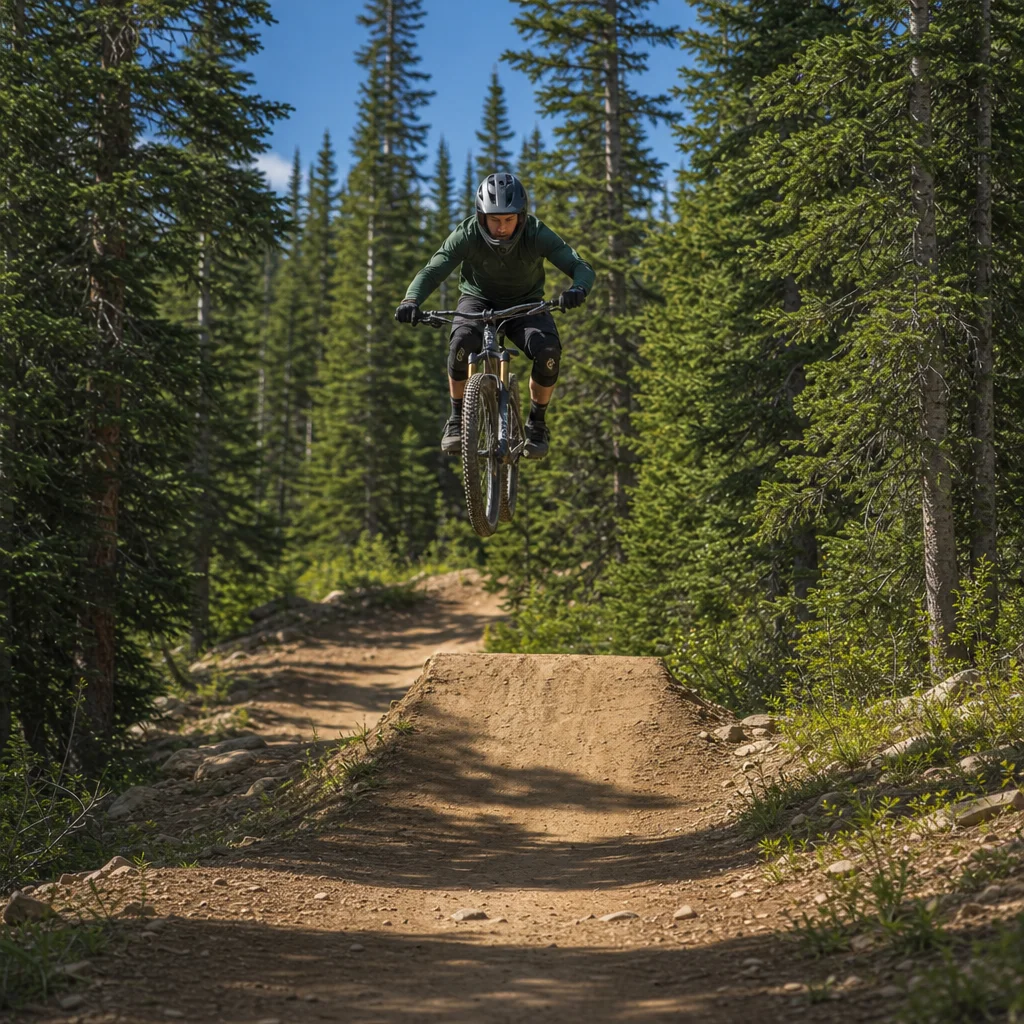
A failed technical climb can make the next attempt harder before you’ve even turned the pedals. You may be breathing heavily, replaying the mistake, and feeling pressure to prove that you can clear the same obstacle immediately. The useful response isn’t to attack the feature with more force. It’s to interrupt the failed attempt, collect enough information, and restart with a simpler plan.
Recovering momentum has two meanings here. You need to rebuild physical momentum on the bike, but you also need to recover your decision-making. A short reset gives you both.
Stop the failed attempt cleanly
As soon as the climb is clearly lost, stop trying to salvage it with frantic pedal strokes. Put a foot down deliberately, keep the bike controlled, and move yourself and the bike out of the main riding line if other riders may be approaching. Avoid dragging a locked rear wheel or spinning uselessly against the trail surface. A small amount of loose dirt displaced under a tire can become a hole or rut that makes the feature worse for everyone.
If you’re still balanced but have lost too much speed, it may be possible to roll or step off to the side without forcing a full stop in the most difficult part of the climb. Don’t turn that into a bigger risk. A controlled dab or dismount is preferable to falling into rocks, crossing another rider’s path, or punching the pedals while the rear tire has no traction.
Take one breath before making a new plan. This isn’t a ceremonial pause; it lowers the chance that frustration will choose your next line for you. Look at the bike, the trail, and your body position rather than immediately looking back at the obstacle as if it has insulted you personally.
Check the restart zone: Before you roll again, make sure you’re clear of other riders, standing on a stable section of trail, and not blocking the preferred line through the feature.
Diagnose the actual failure
Try to describe the mistake in one sentence. “I ran out of speed before the ledge” is more useful than “I’m bad at climbs.” So is “The rear tire spun when I stood up,” “I entered too far left,” or “I looked at the rock instead of the exit.” A specific diagnosis gives you something to change without demanding a completely different riding style.
Several failures can look similar from the saddle:
- You lost speed before the crux. You may have entered too slowly, braked too late, or used a gear that made it difficult to keep a smooth cadence.
- The rear tire spun. Excessive pedal force, an abrupt shift in body position, low traction, or a line covered in loose material may have unloaded the rear wheel.
- The front wheel wandered or lifted. You may have pulled too hard on the bars, shifted your weight too far back, or entered a step without enough controlled commitment.
- You stalled at the obstacle. The gear, approach speed, or line may have required more precision than you could manage while already fatigued.
- You stopped looking ahead. Fixating on the rock, root, or hole often makes your steering less deliberate and your timing late.
You don’t need a perfect diagnosis. Choose the most likely cause and change one or two variables on the next attempt. Changing everything at once makes it difficult to tell what helped.
Choose the next line, not just the same line harder
Walk or visually inspect the feature from a safe position when you can. Look for the exit first, then trace a line backward toward the approach. The best route is often the one that lets you maintain a steady effort rather than the one with the shortest distance or most impressive-looking ledge.
A new line might mean moving a few inches left or right to avoid a polished root, entering on firmer ground, or using a shallow ramp instead of a vertical face. It might also mean deciding that the original line is appropriate but your approach wasn't. If the route is narrow, don’t cut across the trail blindly to create a new angle. Wait for space and keep your tires on the durable surface.
For a beginner or intermediate rider, a slightly longer line with better traction is usually a better decision than a direct line that demands a sudden burst of power. Momentum isn’t the same as speed. It’s the combination of enough forward movement and enough control to keep the bike responding to your inputs.
Before restarting, identify three points: where you’ll begin pedaling with purpose, where you’ll make the key steering or weight adjustment, and where you want your eyes to finish. These points can be simple. For example: smooth pedals before the loose rock, light hands through the step, eyes on the open trail beyond it.
Rebuild momentum without rushing
Start from the easiest stable position available, not necessarily from the exact spot where you failed. A few feet of flat or less-steep trail can give you room to establish balance, choose a gear, and build a consistent cadence. Restarting from a bad angle or in a patch of loose dirt may turn the second attempt into another avoidable stall.
Select a gear that lets you pedal smoothly at the expected climbing speed. If the gear is too hard, you may have to stomp on the pedals and break traction. If it’s too easy, your legs may spin quickly while the bike loses useful forward drive. Shift before the crux when possible; changing gears while applying maximum force can interrupt your rhythm and may produce an unwanted clunk or missed shift.
Approach with controlled momentum. Keep your effort steady rather than sprinting into the obstacle. Stay seated when that helps maintain rear-wheel traction, but don’t treat sitting as a rule. A brief, deliberate change in position may help the front wheel clear a step or let you absorb a rough section. The goal is to keep your weight balanced over the bike while allowing both tires to follow the terrain.
Use lighter hands and a firm lower body. Pulling hard on the bars can make the front end wander, while a rigid upper body prevents the bike from moving underneath you. Keep your gaze on the chosen path and the exit instead of watching the tire meet the obstacle. Your steering will generally be more accurate when your eyes give you somewhere useful to go.
Manage frustration as part of the technique
Frustration often creates a false choice: either retry immediately or admit defeat. You have more options. You can pause for a minute, let another rider pass, take a drink, or roll an easier section before trying again. A short recovery is especially sensible if your breathing is too heavy to maintain smooth control.
Set a limit for repeated attempts. Two or three thoughtful tries can teach you something; several nearly identical attempts usually add fatigue and trail wear without adding information. After each try, change a defined variable or stop. If you can’t explain what will be different, you’re probably relying on emotion rather than a plan.
There’s also no requirement to clear the feature on the same ride. Walking the bike past it, taking a lower line, or returning when you’re fresher are legitimate decisions. A technical climb is a riding problem, not a character test. Saving energy and confidence for the rest of the route may be the better outcome.
Respect the surface: If your tires have started loosening soil or creating a rut, stop repeating the attempt and use a durable alternate line or walk the feature.
Know when to change the goal
A successful recovery doesn’t always end with a clean ascent. It may end with a controlled dismount, a clear understanding of why the line failed, and a plan to practice the relevant skill somewhere less consequential. That outcome is valuable if the feature is above your current ability, the surface has become slippery, or your fatigue is affecting your control.
Weather and trail conditions matter as much as your technique. A line that works on dry, firm soil may be inappropriate when wet, and a rock that was manageable earlier may be slick after rain or covered with disturbed dirt. Don’t insist on preserving a personal challenge when the conditions have changed. Local trail guidance and closures can also vary, so follow the current signs and rules where you ride.
If the problem keeps occurring on moderate climbs, practice the component rather than repeating the entire failure. Work on steady seated climbing, controlled weight shifts, looking through a turn, or starting from a low-speed balance point. You’ll build more useful confidence by isolating the skill than by repeatedly charging the hardest feature on the trail.
Recovering momentum after a failed climb is a sequence: stop safely, identify the likely cause, choose a better line or starting point, and restart with steady effort. Give yourself permission to alter the objective when the trail, your energy, or your control says that another attempt isn’t sensible. The next ride will benefit more from a clear decision than from one stubborn, muddy success.