Ride Through Deep Pine Needles Without Losing the Front Wheel
Deep pine needles reward a different approach than firm dirt: less steering input, better speed control, and more attention to what lies underneath. I’ll explain the first adjustments that help you keep the front wheel tracking through loose forest surfaces.
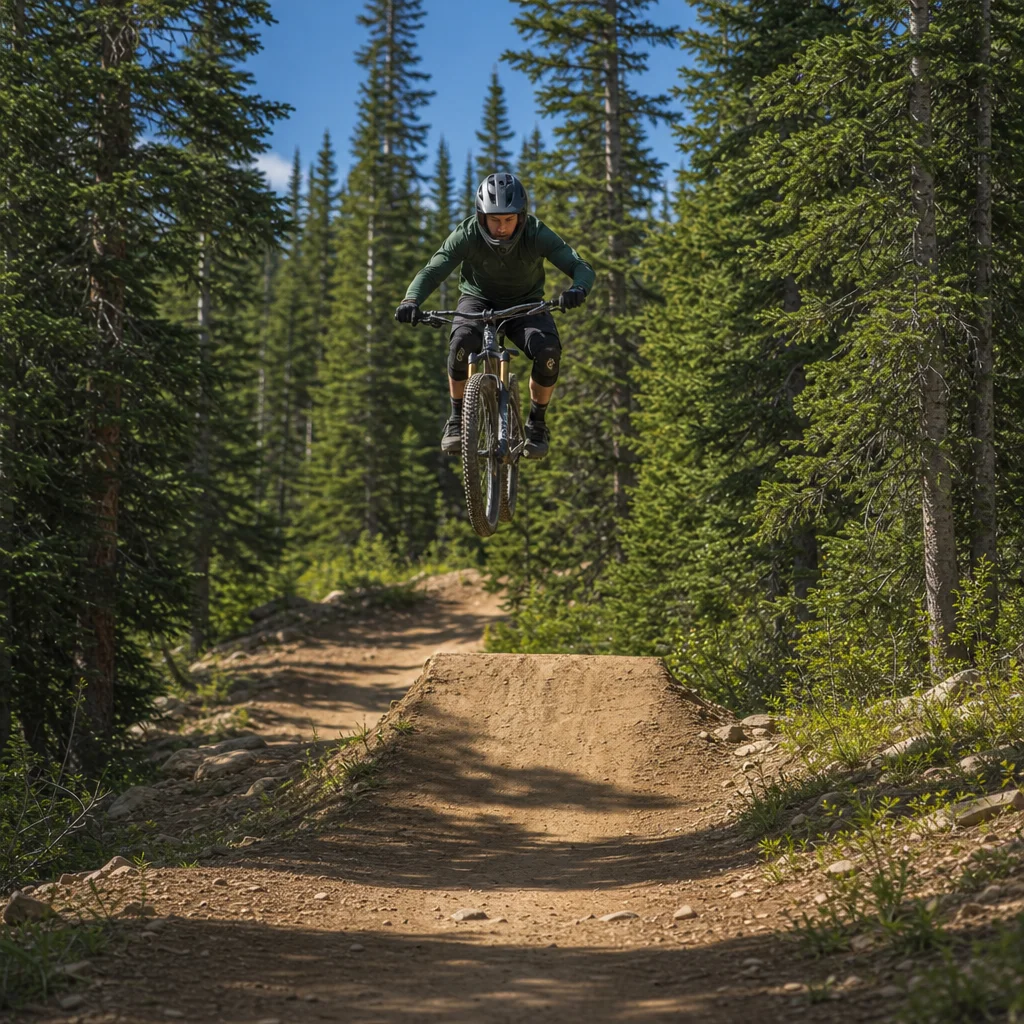
Deep pine needles can make a familiar trail feel strangely unpredictable. The surface may look soft and harmless, yet the front wheel can wander, deflect off a buried root, or tuck toward a rut when you steer or brake too abruptly.
The goal isn’t to force the bike into a perfectly straight line. It’s to give the front wheel enough stability to roll through the loose layer while keeping your weight, speed, and steering under control. That starts with deciding how deep and loose the needles really are, then choosing a line and pace that leave you room to respond.
Read the surface before you commit
Not all needle-covered trail behaves the same way. A thin layer over packed soil may feel almost like ordinary dirt. Several inches of dry, loose needles can act more like a shallow drift, allowing the front tire to move sideways before it finds firm ground. Damp needles may compact and grip better, but they can also become slick, particularly where they cover smooth roots, rocks, or hard clay.
Look for changes in color, texture, and depth. Darker, compressed areas often indicate a line used by other riders, but tire tracks can also conceal ruts. Fluffy, undisturbed needles deserve more caution because you can’t see whether the trail underneath is smooth or interrupted. Pay special attention to the edges of the trail, where needles often collect against roots, berms, and fallen branches.
If you’re approaching a blind corner, steep pitch, or narrow section, reduce speed while you still have a clear view. A brief pause or controlled roll can reveal more than trying to carry momentum into an unknown patch. You’re making a decision about available traction, not trying to prove that the surface is rideable at the same speed as bare dirt.
Keep the front wheel light but planted
A stable front wheel needs enough weight to track, but too much weight makes every sideways movement more difficult to recover. Use a neutral standing position: pedals level, knees and elbows slightly bent, hips centered over the bike, and your torso low enough to stay balanced without folding over the bars.
Avoid hanging far back as soon as the needles get loose. Shifting too much weight to the rear can make the front tire vague and easier to deflect. It may also reduce your ability to steer around a buried obstacle. On a descent, your hips can move slightly rearward as the slope steepens, but keep your chest connected to the bike and your hands relaxed enough to let the front end move beneath you.
Your arms should act as suspension rather than rigid supports. If the front wheel wanders a few inches, allow the bike to move without immediately wrestling it back to the exact center of the trail. A stiff grip transfers every correction into the handlebar, often creating a larger wobble than the original movement.
Look farther ahead than the tire. Your front wheel will follow your steering, but your body tends to follow your eyes. Pick a broad exit or a clear strip through the needles instead of staring at the one root you’re trying to avoid.
Use gentle, deliberate steering
Loose needles reduce the value of sharp steering. Turn the handlebar smoothly and let the bike arc through the corner. A sudden input can push the front tire sideways, especially when the tread is riding on the loose upper layer rather than gripping the soil below.
For a gradual turn, keep your outside foot weighted and your inside knee open slightly toward the corner. Lean the bike into the turn while keeping your upper body balanced over it. This gives you room to make small corrections without twisting your shoulders or pulling on the bars.
In a tighter corner, the best line may not be the deepest part of the needle bed. Look for the section with a consistent surface and fewer visible roots. If the trail has a high outside edge, avoid climbing it abruptly. Crossing from loose needles onto a firm edge at an angle can catch the front tire and redirect it. When possible, cross surface changes close to perpendicular and with the bike relatively upright.
If the wheel begins to drift, don’t automatically countersteer hard in the opposite direction. Ease off the steering input, keep your eyes on the open trail, and allow the tire to regain contact with firmer ground. A calm correction is usually more effective than a series of fast ones.
Choose speed that preserves options
Speed can help a bike roll through loose material, but more speed doesn’t automatically create control. A little momentum keeps the front wheel from stalling in deep needles; too much momentum reduces the time available to identify a hidden obstacle or change your line.
Aim for a pace at which you can still steer around a newly revealed root. Enter corners slower than you would on predictable, firm dirt, then add speed only when the exit is visible and the surface remains consistent. On a straight section with deep needles, a steady, light roll is generally easier to manage than repeated bursts of acceleration and braking.
Keep your pedals level when the trail is rough or the surface depth is uncertain. If the trail is smooth enough to pedal, use a gear that lets you maintain even pressure rather than stomping on the pedals. Sudden torque can spin the rear wheel, while an abrupt pause can pitch your weight forward and make the front tire more difficult to control.
Braking deserves particular attention. Apply both brakes smoothly before the deepest or steepest section, rather than grabbing the front brake once the bike is already unsettled. Keep the bike as upright as the trail allows while braking in a straight line. If you must brake while turning, use lighter pressure and expect the loose surface to lengthen your stopping distance.
Before the next hidden section: Reduce speed while the trail is still visible, scan for roots and ruts, and decide where you’ll go if the obvious line disappears under the needles.
Manage buried obstacles without panic
Pine needles hide small features particularly well. A buried root may only deflect the wheel, or it may stop it abruptly if approached diagonally. Rocks, branches, and shallow holes can have the same effect. You won’t always see them in time, so your position should leave the bike free to move rather than locking it into a rigid line.
When you spot an obstacle, approach it with the bike reasonably straight and your pedals level. Unweight the front wheel slightly by moving your hips back and extending your arms, but don’t pull sharply on the handlebar. The movement should be small enough that you remain centered after the front wheel clears the obstacle.
For a root or branch crossing the trail, try to meet it close to perpendicular. If the trail forces you to cross at an angle, reduce speed and avoid turning at the same moment. A front wheel that is both angled and lightly loaded is more likely to slide along the obstacle instead of rolling over it.
If the front wheel deflects, keep your elbows soft and look toward the space you want to enter. Let the bike straighten before making a larger steering change. If the bike slows sharply or begins to stop, put a foot down rather than trying to save every situation from the saddle. A controlled dab is a useful recovery, not a riding failure.
Adjust your approach for climbs and descents
Deep needles can make climbing difficult because the rear tire may spin while the front wheel wanders. Stay seated on moderate climbs to keep useful weight on the rear tire, but keep your torso forward enough to prevent the front end from lifting. Use a lower gear and smooth pedal pressure. If the rear wheel spins, ease off briefly rather than pushing harder; extra force usually digs a hole without improving traction.
On steeper climbs, choose the firmest visible line and avoid abrupt zigzags. If you need to change direction, make the adjustment gradually and do it before the steepest part. Walking a short section can be the sensible choice when the surface is too deep to maintain traction or the trail underneath is hidden.
Descents require a different balance. Move your hips slightly back as needed, keep your chest open, and maintain enough front-wheel weight to steer. Brake before a corner or obstacle, release some pressure while crossing the loosest section, and resume braking when the bike is upright and settled. Avoid locking either wheel; a skidding tire gives you less control and can expose a rut or root beneath the needles.
Make small setup changes, not dramatic ones
Your normal tire pressure may feel different on a needle-covered trail, but large pressure changes can create new problems. Slightly lower pressure may improve comfort and help the tires conform to uneven ground, while too little pressure increases the chance of rim strikes, tire burps, or vague cornering. Any adjustment should stay within the tire and rim manufacturer’s limits and suit your weight, tires, and riding style.
Check that your tires have usable tread and that your controls are working normally before heading into a long section of loose trail. A properly functioning dropper post can make it easier to lower your center of gravity on descents, but it won’t replace good speed management. Suspension should be set for your overall riding conditions rather than changed dramatically for one patch of needles.
If the trail is consistently covered in deep, loose material, consider whether a slightly slower line with firmer support is more valuable than trying to float across the deepest section. Bike setup can help, but technique and surface reading usually make the larger difference.
Build confidence progressively
Practice first on a flat, open section where you can see the entire surface. Roll through at walking pace, then repeat with a little more momentum. Experiment with relaxed elbows, light steering, and smooth braking so you can recognize how the bike moves before the trail becomes steep or narrow.
Next, try a gentle corner and then a short descent. Change only one factor at a time: your speed, line, or braking point. This makes it easier to identify what improved control and what made the bike feel nervous. If the needles are wet, the trail is crowded, or obstacles are completely hidden, choose a slower pace or another route rather than treating those conditions as a test of skill.
The most reliable approach is simple: inspect the surface, slow down before uncertainty, keep your body centered, steer with small inputs, and preserve enough momentum to roll without rushing. Deep pine needles don’t require a dramatic technique change. They require you to stop asking the front wheel to do everything at once—steer, brake, absorb hidden impacts, and find traction—and give it a stable line with room to work.