How to Ride a Flat, Fast Trail Without Chasing Speed
Flat, fast trails reward control more than frantic pedaling, especially when corners and small mistakes arrive quickly. I’ll show you how to build speed through smooth inputs, efficient lines, and strong corner exits without turning every straight into a race.
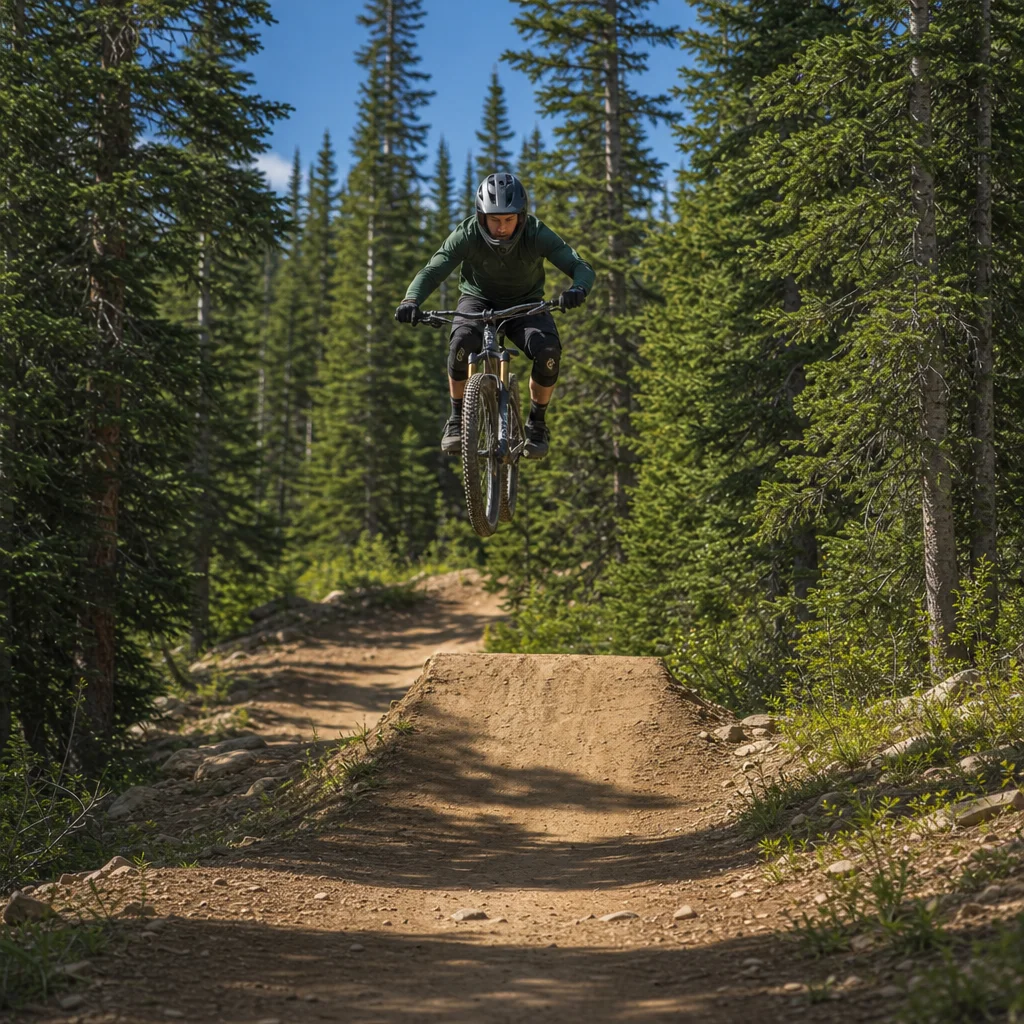
Flat trails can make you feel slower than you are. There may be no steep descent to provide momentum, so the temptation is to pedal harder, brake later, and attack every corner as if speed itself were the goal. That approach often produces more noise, more corrections, and less actual progress.
Riding a fast, rolling trail well is mostly about avoiding unnecessary losses. You want to carry useful speed through corners, keep the bike moving over small changes in terrain, and pedal in a rhythm you can sustain. The fastest line is rarely the one that feels most dramatic.
What “fast” should feel like
On a flat or gently rolling trail, speed comes from connecting sections rather than dominating individual features. A good ride has a steady rhythm: you accelerate where the trail allows it, settle the bike before a corner, guide it through the turn, and begin pedaling as soon as the exit opens. Nothing needs to feel desperate.
You should still feel active. Your eyes are looking ahead, your body is making small adjustments, and your pedals are working when acceleration is useful. But the bike shouldn’t be constantly surging, skidding, or changing direction under abrupt inputs. If you finish a section feeling as though you fought every corner, you probably spent energy correcting choices that could have been made earlier.
A useful measure isn't your maximum speed on one straight. It’s how much speed you can carry while keeping your line, breathing normally, and leaving enough attention for the next feature. That kind of speed is repeatable, and repeatable speed is usually faster over a full trail.
Avoid the common speed traps
The first mistake is treating every straight as a sprint. Pedaling at maximum effort can feel productive, but it may leave you arriving at the next corner tense and overgeared. You then brake heavily, turn poorly, and have to accelerate again. The effort was real, but much of it was spent replacing speed you could have preserved.
Instead, use straights according to what comes next. If the trail remains open, build speed smoothly. If a tighter corner is approaching, shift your focus from producing more speed to arriving in a position that lets you use the speed you already have. A short, controlled acceleration is often more useful than a long effort followed by hard braking.
Another common mistake is braking in the middle of a turn. Braking while leaned over can make the bike feel unsettled, particularly on loose surfaces or when the trail is uneven. It also reduces the traction available for steering. Whenever the trail gives you room, do most of your braking before the corner, release the brakes as you begin turning, and use only light adjustment once the bike is committed to the line.
You don’t need to eliminate all mid-corner braking. Real trails are irregular, and unexpected hazards sometimes require it. The point is to avoid making late braking your normal cornering strategy. Look farther ahead, identify the corner earlier, and choose an entry speed that leaves you options.
A third trap is copying the most direct-looking line. On a flat trail, the inside of a corner can appear efficient, but it may contain roots, soft soil, or a sharp change in direction. A slightly wider entry that opens the exit can let you carry more speed with less steering. Line efficiency is about the whole turn, not the shortest distance across it.
Build speed through smooth inputs
Your hands and feet should guide the bike rather than overpower it. Keep a light grip on the bars, with your elbows and shoulders relaxed enough to absorb small movements. A rigid upper body makes the front wheel more likely to deflect from roots, rocks, and shallow ruts. It also makes every correction larger than it needs to be.
Keep your pedals level when coasting through uneven sections or turns, with the outside pedal weighted as appropriate for the corner. Stay centered over the bike instead of hanging far back or leaning your upper body dramatically into every bend. On flat terrain, excessive body movement usually costs more than it helps because it interrupts the bike’s momentum.
Steering should be deliberate and economical. Rather than making several quick handlebar corrections, choose a line with your eyes, set the bike onto it, and let it track. If you’re repeatedly turning away from the edge of the trail, you may be looking too close to the front wheel or entering too quickly for the available space.
Your controls matter here as well. Use one-finger braking if that’s your established technique and your controls are positioned comfortably, but avoid squeezing suddenly when a small pressure change would do. Smooth braking and smooth pedaling keep the tires loaded predictably. Predictable traction is more valuable than an aggressive-looking riding position.
Check your control margin: Before pushing the pace, make sure you can comfortably reach both brake levers, shift without looking down, and slow the bike on the trail surface you’re riding. If a control feels awkward or your tires are losing grip, solve that problem before trying to go faster.
Use cadence instead of brute force
Flat trails often punish the habit of grinding a hard gear. A large gear can feel fast because each pedal stroke produces a strong surge, but it makes it harder to respond when the trail rises, bends, or becomes rough. It can also encourage you to remain seated and stiff while the bike needs lighter, quicker input.
Choose a gear that lets you increase cadence without immediately running out of breath. You want enough resistance to make useful progress, but not so much that every acceleration becomes a muscular effort. Shifting a little earlier before a rise or corner exit is usually smoother than waiting until your legs are bogged down.
Think of cadence as a way to keep momentum available. If you’re approaching a short uphill section, maintain a steady pedal rhythm rather than waiting for the bike to slow and then attacking the climb. If the trail briefly levels or dips, use that opportunity to recover your legs while keeping the pedals moving when it helps.
You don’t need to watch a cycling computer to manage this. Pay attention to how your legs feel and how quickly you can change effort. If you can’t accelerate without standing abruptly or forcing the pedals, your gear is probably too hard for the section. If your legs are spinning with little effect, shift up, but do it before the next technical decision rather than during it.
Corner for the exit, not the entrance
Many riders focus on entering a corner quickly because that’s where the sensation of speed is strongest. The more useful target is the exit. A controlled entry that allows an early, stable exit often beats a faster entry followed by braking, a wide drift, or a delayed return to the pedals.
Start by looking through the corner toward the place where you want the bike to go next. Set your speed before the turn, choose a line that avoids unnecessary surface changes, and keep your movements quiet as the bike rotates. As the trail opens, gradually release your attention from the apex and look toward the next section. This helps you straighten the bike and begin accelerating earlier.
On a broad corner, you can often use a wide entry, a controlled middle, and a wide exit if the trail and sight lines allow it. On a narrow trail, that may not be possible, and other riders or trail users may affect your line. The principle remains the same: make the turn as open and predictable as the terrain permits, rather than forcing the tightest possible arc.
Avoid cutting across the inside of a corner simply to shorten it. Tires can lose grip on loose edges, and an unseen obstacle may turn a small shortcut into a sudden stop. Stay on durable trail surfaces and respect the line that gives you the best combination of traction, visibility, and room to correct.
Read the trail in linked sections
Fast riding improves when you stop treating the trail as a series of isolated obstacles. Look beyond the corner in front of you and notice what follows it: a short climb, a rough patch, another bend, or an open stretch. That information changes how you approach the current feature.
For example, a corner that leads directly into a climb may reward a slightly slower entry and an earlier shift. A corner followed by a long straight may justify carrying more speed through it, provided you can see the exit and maintain control. A turn that appears easy may need a cautious approach if its exit narrows or drops away.
Use a simple visual sequence: identify the immediate hazard, find the intended line, then look beyond it. Your eyes should move ahead as soon as the current decision is made. Staring at the front wheel or the nearest root keeps you in reaction mode and makes the trail feel faster than it is.
This approach also helps prevent over-riding. If you’re unable to look past the next feature, you’re probably asking for more speed than your current vision and control can support. Back off slightly until you can process the trail early again.
Practice smoothness without chasing a time
You can practice this skill on familiar terrain without turning every ride into a test. Choose a loop or trail with several corners and make one pass focused only on reducing braking. Don’t forbid yourself from braking; aim to brake earlier, use less force, and finish each turn in a position to pedal.
On the next pass, focus on your eyes. Pick a point beyond each corner and notice whether your line becomes calmer when you look there. Then pay attention to cadence and shifting. Try to maintain a steady rhythm through short rises rather than waiting for the bike to slow.
A useful sign of improvement is that the trail begins to feel less busy. You may not see a dramatic increase in top speed, but you’ll spend less time correcting, fewer sections will require a full restart of your effort, and your breathing will recover more quickly between accelerations. Those changes show that you’re wasting less momentum.
If you use a stopwatch or cycling computer, treat it as feedback rather than a command. Compare similar rides under similar conditions, and pay attention to whether a faster time came with controlled lines and enough energy to continue. Wind, trail traffic, surface conditions, and fatigue can make small time differences meaningless.
Let speed follow control
The main mistake on flat, fast trails is trying to create speed everywhere. Instead, create the conditions that let speed remain: choose a manageable entry, brake before the turn, guide the bike with light inputs, use a suitable gear, and accelerate toward the exit.
Start on a familiar trail at a pace that leaves you room to look ahead. Pick one habit to change, such as braking earlier or shifting before short rises, and keep the rest of your riding uncomplicated. Once that habit feels natural, add the next one. Smoothness isn't passive riding; it’s the active removal of wasted movement.
When you can link corners, cadence, and line choices without feeling rushed, your pace will usually increase on its own. More importantly, you’ll be able to carry that pace with better control, less fatigue, and fewer of the mistakes that turn a quick trail into a collection of emergency corrections.