Improve Mountain Bike Confidence When Riding With Faster Friends
A faster group can turn a familiar trail into a stressful chase, especially when you’re unsure when to push or ask for a regroup. I’ll explain how to communicate, choose sustainable lines, and build confidence without treating every ride as a race.
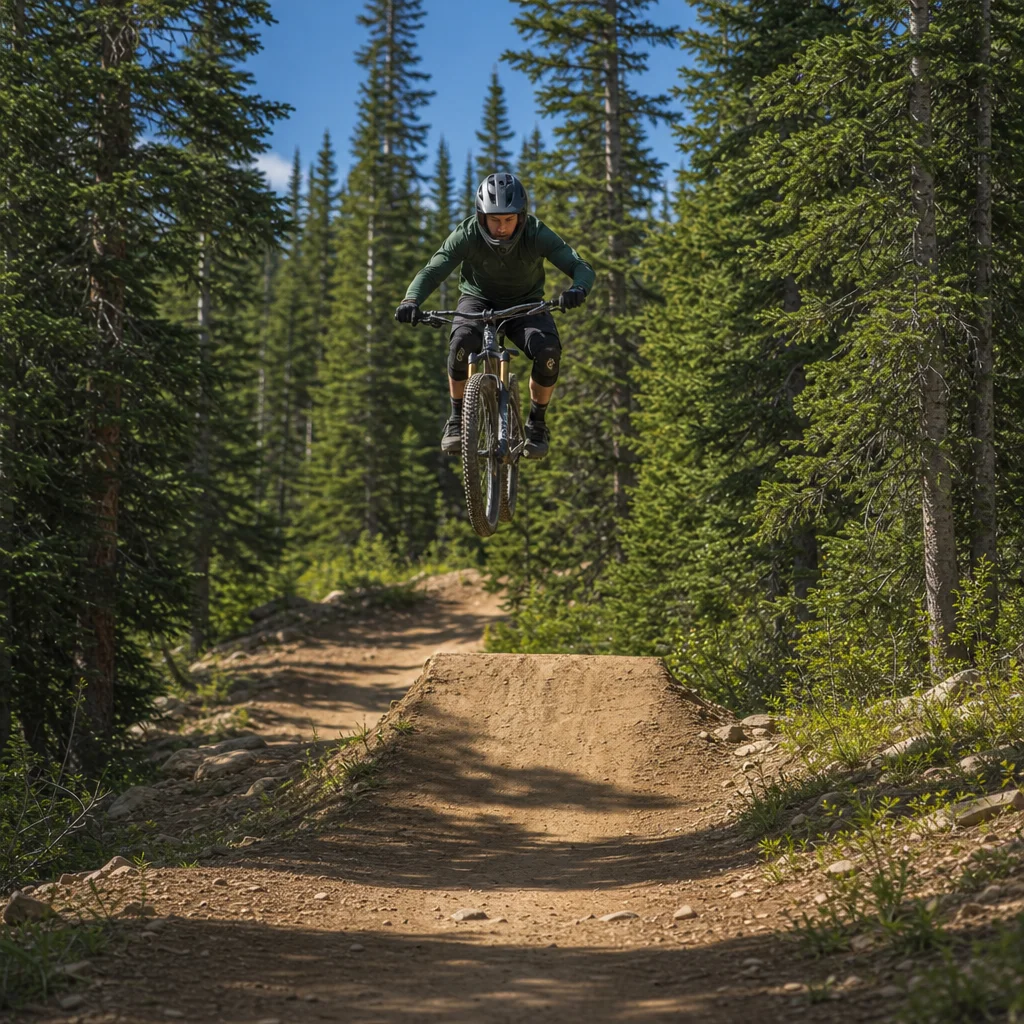
Riding with faster friends can improve your skills, but it can also make every corner feel like a test. You may start too hard, miss useful lines while trying to stay close, or hesitate to speak up when the group’s pace no longer feels manageable. That pressure is rarely a good teacher for long.
The goal isn’t to match your friends’ speed everywhere. It’s to make sensible decisions at your own current level while using the group’s experience to learn. Confidence grows when you can communicate clearly, recover before you’re exhausted, and recognize which challenges are worth attempting today.
Agree on the ride before you start
A short conversation in the car park can prevent most of the awkwardness later. Tell your friends roughly how you’re feeling, whether you’re comfortable riding unfamiliar technical sections, and whether you’d rather stop at junctions or regroup after significant trail features. You don’t need to give a detailed performance report. A simple statement such as “I’m happy to ride, but I may need a steadier pace on the climbs and technical descents” gives the group useful information.
Ask how the route is structured. Is it an out-and-back, a loop, or a network where people can wait at obvious intersections? Will the group stay together, or is it normal for riders to spread out? Knowing the plan helps you distinguish between a normal gap and a situation where you’ve actually been left behind.
It’s also worth agreeing on what “wait” means. Some groups stop at every trail junction, while others regroup at the bottom of a descent or at a trailhead. Neither approach is automatically better. Frequent stops keep a mixed-ability group together but can interrupt the faster riders’ rhythm. Longer sections between regroup points preserve flow but require clearer navigation and more confidence from the rider at the back. Choose a system that matches the route and your comfort level rather than copying another group’s habits.
Check the trail plan: Before setting off, confirm current closures, permitted riding directions, and any local group or trail-system rules. Make sure everyone knows the route, the regroup points, and what to do if someone has a mechanical problem or gets separated.
Set a pace you can repeat
The first climb often determines whether the rest of the ride feels encouraging or punishing. Faster friends may be able to ride above your sustainable pace without appearing to work hard, but copying them can leave you overheated before the technical sections begin. Let them ride ahead if needed, then use the agreed regroup point rather than trying to close every gap immediately.
A useful pace is one that lets you control your breathing and make decisions. On a climb, that may mean using an easier gear earlier, sitting down more often, or walking a short steep section before your legs are completely spent. Walking isn’t a failure of the ride plan; it can be the sensible trade-off that preserves energy for the descent.
On descents, avoid treating the rider ahead as a target. Their speed reflects their line choice, braking habits, bike setup, and experience, not just their courage. Following too closely encourages late braking and rushed decisions. Leave enough space to see the trail rather than only the rider’s rear wheel, and allow the gap to grow if dust, darkness, wet roots, or loose gravel reduces your view.
If you find yourself braking continuously because the group is moving faster than you can process, slow down deliberately. A controlled reduction in speed is more useful than repeatedly entering corners above your comfort level and then grabbing the brakes. Confidence is built through successful, repeatable runs, not through surviving one descent that made you tense from top to bottom.
Use faster riders as references, not targets
A skilled friend can show you possibilities without dictating your speed. Watch where they look, how early they set up for a turn, and whether they stay seated or stand through rough terrain. Then choose which part of that information applies to you. You might copy their entry line while using less speed, or use the same braking point on an easier section while keeping more margin around obstacles.
Ask for one observation at a time. “Where should I look through that corner?” is more useful than “How do I ride this whole section faster?” After you try the advice, ask for specific feedback: Did you brake earlier? Did your body stay centered? Did you look through the exit? Focused questions produce information you can use on the next attempt.
You don’t have to follow the exact line of the rider ahead. The fastest line for one rider may be a poor choice for another because of differences in height, confidence, tire grip, suspension setup, or braking control. A tighter inside line might be efficient for your friend but leave you with no room to correct. A wider, slower line may give you better visibility and a smoother exit. The better line is the one you can enter, control, and leave without a last-second rescue.
Communicate before the pressure builds
Many riders wait until they’re exhausted or anxious before saying anything. Speak earlier. If the pace is too high, say so at the next safe stopping point: “I’m losing control of the ride at this speed. Can we regroup here and use the next section at a steadier pace?” That statement describes the problem without blaming anyone.
Use clear trail communication when riding behind or ahead of others. Call out hazards, approaching riders, and changes in speed according to the conventions used on your local trails and by your group. Don’t assume a friend sees the same obstacle you do. On narrow or blind sections, give other trail users space and avoid creating pressure for anyone to ride faster than they want.
If you need to stop, move somewhere safe and visible rather than halting in the middle of a corner, landing, or narrow trail. Let the group know whether you’re checking a mechanical issue, recovering your breathing, or deciding whether to walk a feature. A clear explanation makes it easier for faster riders to adjust without guessing.
Choose regroup points that work
Regroup points should be easy to identify, safe to occupy, and placed often enough that nobody has to ride beyond their ability to find the group. Trail junctions are useful when navigation is complicated, but they may not be safe if riders arrive at speed or if the junction blocks other users. The bottom of a descent can work well when there’s room to pull clear of the trail. On long climbs, a shaded or sheltered area may be more practical than the summit if the summit has no space or water access.
A faster rider can help by stopping where the slower rider will actually see them, rather than disappearing around the next turn. A slower rider can help by knowing the planned regroup points and continuing there when it’s safe instead of stopping at every momentary gap. This is another trade-off: too many stops break up the ride, while too few make the back rider feel abandoned. Adjust the spacing as the terrain, weather, and group energy change.
If the group uses a front-and-sweep arrangement, make sure everyone understands it. The lead rider should know the route, and the last rider should know that they aren’t expected to navigate unknown junctions alone. On a small group ride, this can be as simple as agreeing that nobody takes an unmarked turn without checking behind them.
Practice without turning the ride into a chase
A group ride can include practice, but it shouldn’t become an unplanned series of tests. Pick one manageable skill or section and make the goal specific. You might practice looking through berms, keeping your feet level through rough ground, or braking before a corner rather than in its middle. Ride the section at a speed that leaves room to think, then repeat it only if your control remains consistent.
Ask a faster friend to ride behind you for one run instead of always leading. From behind, they can see whether you’re braking too late, standing too rigidly, or drifting toward the edge of the trail. Agree that the feedback will be brief and constructive. One useful correction is easier to apply than a list of everything you might improve.
You can also split the group for short periods. Faster riders might complete an optional feature while you take the easier line, then everyone reunites at a known point. This preserves the group’s shared ride without making every rider attempt the same difficulty. The cost is a little coordination; the benefit is that nobody has to choose between holding others back and riding beyond their ability.
Use solo rides or rides with a similarly paced partner to consolidate what you learned. Without the pressure of a faster group, you can repeat a climb, corner, or descent enough times to make the movement familiar. Progress may look less dramatic than keeping up for one heroic section, but it tends to be more durable.
Recognize when confidence is turning into risk
Confidence doesn’t mean ignoring fear. It means understanding what the fear is telling you and responding appropriately. If you’re tense because the trail is unfamiliar, you may need a slower first run and a chance to inspect the feature. If you’re tense because your brakes are fading, your tires are losing grip, or you’re too fatigued to react, the answer is equipment attention or rest—not more encouragement to commit.
Before following a friend into a feature, assess the landing, runout, surface, and consequences of a mistake. If you can’t see the exit or don’t know whether the trail continues beyond a blind crest, wait and ask. Watching someone else ride a feature successfully doesn’t remove the hazards for you.
Your friends’ reactions can also reveal whether the group is a good fit. Supportive riders may be faster, but they won’t pressure you to ride beyond your limits or treat a request to stop as an inconvenience. You can thank them for waiting while still making your own decisions. Group loyalty isn't a reason to abandon judgment.
Build a better arrangement for the next ride
After the ride, note which conditions made you comfortable and which ones caused problems. Was the difficulty the sustained climbing, the technical terrain, unfamiliar navigation, or simply the speed of the group? The answer helps you choose a useful next step. You might work on climbing endurance, practice braking on a familiar trail, improve your route knowledge, or plan a shorter ride with more frequent regroup points.
For the next group outing, agree on one adjustment rather than trying to redesign everything. A slower opening climb, a clear regroup location, or permission to take an easier line can change the entire experience. If the group’s normal pace still leaves you chasing and tense, ride with them less often or choose routes where the consequences of spreading out are lower.
The best faster-friend rides give you room to learn without demanding that you perform at someone else’s level. Communicate before you’re overwhelmed, protect enough energy for the terrain ahead, and treat another rider’s line as information rather than an instruction. When you can finish with decisions you’re proud of—not merely a speed you survived—you’re building the kind of confidence that carries into every ride.