How to Make a Mountain Bike Ride Safer During Hunting Season
I’ll compare the practical choices that make a mountain-bike ride safer during hunting season, from route and timing decisions to visibility, communication, and respectful behavior near active hunting areas. You’ll also learn what local information to verify before rolling out.
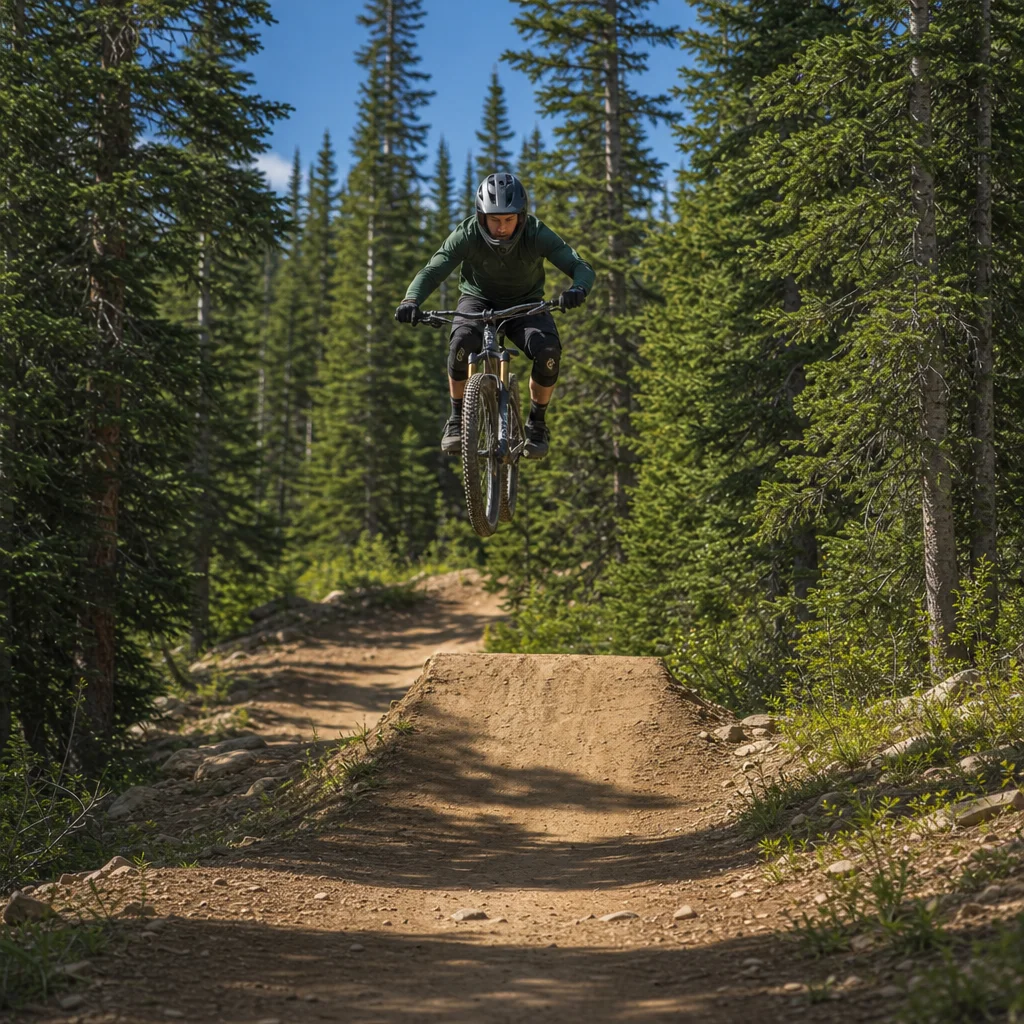
Hunting season changes the risk picture on trails that may feel familiar and predictable for most of the year. The main challenge isn’t simply being seen; it’s knowing where hunting is allowed, when activity is most likely, and when a ride should be moved elsewhere.
A safer approach combines current local information with conservative decisions in the field. You may choose a different trail, ride later in the day, wear more visible clothing, or skip the outing entirely if you can’t establish that your route is appropriate. Those choices are usually more effective than relying on one piece of gear to solve every problem.
Start with the land manager, not the trail map
Trail apps and map layers are useful for planning, but they don’t always show temporary closures, seasonal restrictions, private-property boundaries, or hunting regulations. A route that appears open online may pass through public land with an active hunt, a wildlife-management area, or a trail system operating under special seasonal rules.
Check the current information from the agency or organization responsible for the land. Depending on where you ride, that may be a state wildlife agency, the U.S. Forest Service, the Bureau of Land Management, a county or city parks department, or a private trail operator. Look for hunting-season dates, weapon-specific restrictions, area closures, trail advisories, and any required colors or equipment. Rules can differ between neighboring properties, even when the trails connect.
Confirm this ride’s status: Before leaving, check the land manager’s current closure notices, hunting dates, and trail-specific rules for the exact access point and route you plan to use. If the information is unclear, choose a different trail or contact the managing agency rather than guessing.
Treat signs at the trailhead as current and relevant, even if they conflict with an older online post. A sign may identify an active hunt, a temporary closure, or a boundary that isn’t obvious once you’re riding. Take a photo of important notices if you need to refer to them later, but don’t block access or linger in a restricted area while reading them.
Compare route options by exposure and escape points
During hunting season, the shortest or most familiar route isn’t automatically the best option. Compare routes by more than mileage and elevation. A safer choice may have fewer intersections with hunting access roads, better sightlines, more open terrain, and several easy ways to return to a trailhead if conditions change.
Closed-canopy woods, brushy edges, creek bottoms, and fields near parking or access roads can all deserve extra caution, but no landscape feature tells you by itself whether hunting is occurring. Your goal is to avoid entering areas where you can't see or be seen easily, especially if you don’t know whether hunters are positioned nearby.
Routes with good visibility can make it easier for other trail users to identify you, but open terrain can also be active hunting habitat. Don’t treat a wide trail, a fire road, or a popular loop as automatically safe. Use the land manager’s information first, then favor routes that let you make a controlled retreat without committing to a long, isolated section.
If your planned ride crosses several jurisdictions, check each one. A trail system may move from city parkland onto state-managed property or private land under a conservation agreement. The route may remain physically continuous while the rules and current activity change.
Choose timing conservatively
Many hunting activities take place around dawn and dusk, but hunting schedules vary by species, season, method, weather, local rules, and individual practice. Avoid assuming that a particular time is quiet simply because it has been quiet on previous rides. Early morning and late afternoon often provide less daylight and poorer visibility for cyclists as well as greater potential overlap with hunters.
A later-morning or midday ride may reduce some overlap in certain areas, but it isn’t a universal safe window. Verify the local context instead of turning a general pattern into a guarantee. Weather can also affect activity and visibility: fog, rain, snow, and low cloud can make a rider harder to identify and make it more difficult to recognize people, signs, or trail junctions.
Give yourself enough daylight to finish comfortably. A ride that begins late and runs into dusk creates several problems at once: reduced visibility, more difficult navigation, colder conditions, and a greater chance that you’ll encounter people who are still active in the area. If the route takes longer than expected, turn around while you still have a clear margin rather than trying to salvage every planned mile.
Be visible without treating visibility as protection
Wear bright, high-contrast clothing rather than relying on muted earth tones. A fluorescent jersey, bright jacket, or contrasting helmet can help you stand out against vegetation, but visibility is strongest when your clothing, bike, and movement are easy to distinguish from the surrounding terrain.
If local rules require a particular color or amount of visible material, follow those rules exactly. Requirements can differ by jurisdiction and may apply differently to hunters, hikers, cyclists, or other trail users. Even where no cyclist-specific requirement exists, additional high-visibility clothing is a sensible choice during an active season.
Lighting matters whenever you ride in low light. Use a front light and a rear light that make your direction and presence apparent, and keep them charged. A light designed mainly to illuminate the trail may not be as noticeable from the side as you expect, so consider how you’ll appear at trail crossings, road approaches, and intersections. Reflective details can supplement lights but shouldn’t replace them.
Avoid camouflage patterns and clothing that blends into the background. Don’t assume that wearing one bright item makes you identifiable from every angle. A backpack, helmet cover, or outer layer can hide much of your jersey, so think about visibility from the front, rear, and side.
Make your presence predictable
Hunters and cyclists both benefit when people behave predictably. Stay on the legal route, avoid cutting across closed areas, and don’t leave the trail to investigate equipment, blinds, camps, or other signs of activity. Moving quietly through vegetation can make you harder to identify and can disturb wildlife or people using the area.
Use your voice appropriately when approaching blind corners, narrow sections, or trail junctions. A normal greeting can help identify you as a person, but shouting continuously is unnecessary and may disturb other trail users. Bells can be useful where permitted and accepted locally, particularly on shared-use trails, but they’re an aid to communication rather than a substitute for slowing down and looking.
If you see a hunter, hunting equipment, or a posted active-hunt notice, reduce speed and create distance. Don’t approach a person in a concealed position to ask questions, and don’t handle or move equipment. If you’re unsure whether the route remains appropriate, turn around using the safest available option and report the location to the trail manager if a notice or boundary appears to be missing or confusing.
Keep dogs under control and follow the local leash rules. A loose dog can move unpredictably through hunting areas, disturb wildlife, and create a difficult situation for both you and anyone nearby. A bike-and-dog combination also makes it harder to stop quickly on unfamiliar or restricted terrain.
Tell someone where you’ll be
A route plan is particularly valuable when you’re riding somewhere with limited cell service or changing seasonal access. Give a friend or family member the trailhead, planned route, expected finish time, and the vehicle you’re using. Include a reasonable check-in deadline rather than promising an exact return time that leaves no room for a mechanical problem.
For solo rides, download the map before leaving and carry a charged phone in a protected location. A satellite communicator or other emergency device may be appropriate for remote areas, but understand its limitations and test how you’ll use it before the ride. Sharing a live location can help, but it depends on battery life, signal, and the settings of the service you’re using.
Your plan should include a clear decision point. For example, you might decide that a closure notice, visible hunting activity, poor weather, or a missed check-in will end the ride rather than trigger a search for a more complicated alternative. Turning around early is a normal risk-management decision, not a failure to complete the route.
Know when not to ride
The safest choice may be to use a trail system outside the active hunting area or choose a different activity for the day. That’s especially reasonable when you can’t confirm the land status, the route crosses multiple poorly documented properties, or the only available ride would occur in low light.
You should also reconsider the outing if you’re recovering from an injury, riding with children who may not respond quickly to instructions, or planning a high-speed descent with limited visibility. Hunting-season precautions don’t replace ordinary mountain-bike safety: a helmet, suitable equipment, reliable brakes, water, repair supplies, and realistic route planning still matter.
Don’t enter a posted closure to save a few miles or assume that a familiar trail is exempt because other riders are using it. If you encounter a closed gate, temporary sign, or instruction from a land manager, comply with it. Current restrictions can reflect conditions that aren’t visible from the trailhead.
Make the decision before you clip in
A safer hunting-season ride usually comes from combining several modest advantages: current land information, a route with sensible escape options, daylight, high-contrast clothing, working lights, and a communication plan. None of these guarantees that another person will see you, so the most important choice is avoiding areas and times where you can’t confidently establish that riding is appropriate.
Before you leave, verify the exact route and its current status, tell someone where you’re going, and set a turnaround rule. Once you’re on the trail, stay predictable, respect signs and boundaries, and leave when the situation no longer feels clear. A shorter ride on a confirmed-open route is a much better outcome than finishing the planned loop by relying on assumptions.