Make a Safe Plan for Riding During Hunting Season
A quiet weekday and a familiar trail don’t necessarily mean low risk during hunting season. I’ll show you how to check access notices, improve your visibility, communicate clearly, and build a ride plan that respects local rules and other trail users.
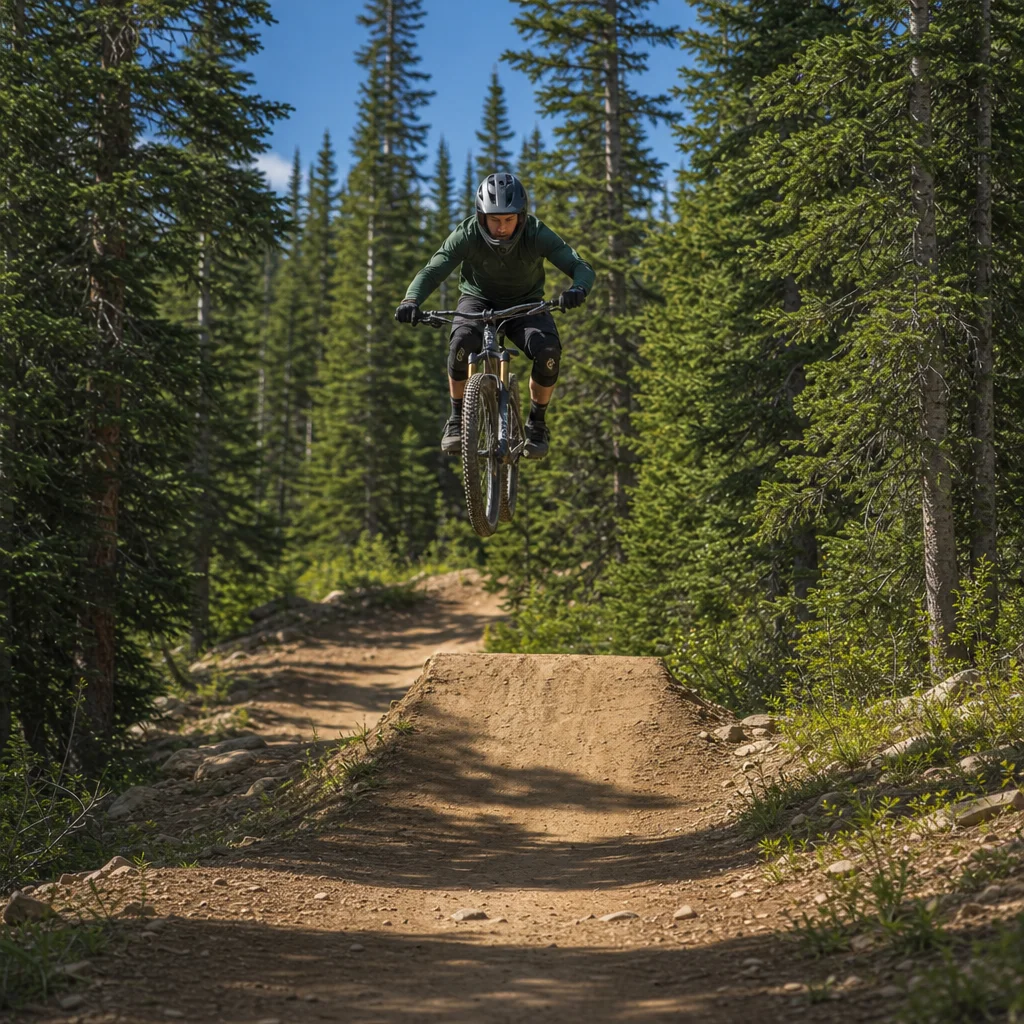
Hunting season changes the decisions you make before a mountain-bike ride. A trail that’s open and uneventful for much of the year may have seasonal closures, temporary restrictions, active hunting nearby, or different expectations for users on public and private land. You don’t need to avoid every trail, but you do need a more deliberate plan.
The safest approach combines current information, high visibility, clear communication, and a willingness to change your route. Treat those steps as part of your ride preparation rather than as obstacles between you and the trail.
Start with the land manager’s current information
Identify who manages the area before you decide where to ride. The relevant authority might be a state or provincial agency, national forest, county park department, conservation organization, private timber company, or a trail association operating under a land-use agreement. A trail map from a previous season may show where the trail goes, but it may not tell you whether the trail is open today.
Look for current hunting-season dates, area-specific closures, designated hunting zones, access hours, and notices about temporary restrictions. Check the land manager’s website and social-media updates, then compare that information with signs at the trailhead. If the rules are unclear, contact the managing agency or a ranger station instead of relying on an old forum post or a comment from another rider.
Pay attention to the difference between a legal access rule and a recommendation. A closure or posted restriction isn't optional. A request to avoid certain hours or use a particular entrance may be advisory, but it can still be the most sensible way to reduce conflict with hunters and protect future access.
Check the current access notice: Before you leave, confirm the season dates, the exact trail or zone boundaries, any temporary closure, permitted hours, and the land manager’s rules for cyclists. Save a screenshot or offline map in case service disappears at the trailhead.
Some areas allow multiple forms of recreation during hunting season, while others close specific trails or entire properties. Don’t assume that a public trail remains open simply because you can still find it on a mapping app. Digital maps can lag behind seasonal signs, land agreements, and emergency changes.
Choose visibility over appearance
Wear clothing that makes you easy to identify as a person moving through the landscape. Blaze orange is a common choice because it stands out in wooded terrain, but fluorescent yellow, bright red, or other high-contrast colors may also improve your visibility depending on the surroundings and the local guidance. An orange vest, jersey, jacket, pack cover, or helmet cover can add visibility without requiring a complete change of riding kit.
Avoid camouflage and muted earth tones during the ride. A dark kit that looks fine against a trailhead background can blend into brush and shadow once you leave the road. If you ride in a group, ask everyone to wear at least one conspicuous outer layer rather than expecting the lead rider or the most visible person to represent the whole group.
Visibility isn't only about color. A helmet, bright gloves, and a moving bicycle help distinguish you from stationary objects, but you should still make yourself obvious when approaching a blind corner, crossing a road, or traveling near a likely hunting area. Front and rear lights can help in dim conditions and around road crossings, although they don’t replace daylight, bright clothing, or sound communication.
If local regulations specify a particular color, garment, or minimum amount of visible material for recreational users, follow that requirement. Requirements vary by jurisdiction and can change, so don’t treat general advice about hunter orange as a substitute for checking the rule where you plan to ride.
Make communication part of the route plan
Tell another person where you’re going, which access point you’ll use, and when you expect to return. Include the trail system or hunting unit rather than sending only a broad location such as “the state forest.” If you change plans at the trailhead, update that person before riding. A simple route screenshot and an expected check-in time are useful when mobile coverage is unreliable.
When riding with others, agree on a few basic signals before entering the woods. Decide how you’ll warn the group about hikers, horses, hunters, vehicles, or an unexpected obstacle. Keep enough space between riders that a warning can travel through the group, and regroup at junctions rather than letting the last rider disappear around several turns.
A bell or a brief, calm greeting can make your approach more predictable, especially on a shared trail. Use it before blind corners, near trail intersections, and when you can reasonably expect people to be nearby. Don’t rely on speed, tire noise, or a loudspeaker to announce your presence. A sudden appearance is more likely to create a problem than a courteous warning delivered with time to react.
If you encounter hunters, slow down early and give them room. A polite greeting identifies you as another trail user and can avoid the ambiguity of passing silently. Follow any request to stop or use another route when it’s reasonable and consistent with the land manager’s rules. Don’t argue about who has priority in the middle of the woods, and never approach a person who is actively handling a firearm.
Pick a route and time with fewer complications
A good seasonal plan may mean choosing a different trail rather than trying to make your preferred route work. Favor areas with clearly documented shared use, strong signage, and a reliable way to confirm current conditions. Trails near busy recreation hubs may be easier to navigate socially than remote routes where you can unexpectedly enter a hunting area with little warning.
Avoid assuming that a particular time is automatically safe. Hunting activity can vary by species, local rules, weather, land access, and the people using the area. Dawn and dusk also create lower visibility for every trail user, so a daylight ride in the middle of the day may offer better practical visibility without guaranteeing that no hunters are present.
Plan an alternative before you drive to the trailhead. The backup could be a trail outside the hunting zone, a bike-park session, a paved route, or a shorter ride on a property with clear year-round access. Knowing your second option makes it easier to turn around when you see a new closure or find conditions different from what you expected.
Share your route choice with your riding partners. A group that has already agreed to switch trails is less likely to rationalize continuing into an uncertain area because someone has traveled a long way or wants to complete a particular loop.
Use the trailhead as a final decision point
Read every sign at the entrance, including temporary notices attached to a gate, kiosk, or map board. Check whether the sign applies to the trail, the whole property, or a particular date range. Look for information about parking, road crossings, seasonal gates, and areas where cyclists must stay on designated routes.
Observe the environment before setting off. Hunting vehicles, equipment, posted boundaries, or people preparing for a hunt may tell you that activity is present even if the online information was brief. That doesn’t automatically mean you must leave, but it should prompt you to recheck the rules and reconsider whether this is the right day for that route.
Don’t cross a closed gate or bypass a sign because the trail looks rideable. A seasonal closure may protect an active operation, a sensitive habitat, or a land agreement that depends on limited access. Turn around if the status is uncertain, and record the location so you can ask the land manager about it later.
If you hear or see gunfire
Stop and assess rather than continuing toward the sound. Gunfire can travel a long distance and may not reveal the shooter’s exact location, so don’t try to identify it by riding closer. Move toward a known safe exit or remain on a clearly permitted route while following the area’s instructions. If you can’t establish where you are or whether the route is open, use your phone, map, or emergency contact to get help.
Never assume that wearing bright clothing makes it acceptable to continue through an area with active shooting nearby. Visibility reduces the chance of being mistaken for an animal, but it doesn’t eliminate the risk of a cyclist appearing unexpectedly behind vegetation or on a shared access road. Slow down, make your presence known from a safe distance, and leave when the situation is unclear.
If a person behaves aggressively, threatens you, or appears to be violating a closure, create distance and contact the appropriate authority when you’re safely away. Don’t confront them or attempt to document the situation at close range. Your goal is to finish the ride safely, not to settle a trail dispute.
Keep the plan respectful and repeatable
Hunting-season access often depends on cooperation among landowners, hunters, hikers, equestrians, and cyclists. Stay on designated trails, close gates if the posted rules require it, keep noise controlled near active areas, and yield appropriately to other users. If dogs are involved, keep them under reliable control and verify that animals are permitted on the property.
After the ride, note what you learned: which notices were current, where signage was confusing, whether the route crossed a hunting zone, and which backup options worked. Share useful, accurate information with your riding group, but avoid presenting one day’s conditions as a permanent rule. Seasonal access can change from one year to the next.
Your pre-ride checklist is straightforward: identify the land manager, verify today’s access rules, choose visible clothing, tell someone your route, prepare an alternative, and make a clear decision at the trailhead. If any part of that process leaves you uncertain, choose the route with better information and lower conflict potential. A missed ride is temporary; preserving your safety and the trail’s shared access is the better long-term trade-off.