Reduce Risk on Mountain Bike Trails During Hunting Season
When a familiar trail sits inside an active hunting area, the safest ride may require a different route or schedule. I’ll show you how to check notices, improve visibility, and make a conservative decision before you roll.
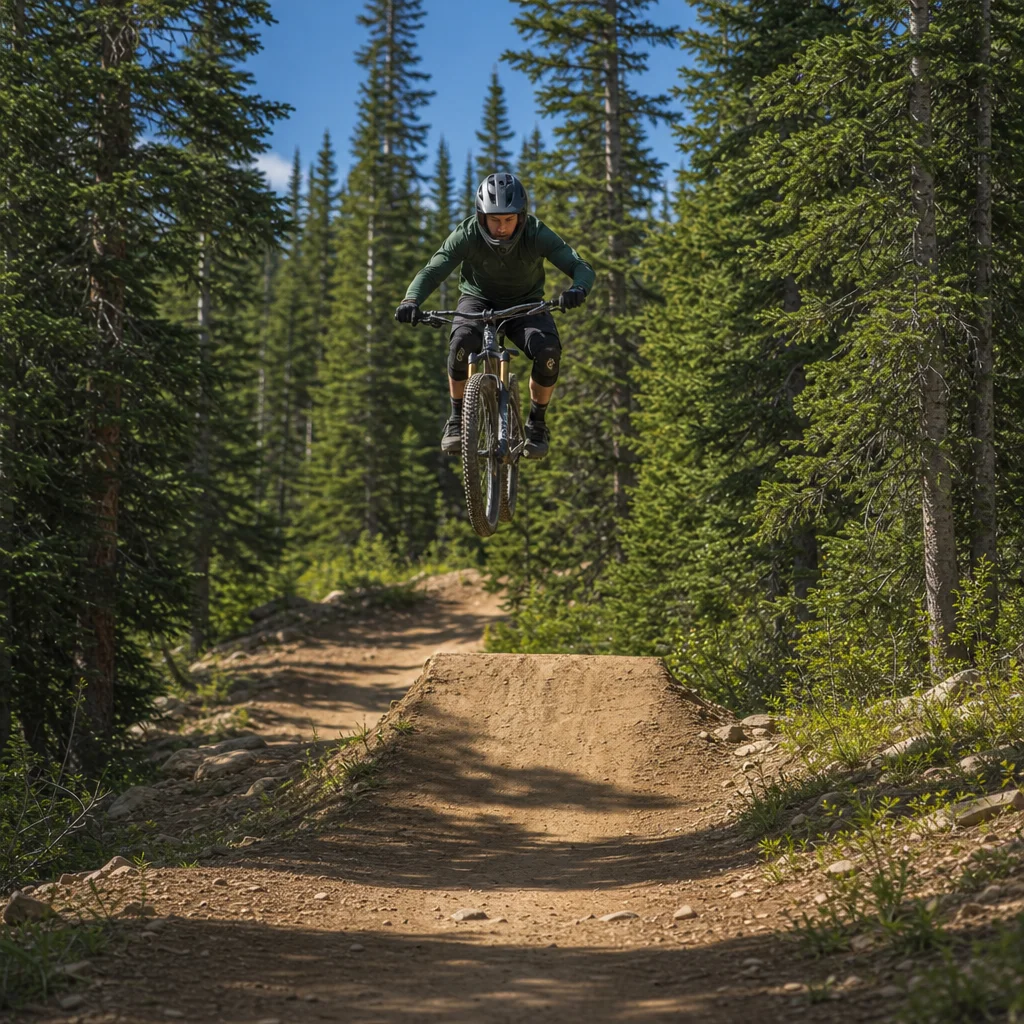
Hunting season can change the risk profile of a mountain bike ride even when the trail itself remains open. A route that feels quiet and predictable in midsummer may be shared with hunters, access vehicles, and people moving through the woods with very different objectives.
You don’t need to avoid every trail near public-land hunting, but you do need better information and a more conservative plan. Check the rules for the specific area, make yourself easy to identify, and be willing to turn around when conditions are unclear.
Start with the land manager’s information
“Public land” doesn’t mean every trail is managed under the same rules. A state wildlife area, national forest, county park, and private property with public access may have different hunting dates, access restrictions, trail closures, and requirements for people using the land. Even within one property, some zones may be open to hunting while developed recreation areas are closed or subject to different rules.
Look for information from the agency or organization that manages the trail, not only from a general trail app. Useful sources may include the land manager’s website, a current closure page, a visitor center, a ranger or park office, and posted notices at the trailhead. Local hunting regulations may come from a state wildlife agency, while trail conditions and closures may come from a separate land manager. You may need to check both.
Pay attention to the exact dates, hours, game season, weapon season, and management unit that apply to your route. “Hunting season” isn't one uniform period: archery, muzzleloader, firearm, and special hunts can have different schedules and restrictions. Regulations can also change from year to year, so don’t rely on last season’s screenshot, an old forum post, or a sign you remember seeing months ago.
Confirm today’s access rules: Before leaving, check the current land-manager notices and applicable wildlife regulations for your trail, planned riding time, and route. Save the relevant phone number or webpage so you can verify a change if the trailhead information is unclear.
If the information is contradictory, incomplete, or difficult to interpret, treat that uncertainty as a reason to choose another route. A missed ride is inconvenient. Riding into an active closure or an area where you can’t determine who is using the trail creates a problem you could have avoided.
Choose visibility over camouflage
During an active hunting season, your clothing should make you easy to identify as a person and a recreational trail user. Bright, solid colors are generally more useful than muted earth tones, camouflage patterns, or clothing that blends into foliage. A high-visibility vest, jacket, pack cover, or helmet cover can add a strong visual signal without requiring a completely new riding kit.
Visibility is especially important when you’re moving through brush, crossing an opening, or approaching a trail junction. A hunter may see a bright color more readily than a cyclist in dark clothing, but no color makes you automatically safe. Trees, terrain, shadows, rain, and low light can hide even noticeable clothing. Don’t use visibility gear as a reason to ride closer to uncertain activity or disregard a closure.
Consider visibility from several angles. A bright jersey may be easy to see from the front but less obvious from behind, while a pack can cover much of your upper body. Add visible elements to the parts of your kit that remain exposed as you ride. In low-light conditions, use the lighting and reflective equipment required or recommended for cyclists in your area, and make sure it doesn’t conflict with local rules or trail restrictions.
Avoid headphones that block environmental sound. You want to hear approaching vehicles, other trail users, warnings, and unusual activity around you. This isn’t a substitute for visual awareness, but it gives you another way to notice that the trail environment has changed.
Make the route decision before the ride
The easiest way to reduce conflict is to avoid the most uncertain areas. A beginner-friendly plan during hunting season usually favors trails with clear public notices, regular recreational use, good sightlines, and straightforward access. It may be worth choosing a shorter loop near a developed trailhead instead of a remote route with several unmarked spurs and infrequently maintained signs.
Look at the route as more than a line on a map. Consider where you’ll park, whether the trail crosses private land, how many access roads enter the area, and whether you’re likely to encounter hunters away from the main trail. Remote sections, dense cover, and quiet side paths may require more caution than a busy, clearly designated multiuse route. A route that is technically open can still be a poor choice if you can't confidently understand how it is being used that day.
Time of day matters as well, but don’t assume that riding at a particular hour automatically avoids hunting activity. Legal hunting hours and local practices vary, and some hunters may be walking in, setting up, or leaving while you’re riding. Check the applicable rules and local notices rather than relying on a general assumption such as “early morning is safe” or “no one will be out at midday.”
Tell someone where you’re going and when you expect to return. Share the trailhead, planned loop, alternate route, and vehicle description if you’re riding alone. Keep your phone charged, but remember that coverage can be unreliable on public land. An offline map, basic navigation skills, water, and enough supplies to wait or walk out are sensible additions when your route is remote.
Ride in a way that prevents surprises
Use designated trails and follow posted access directions. Don’t create a shortcut around a closure, duck under a barrier, or assume a narrow service road is open to bikes because it appears on a mapping app. Barriers and signs may reflect active management decisions that aren’t visible in the app’s data.
Approach blind corners, trail junctions, and road crossings with extra control. Keep your speed low enough to stop within the distance you can see, and give other users time to recognize you. A bell or a clear, calm verbal call can help announce your presence on a shared trail, particularly where vegetation limits sightlines. Avoid shouting in a way that could be mistaken for an emergency or create unnecessary disturbance.
If you’re riding with others, keep the group organized. Don’t spread across the trail, and make sure the last rider knows the plan. A group is often easier to identify than a solitary rider, but a large or fast-moving group can also surprise people if it comes around a corner without warning. Regroup only in places where you’re clearly visible and not blocking the trail or an access road.
Dogs need additional consideration. Keep yours under the control required by local rules, and think carefully about whether the dog’s movement, color, or tendency to chase wildlife makes the route appropriate during hunting season. A loose dog can create a conflict with hunters, wildlife, and other trail users even if the rider is wearing highly visible clothing.
Know how to respond to warning signs
You may notice signs, vehicle activity, distant voices, fresh tracks, temporary tape, or equipment that suggests the area is being used for a hunt. None of these observations should become a challenge to investigate. Slow down, increase your distance, and leave by the route you know is permitted. Don’t approach a hunter to ask questions while they’re positioned, carrying equipment, or focused on the woods.
If you hear gunfire nearby, stop and assess rather than continuing toward the sound. Move away from the area calmly, stay on an authorized route, and avoid crossing through cover where you may be difficult to identify. If the sound is close, repeated, or you can't determine a safe direction of travel, choose the most visible location available without entering a roadway or restricted area, contact the land manager or emergency services as appropriate, and follow their instructions.
Never assume a person in the woods has seen you. A brief greeting at a suitable distance can identify you when the situation is clearly safe, but communication shouldn't replace space and caution. If someone asks you to leave an area, do so without arguing. The land manager or law enforcement agency can resolve questions about access, boundaries, and compliance; a trail encounter isn't the place to settle them.
Report confusing or damaged signs through the land manager’s official contact method. Include the trail name, location, date, and what you observed. Don’t remove signs, move barriers, or post your own unofficial warning unless the responsible agency specifically asks you to do so. Accurate reports help the people managing the area correct information for the next visitor.
A simple pre-ride decision process
Before loading the bike, ask yourself four questions:
- Is the trail open to bikes on the date and during the hours I plan to ride?
- Is hunting active in or near the route, and do I understand the applicable local rules?
- Can I make myself clearly visible and maintain reliable communication?
- Do I have a reasonable alternative if I encounter a closure, active hunting activity, or unclear conditions?
A “no” answer doesn’t always mean you can’t ride, but it should change the plan. You might select a managed trail outside the hunting area, ride with a partner, shorten the route, choose a time with better visibility, or postpone the trip until you can confirm access. If you can’t answer the first two questions, postponing or relocating is the sensible choice.
Once you’re on the trail, continue making the same assessment. Weather can reduce visibility, a temporary hunt can change access, and a quiet route can become busy with vehicles or other users. Conservative decisions aren't failures of confidence; they’re part of managing a recreational activity in a shared landscape.
Check the current notices before each ride, wear clothing that helps others identify you, and favor routes where access and activity are easy to understand. When anything feels uncertain, create more distance and choose the exit rather than trying to prove that the trail is still rideable. That approach preserves the ride you came for—and leaves room for everyone else using the land to do so safely.