Use the Outside Foot Through Flat Berms
I’ll compare the outside-foot technique with level-pedal alternatives, explain why low-banked turns offer less support, and show how to coordinate vision, pressure, and body position without treating every flat berm like a high-speed wall ride.
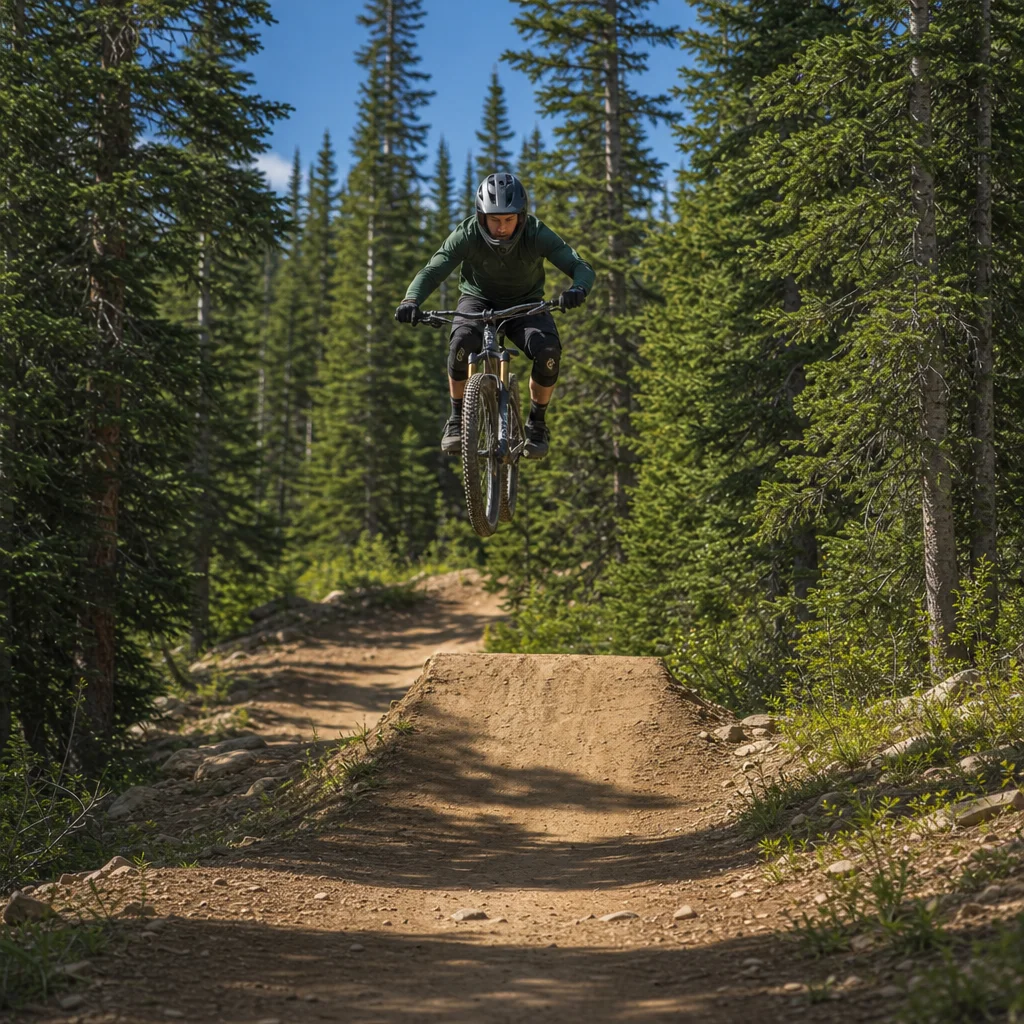
A flat berm can look like a normal berm with the support removed. Instead of leaning into a clearly raised bank, you’re turning on a shallow, loose, or uneven surface that may not hold your tires if you push against it too aggressively. That’s where foot position matters: the outside foot usually goes down, but the rest of the technique has to match the amount of support the turn actually provides.
The common mistake is treating “outside foot down” as a complete instruction. It isn’t. You also need to look through the turn, control your speed before the entry, keep pressure over the tires, and stay flexible enough to respond when the berm stops behaving like a berm.
What changes when a berm is flat?
A well-built, high berm lets the trail do some of the turning work. Its angled face gives your tires a surface to push against, so you can lean the bike while keeping your body relatively balanced over it. With enough speed and traction, that support can make the turn feel predictable.
A flat berm, or low-banked turn, offers much less of that assistance. The surface may only be slightly raised at the outside edge, and the best line might run across a broad patch of dirt rather than along a distinct wall. If the ground is loose, wet, dusty, or covered with small roots, pushing hard into the outside of the turn can overwhelm the available grip.
Your goal is therefore not to force the bike into a dramatic lean. It’s to maintain controlled pressure through both tires while allowing the bike to turn underneath you. The outside foot helps because it lowers your center of mass, stabilizes the bike, and gives you a strong platform for steering and absorbing changes in the trail.
Why the outside foot helps
As you turn, your outside foot is the one farthest from the inside of the corner. Lowering it gives you a stable point from which to brace against the bike. It also reduces the chance that your inside pedal will strike the ground if the bike leans beneath you.
The position is most useful when the pedals are roughly level or when the outside pedal is slightly lower. In a flat, smooth turn with enough room, placing the outside foot clearly down can make the bike feel calmer. You can keep your hips centered, bend your knees and elbows, and let the bike lean without feeling as though your feet are floating on the pedals.
Pressure should be deliberate rather than excessive. Pressing firmly through the outside foot can help the rear tire track the turn, but stamping on the pedal won’t create grip that the surface doesn’t have. If the dirt is loose, your pressure should become smoother and your speed should be lower. Traction comes from managing the available load, not from trying to overpower the corner.
Your hands should remain light enough for the front wheel to follow the ground. Avoid hanging heavily on the handlebar while driving all your weight through the outside pedal. That combination can unload the rear tire or make the front tire dig into soft dirt. Think of the outside foot as part of a balanced stance, not a substitute for body position.
Coordinate your vision, speed, and body position
Look through the turn toward the exit, not at the spot immediately in front of your front tire. Your head and eyes should lead the bike. Looking ahead gives you more time to notice a rut, a patch of gravel, a root, or a rider who has slowed near the exit.
Speed control starts before the turn. Use the approach to choose a speed that leaves you enough traction and room to adjust. Braking hard while already leaned over can make the tires slide, especially on loose or damp ground. If you need more speed control, do most of the braking while the bike is relatively upright, then release the brakes gradually as you enter the turn.
Once you’re in the corner, maintain a relaxed stance. Keep your elbows and knees bent, your hips centered over the bike, and your chest facing generally toward the exit. You may need to lean the bike more than your body, but the amount should reflect the turn’s shape and surface. A shallow turn on loose dirt may call for less lean than a smooth, well-supported berm.
The outside foot and inside leg work together. Lower the outside pedal for support, while allowing the inside knee to open slightly. This gives the bike room to lean and helps you stay loose rather than twisting your upper body against the bars. Your inside foot doesn’t need to point dramatically outward; it simply shouldn’t be locked in a position that prevents the bike from moving.
Check the turn before committing: Look for the firmest, smoothest line through the corner, and adjust your entry speed to the surface you actually have rather than the support you hoped the berm would provide.
Common mistakes that make flat berms harder
Dropping the outside foot too late
Some riders enter with their pedals level, then suddenly drop the outside pedal after the bike is already leaning. That abrupt movement can disturb the bike and shift your weight at the least convenient moment. Set your feet before or as you begin the turn, with enough time to establish a stable stance.
This doesn’t mean you need to make a large, exaggerated motion. A smooth outside-foot drop is usually more effective than forcing the pedal down after the corner has started. Practice the timing on a gentle turn where you can focus on the transition rather than simply surviving it.
Pressing harder instead of slowing down
When a turn feels loose, it’s tempting to push harder through the outside foot and handlebars. Sometimes that helps the tires stay connected, but too much pressure can break traction. If the bike feels like it’s drifting wide, the first correction is often to reduce entry speed on the next attempt, not to add force halfway through the corner.
A flat berm rewards a manageable approach. Entering slightly slower lets you keep your eyes up, maintain a neutral stance, and accelerate once the bike is pointed toward the exit. That is generally more useful than carrying too much speed and relying on a last-second correction.
Leaning the whole body too far into the turn
Leaning your body and bike together can work on a predictable surface, but it leaves less margin when the tires begin to slide. If your body is already low and far inside the corner, there may be little room to recover.
Instead, keep your body balanced over the contact patch while allowing the bike to lean beneath you. The precise amount varies with speed, surface, and corner radius. On a very flat turn, a more upright body and a gently leaned bike can provide a stable starting position. On a smooth turn with more support, you can lean farther while maintaining control.
Staring at the outside edge
The outside edge often attracts attention because it’s where riders fear running wide. Looking directly at it can draw the bike toward it and make your steering tense. Keep your head pointed toward the exit or the next useful section of trail. Your peripheral vision can monitor the edge without making it the target.
Pedaling through the wrong part of the turn
Pedaling can help on a long, shallow corner, but a poorly timed downstroke may cause the inside pedal to strike the ground or upset your balance. If you need to pedal, make sure the bike has enough clearance and choose a gear that allows smooth pressure rather than frantic spinning.
For a short flat berm, it’s often simpler to coast through the middle and begin pedaling once the bike is leaving the turn. That gives you a clear, stable platform while the tires are most heavily loaded laterally.
When level pedals or a dropped inside foot make sense
Outside foot down is a strong default, not an unbreakable rule. Level pedals can be useful when the turn contains roots, rocks, holes, or other features that require both feet ready to absorb movement. They can also work when the corner is so open and shallow that you’re mainly making a gentle direction change rather than leaning into a defined turn.
A dropped inside foot may be appropriate when traction is poor, the turn is extremely tight, or you need a quick dab to prevent a fall. It’s a recovery option, not a technique to rely on when you’re carrying avoidable speed. Removing a foot from the pedal also reduces your control and can leave you less prepared for the next obstacle.
Pedal position should follow the trail’s demands. If the surface is smooth and the turn is predictable, the outside foot down gives you a strong platform. If the trail is technical, keep enough mobility to absorb and reposition. The important point is to avoid locking yourself into a posture that can't respond to changing terrain.
A simple way to practice
Find a wide, low-consequence corner with a clear exit and no traffic. Approach it slowly, brake before the turn, and enter with your eyes already looking toward the exit. As you turn, place the outside pedal down, keep your inside knee relaxed, and notice whether the bike feels supported without forcing it into the ground.
Repeat the turn at the same speed until the movement feels smooth. Then try a small variation: enter with slightly less speed, use a wider line, or keep the pedals level for part of the corner. These comparisons help you feel what the outside foot contributes instead of turning the technique into a rigid command.
You can also practice on a flat area by making large circles in both directions. Keep your upper body relaxed and change only one variable at a time: gaze, pedal position, or speed. The exercise is less about perfect form than learning to recognize when the tires are loaded comfortably and when you’re asking them to do too much.
Put the technique together on the trail
For most flat berms, approach with controlled speed, look through the corner, and establish the outside-foot position before the turn becomes demanding. Keep your body centered, let the bike lean naturally, and use smooth pressure rather than trying to manufacture support by force.
If the turn feels unstable, review the basics in order: Was your entry speed too high? Were you looking at the outside edge? Did you brace heavily through the bars? Did the surface require level pedals instead? Those questions usually reveal more than simply trying to press harder on the outside pedal.
The outside foot is valuable because it gives you stability and clearance, but it works best as part of a complete cornering stance. Match it to the berm’s actual shape, keep your vision moving toward the exit, and leave enough traction and attention in reserve for the trail to change its mind.