Prepare for a Mountain Bike Ride During High Winds
I’ll help you judge whether a mountain bike ride is sensible in high winds, from choosing a sheltered route to preparing for sudden gusts, falling branches, changing temperatures, and an early turnaround when conditions deteriorate.
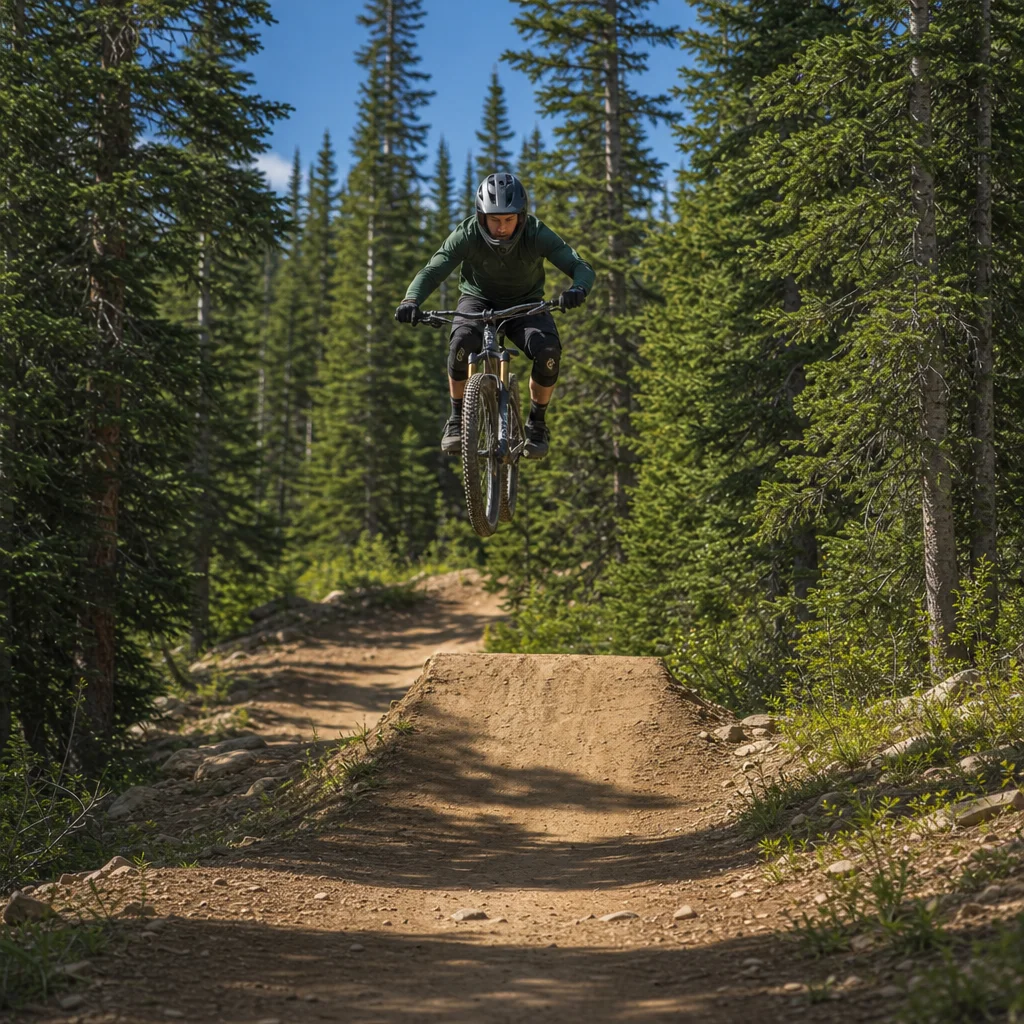
High winds can turn a familiar trail into a different ride. Gusts affect balance, exposed ridgelines become tiring and unstable, and forested routes may carry a falling-branch risk that isn’t obvious when you leave home. The safest plan isn’t always to ride slower; sometimes it’s to choose a different route or postpone the ride.
Check the conditions that matter on the trail
A general wind forecast is only a starting point. Look at sustained wind, stronger gusts, direction, temperature, precipitation, and any active weather alerts. Gusts are especially important for riding because a calm stretch can be interrupted by a sudden sideways push. Wind direction also matters: a route that feels sheltered on one side of a ridge may become fully exposed after a turn.
The forecast at the trailhead may not represent the conditions on a ridgeline, plateau, open field, or high pass. Elevation can increase wind, while trees and terrain can create unpredictable bursts. If the route climbs toward an exposed feature, assume the conditions may become more demanding rather than staying the same throughout the ride.
Confirm the route before you roll: Check the latest local weather alerts, land-manager notices, trail closures, and emergency information for the area you’re visiting. Wind-related closures and restrictions can change during the day, particularly where wildfire, falling trees, or public-safety concerns are involved.
Recent weather can matter as much as the forecast. Strong winds may have dropped branches, loosened rocks, damaged signs, or blocked a trail even if the route was clear the previous day. Heavy rain combined with wind can also make exposed sections slippery and forest trails more difficult to inspect at speed.
Choose a route with fewer consequences
For a beginner or a rider who doesn’t regularly deal with severe wind, favor a route with natural shelter, several exit points, and reliable access back to the trailhead. Low-elevation woodland, wide gravel paths, and loops near roads or populated areas are usually easier to manage than a narrow ridgeline with long sections of exposure. You’re not trying to eliminate every gust; you’re reducing the number of hazards that can arrive at once.
Avoid routes where a single exposed section determines whether the ride is safe. A narrow traverse beside a steep drop, an elevated bridge, a cliff-top trail, or a ridgeline with no alternative line leaves little room to correct a balance error. Wind can push you toward the edge, move a branch into your path, or make stopping difficult.
Forested routes need a slightly different kind of caution. Trees provide shelter, but they also create falling-branch and falling-tree hazards, especially during or after strong winds. Dense stands, recently burned areas, dead trees, and trails beneath visibly damaged branches deserve extra respect. If you hear cracking, see trees moving violently, or encounter fresh debris across the trail, turn around rather than trying to pick your way through.
A shorter route is often the better choice. High winds can make a normal distance feel more tiring because you’re constantly correcting your steering and bracing against gusts. Keeping the ride close to the trailhead gives you more options if conditions worsen or you find the trail damaged.
Set up your ride for control, not speed
Wind doesn’t usually require a special bike setup, but it rewards a stable, predictable one. Check that your tires are properly inflated for the terrain, your wheels are secure, and your brakes work consistently. Avoid making last-minute changes that you haven’t tested, such as fitting a new handlebar, changing tire pressure dramatically, or loading a large bag onto the front of the bike.
Loose clothing and bulky accessories can catch gusts. A close-fitting outer layer, securely fastened pockets, and a compact pack are easier to control than a flapping jacket or a loosely strapped load. If you use a handlebar bag, make sure it can’t swing into the front wheel or affect steering when the wind hits from the side.
Carry enough equipment to deal with a slower, less predictable ride: water, a basic repair kit, a charged phone, suitable lights if the route could take longer than expected, and an extra layer. A map or navigation device is useful if wind damage forces a detour. Keep your emergency supplies protected from rain and attached securely so they don’t become distractions.
Ride differently in exposed sections
On open ground, keep a relaxed grip and lower your speed before the gust arrives. Bending your elbows and maintaining a centered position lets the bike move slightly underneath you without immediately steering into every change. A rigid upper body makes a sudden gust more likely to turn into a sharp correction.
Give yourself more room from trail edges, other riders, posts, fences, and obstacles. A gust can move you sideways even when your front wheel is pointed correctly. On a narrow trail, slow down early and be ready to stop. If the safest line requires riding close to a drop, unstable slope, or obstacle, walking that section is a sensible riding decision, not a failure of technique.
Crosswinds deserve particular attention when they strike as you leave shelter. The transition from trees to an open meadow or ridge can produce a sudden push. Reduce speed before the opening, keep your eyes on the route ahead rather than staring at the source of the wind, and be prepared to pause while you assess the next section.
Wind can also affect braking and cornering indirectly. Debris may collect in corners, visibility can be reduced by dust, and a headwind may disguise how much effort you’re using. Ride by control and available energy rather than by your usual pace. On a descent, the extra speed created by a tailwind may leave less time to respond to branches, loose rock, or another rider.
Dress for changing effort and temperature
High winds increase heat loss when you’re exposed, but climbing through sheltered terrain can still make you sweat. The useful approach is to dress in adjustable layers rather than relying on one heavy garment. A breathable base layer, a wind-resistant outer layer, and a packable insulating layer give you more options when the route changes elevation or direction.
Protect your eyes from dust, grit, and small debris. Gloves can improve comfort and grip when your hands are exposed to cold air, while a neck covering may help on open descents. Avoid loose hoods, straps, or drawcords that can obstruct vision or interfere with the bike.
Don’t wait until you’re cold to add a layer. Stopping in an exposed area can be uncomfortable and may make it harder to handle the bike afterward. Find a sheltered place to adjust clothing, and keep spare layers accessible rather than buried under the rest of your gear.
Decide when to turn around
Set a turnaround rule before starting. You might decide that you’ll skip an exposed ridge if the gusts make standing still uncomfortable, turn back when the trail accumulates fresh debris, or end the ride if you can’t maintain a controlled line at a reasonable speed. A preplanned rule removes some of the pressure to continue simply because you’ve already invested time in the ride.
Turn around if trees are falling or visibly failing, branches are landing on the trail, visibility is deteriorating, or the route’s condition is no longer clear. Do the same if you’re repeatedly pushed off your intended line, struggling to control the bike while braking, or becoming too fatigued to react promptly. Those are signs that the margin for error has narrowed.
Remember that returning isn’t automatically safer than continuing. A headwind on the way out may become a crosswind on the way back, and a route can feel different in the opposite direction. If conditions are changing quickly, use your map and local knowledge to choose the most sheltered exit rather than blindly retracing the longest part of the route.
Tell someone where you’re riding and when you expect to return, especially for remote or exposed areas. If you change the route, update them when practical. A charged phone helps, but reception may be unreliable, so don’t treat it as a substitute for conservative route planning.
A sensible plan for a windy day
Start by matching the route to the conditions, not to your original ambition. Check the latest forecast and local notices, identify exposed and forested sections, and choose a shorter option with multiple ways out. Secure your equipment, wear adjustable layers, and leave enough time to ride slowly and stop when the trail demands it.
Once you’re moving, treat each transition into open ground as a fresh assessment. Keep your body relaxed, create extra space, and watch for debris and damaged trees. If the wind makes control, visibility, or route safety uncertain, turn around early. A successful windy-day ride is one that leaves you with good options throughout—and gets you home before those options disappear.